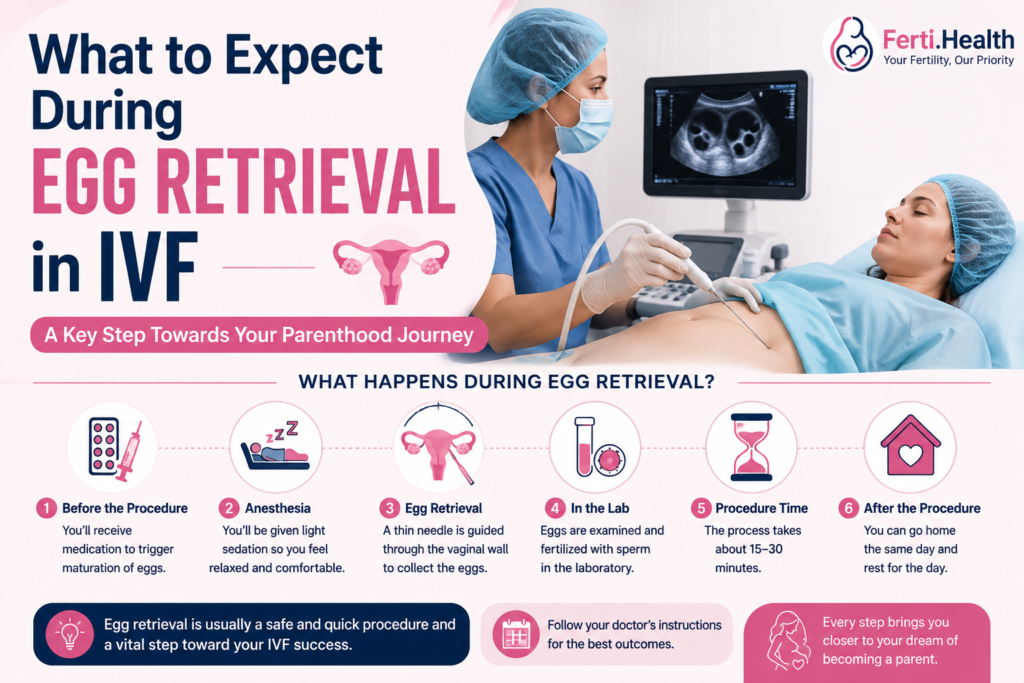

If you’re preparing for IVF treatment, you may be wondering what happens during egg retrieval. It’s one of the most important steps in the IVF process and often the stage that causes the most anxiety for first-time patients. Fortunately, egg retrieval is a routine, minimally invasive procedure performed by experienced fertility specialists.
Understanding what to expect before, during, and after egg retrieval can help you feel more confident and prepared for your fertility journey.
What Is Egg Retrieval?
Egg retrieval, also known as oocyte retrieval, is a medical procedure used to collect mature eggs from the ovaries after ovarian stimulation. The retrieved eggs are then fertilized with sperm in a laboratory to create embryos for IVF treatment.
The procedure is performed under light sedation, ensuring you remain comfortable throughout the process.
Why Is Egg Retrieval Necessary?
Egg retrieval is a crucial step in IVF treatment because it allows fertility specialists to collect multiple mature eggs in a single cycle. Having more eggs increases the chances of producing healthy embryos, improving the likelihood of a successful pregnancy.
After fertilization, the best-quality embryos are selected for transfer or freezing for future use.
Preparing for Egg Retrieval
Before egg retrieval, your fertility specialist will closely monitor your ovarian response through blood tests and ultrasound scans.
Preparation typically includes:
- Daily fertility hormone injections
- Regular ultrasound monitoring
- Blood tests to check hormone levels
- A trigger injection given approximately 36 hours before retrieval
- Fasting for several hours before the procedure
The trigger injection is carefully timed because it helps mature the eggs before they are collected.
What Happens During the Procedure?
The egg retrieval procedure is usually completed within 20 to 30 minutes.
Step 1: Sedation
You’ll receive light anesthesia or intravenous sedation so you remain relaxed and pain-free during the procedure.
Step 2: Ultrasound Guidance
Your fertility specialist inserts a transvaginal ultrasound probe equipped with a fine needle.
The ultrasound helps guide the needle safely to each ovarian follicle.
Step 3: Egg Collection
The needle gently aspirates the fluid from each follicle, collecting the mature eggs.
The fluid is immediately transferred to the embryology laboratory, where specialists identify and prepare the eggs for fertilization.
Step 4: Recovery
After the procedure, you’ll rest in the recovery area for approximately one to two hours before being discharged.
Most patients return home the same day.
Does Egg Retrieval Hurt?
One of the most common concerns is whether egg retrieval is painful.
Because sedation is used, most women experience little to no pain during the procedure itself.
After the anesthesia wears off, you may notice:
- Mild cramping
- Light spotting
- Abdominal bloating
- Pelvic discomfort
- Fatigue
These symptoms usually improve within a few days.
Recovery After Egg Retrieval
Recovery is generally quick, but your body still needs time to heal.
During the first 24 to 48 hours, it’s recommended to:
- Rest as much as possible.
- Stay hydrated.
- Eat light, nutritious meals.
- Avoid heavy lifting.
- Skip strenuous exercise.
- Follow your doctor’s medication instructions.
Most women can return to work and normal daily activities within one or two days.
Possible Side Effects
Most side effects are mild and temporary.
Common side effects include:
- Mild pelvic pain
- Bloating
- Constipation
- Slight vaginal bleeding
- Nausea
- Breast tenderness
These symptoms typically disappear within a few days.
Rare Risks of Egg Retrieval
Although egg retrieval is considered very safe, complications can occasionally occur.
Rare risks include:
- Infection
- Excessive bleeding
- Injury to surrounding organs
- Reaction to anesthesia
- Ovarian Hyperstimulation Syndrome (OHSS)
Your fertility clinic will provide detailed instructions on when to seek immediate medical attention.
What Happens After Egg Retrieval?
Once the eggs are collected, the next stage begins.
The embryology team will:
- Examine the retrieved eggs.
- Select mature eggs.
- Fertilize the eggs using sperm.
- Monitor embryo development over several days.
Depending on your treatment plan, the embryos may be:
- Transferred into the uterus
- Frozen for future use
- Tested through genetic screening if recommended
Tips for a Smooth Recovery
Following your doctor’s advice can help improve your recovery experience.
Helpful tips include:
- Drink plenty of water.
- Eat protein-rich foods.
- Avoid alcohol and smoking.
- Wear comfortable clothing.
- Get enough sleep.
- Take prescribed medications as directed.
- Contact your doctor if symptoms worsen.
When Should You Contact Your Doctor?
Although serious complications are uncommon, seek medical attention immediately if you experience:
- Severe abdominal pain
- Heavy bleeding
- Fever above 38°C
- Difficulty breathing
- Rapid weight gain
- Persistent vomiting
- Severe swelling
Prompt medical care helps prevent complications.
Emotional Well-Being During IVF
Egg retrieval is not only a physical procedure but also an emotional milestone.
It’s completely normal to feel:
- Excited
- Nervous
- Hopeful
- Anxious
- Emotional
Talking openly with your fertility specialist, partner, or counselor can help reduce stress during the process.
Final Thoughts
Egg retrieval is one of the most important milestones in IVF treatment and plays a critical role in creating healthy embryos for pregnancy. Although the procedure may seem intimidating at first, it is typically quick, safe, and well-tolerated by most patients.
Understanding what to expect before, during, and after egg retrieval can help you approach the process with greater confidence. By following your fertility specialist’s guidance and allowing yourself adequate time to recover, you’ll be well prepared for the next exciting step in your fertility treatment journey.
Frequently Asked Questions
1. How long does egg retrieval take?
The egg retrieval procedure usually takes about 20 to 30 minutes, while the entire clinic visit may last a few hours, including preparation and recovery.
2. Is egg retrieval painful?
Most patients experience little or no pain during the procedure because light sedation or anesthesia is used. Mild cramping and bloating afterward are common.
3. How many eggs are usually retrieved?
The number of eggs varies depending on age, ovarian reserve, and response to fertility medications. Your fertility specialist will discuss your expected response before the procedure.
4. How soon can I return to work?
Many women return to normal activities within one or two days, although your doctor may recommend additional rest depending on your recovery.
5. What happens to the eggs after retrieval?
The eggs are examined in the laboratory, fertilized with sperm, and monitored as embryos before transfer or freezing as part of your IVF treatment plan.