
Most fish passage infrastructure in service today was designed before anyone had seriously considered combining autonomous sensing, AI classification, and pneumatic transport in a single floating unit. The design logic of a 1970s fish ladder was sound for its time. But river management in 2025 asks different questions, and the answers a conventional ladder can give are increasingly limited.
A modern fish passage portal should be doing more than just moving fish past a barrier. It should be generating reliable data on every fish that passes. It should be distinguishing between species that belong upstream and species that don’t. It should be operating autonomously around the clock without needing a staff presence. And it should be doing all of this without diverting the volumes of water that degrade the power output of the hydroelectric facility it’s attached to.
Why Is the Traditional Fish Ladder No Longer the Default Answer?
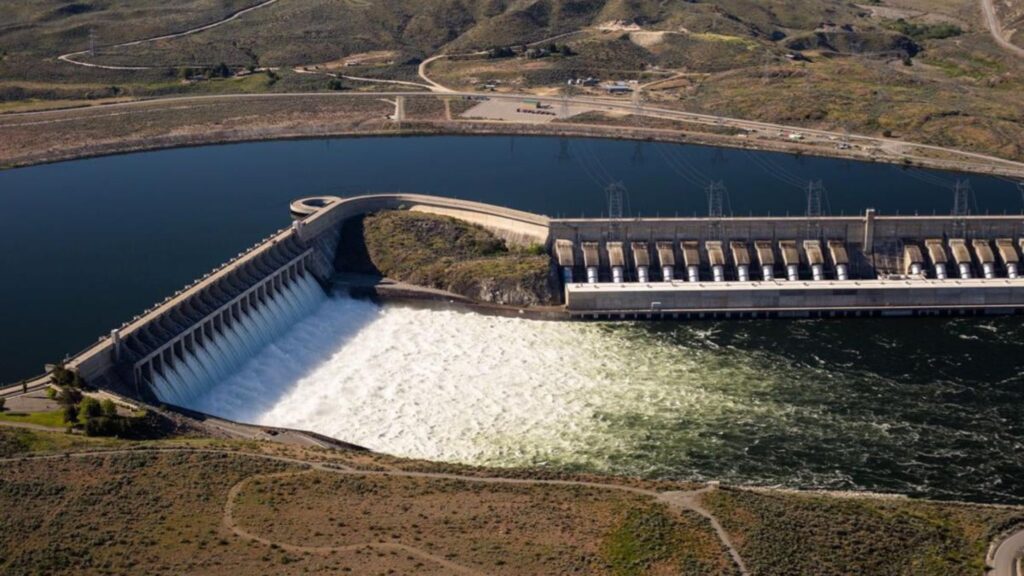
The fish ladder, as a concept, is elegant in its simplicity. A series of stepped pools create a passable gradient that fish can swim through under their own power. The problem is that the gradient requires constant high-volume water flow, often hundreds to thousands of cubic feet per second drawn from the reservoir. That water is no longer producing electricity. At a facility generating revenue from hydropower production, this is a direct operational cost, not just a theoretical loss.
Beyond the water diversion issue, traditional ladders are non-selective. Every fish that reaches the ladder gets the same treatment regardless of species. Invasive carp, American Shad, non-native bass, all pass upstream alongside native salmon and steelhead. The ladder has no mechanism to distinguish between them. That means every conventional passage structure is simultaneously a native species conservation tool and an invasive species dispersal pathway.
What Does the PassagePortal Model F Offer That Other Systems Don’t?
The PassagePortal Model F is a floating, fully autonomous passage system that uses air pressure rather than water to move fish. The system anchors in the river within the natural attraction flow, which means fish locate it instinctively without additional guidance structures. The ASPFishway provides a volitional entry point where fish can swim in on their own terms.
Once inside, fish slide through the Fish Faucet into the FishL Recognition imaging hood, where species, size, origin, and condition are assessed in milliseconds. The Gate Keeper then routes each fish based on that assessment. Target native species go upstream through Migrator Tubes. Non-target species can be directed downstream. All of this happens without human intervention, at up to 40 fish per minute.
How Does Selective Passage Change the Conservation Equation?
The conservation upside of selectivity is significant. For river systems dealing with established invasive species populations, a passage structure that actively routes non-native fish away from upstream habitat doesn’t just slow the spread, it actively reverses it over time. Whooshh’s models suggest that installing selective passage at the lowest dams on a river system could largely eliminate certain invasive species like American Shad from the upstream river reach within a few years of continuous operation.
That’s a materially different outcome from what any conventional passage structure can deliver.
For dam operators, the Upstream Fish Passage compliance picture also improves under this model. Licensing bodies increasingly require documented species-level data to confirm that passage programs are meeting their objectives. The Passage Portal generates this data automatically, in a format that can be transmitted directly to regulatory bodies without additional processing. The full context of what selective, automated passage means for fisheries management programs is covered at Whooshh Innovations fish passage expertise page.
What Are the Practical Deployment Considerations?
The Model F is self-contained on an H-shaped floating vessel. All components except the MigratorTubes are integrated on the vessel itself, which simplifies deployment and reduces site preparation. Minimum water depth requirements are 4 to 6 feet. Operating power needs range from 40 to 110 kW depending on configuration. Migrator Tubes can run up to 1,000 feet in standard configuration, with Booster Stations available for longer reaches.
The system supports 1 to 6 transport lanes plus a bypass, making it scalable to the passage volume requirements of the specific site. For operators transitioning from conventional ladders or fish elevators, the installation timeline is days rather than years. That difference in deployment speed directly affects how quickly the system can begin contributing to compliance requirements and operational efficiency.