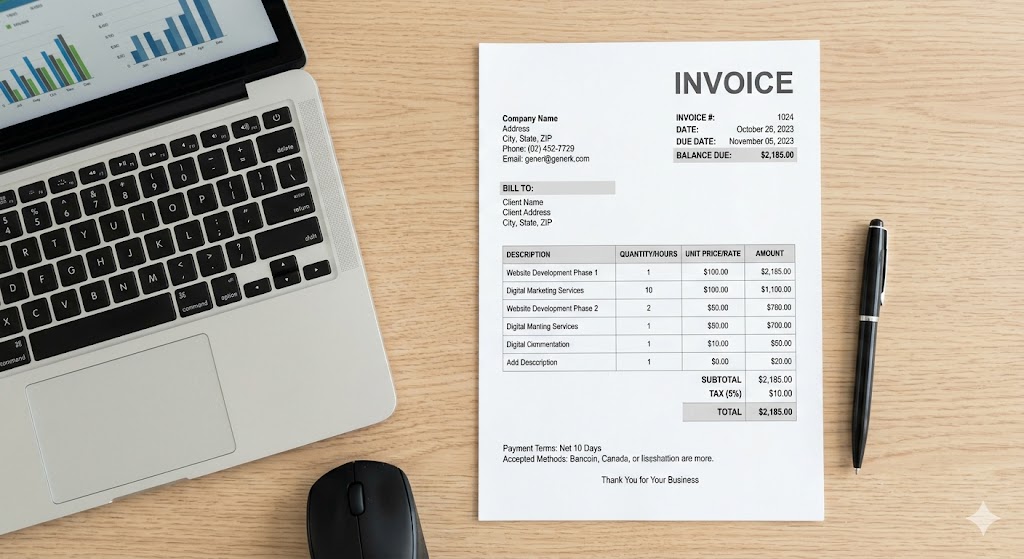

A GST invoice India format is a structured document used by registered businesses to record sales transactions and collect GST from customers. It provides complete information about the seller, buyer, products or services, applied taxes, and payment details. A properly prepared gst invoice india format helps businesses maintain compliance, improve record keeping, and ensure accurate tax reporting.
A GST invoice plays an important role in business transactions because it acts as official proof of a sale. It allows both buyers and sellers to maintain transparency regarding pricing, tax calculations, and payment details. Whether a business operates in retail, manufacturing, services, or online sales, maintaining a correct GST invoice format helps simplify accounting and financial management.
A standard GST invoice generally includes several important components:
-
Seller’s legal name and business address: This identifies the registered business issuing the invoice.
-
Seller’s GSTIN: The Goods and Services Tax Identification Number confirms the seller’s GST registration.
-
Buyer’s details: Customer information is included to maintain a clear transaction record.
-
Invoice number and date: A unique invoice number helps businesses track sales and maintain proper documentation.
-
Description of goods or services: Details of products or services sold are mentioned for clarity.
-
Quantity and price: The invoice shows the number of items and their individual costs.
-
HSN or SAC code: These codes classify goods and services under GST regulations.
-
Taxable value: The amount before adding GST is displayed separately.
-
CGST, SGST, or IGST details: Applicable tax components are mentioned based on the transaction location.
-
Total invoice amount: The final payable amount after including taxes is clearly shown.
Following the correct GST invoice format reduces billing errors and makes financial operations smoother. It also supports customers who may need invoices for claiming eligible input tax credit. A complete invoice ensures that every transaction is properly documented and can be verified whenever required.
Why is a GST invoice format important for businesses?
A proper GST invoice format helps businesses maintain accurate financial records and follow tax regulations effectively. It creates a standardized method for documenting sales, making it easier to manage daily transactions and prepare tax-related reports.
Businesses benefit from using a structured GST invoice because it provides several advantages:
Better tax management:
A detailed GST invoice helps businesses calculate taxes correctly and reduces mistakes while preparing GST returns. Clear tax information allows businesses to understand their tax obligations and avoid unnecessary confusion.
Easy record keeping:
Organized invoices make it easier to find transaction details whenever required. Businesses can quickly review past sales, customer payments, and tax information without searching through multiple documents.
Customer trust and transparency:
Professional invoices create confidence among customers by showing complete details about the purchase. Buyers can easily understand product costs, tax amounts, and the final payment value.
Smooth audits and verification:
Complete invoice records help businesses during audits or whenever financial documents are required. Proper documentation ensures that transactions can be verified without difficulty.
A GST invoice should always be prepared carefully because incorrect information can create compliance issues. Missing GSTIN details, incorrect tax calculations, or incomplete transaction information may cause problems during filing or verification. Businesses should review every invoice before sending it to customers to ensure accuracy.
How can businesses create a GST invoice easily?
Businesses can create GST invoices manually or use digital invoicing tools that simplify the entire billing process. Online invoice solutions allow users to add business information once and generate professional invoices quickly whenever needed.
A reliable invoicing process helps businesses:
-
Save time on manual paperwork
-
Reduce calculation mistakes
-
Maintain digital transaction records
-
Track customer payments
-
Improve overall workflow
-
Access old invoices easily