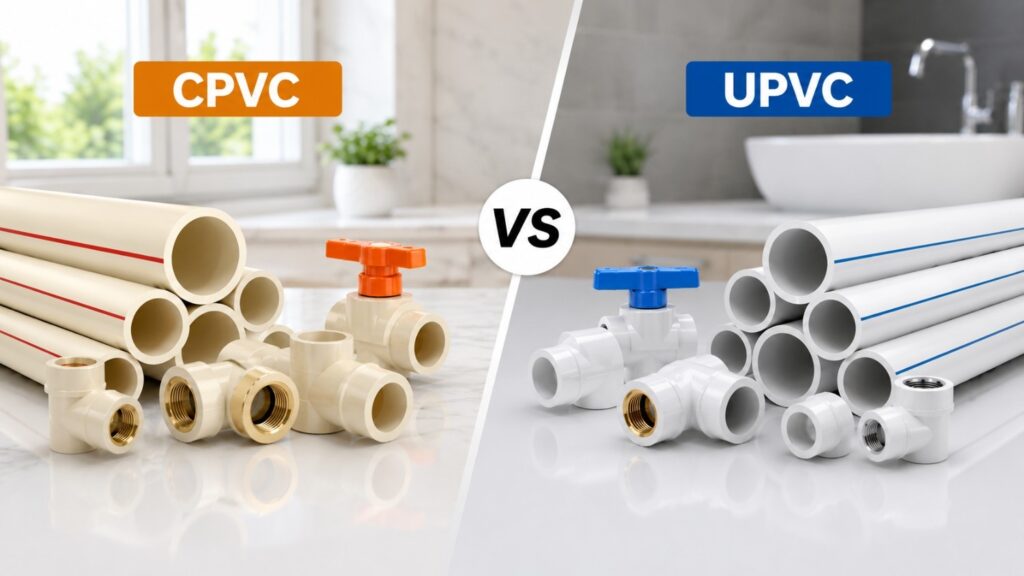

If you are planning any plumbing work, whether for a new home or a renovation, you have probably come across two very common terms: CPVC and UPVC. Both are widely used piping materials in Indian households and commercial buildings, and both look quite similar at first glance. But they are not the same, and using the wrong one in the wrong place can lead to leaks, damage, or even health hazards over time.
In this post, we will break down the real differences between CPVC and UPVC pipes and fittings, so you can make an informed choice for your next plumbing project. We will also discuss why choosing the best UPVC pipes & fittings matters just as much as choosing the right material in the first place.
What Is UPVC?
UPVC stands for Unplasticized Polyvinyl Chloride. It is a rigid form of PVC that does not contain any plasticizers, which makes it strong, durable, and resistant to corrosion. UPVC pipes are widely used for cold water supply lines, drainage systems, sewage pipes, agricultural irrigation, and even door and window frames.
Because UPVC does not handle high temperatures well, it is not suitable for hot water applications. If exposed to heat over a long period, UPVC pipes can soften, warp, or lose their structural strength. That is why UPVC is mostly used outdoors or for cold water plumbing where temperature is not a concern.
What Is CPVC?
CPVC stands for Chlorinated Polyvinyl Chloride. It is made by adding extra chlorine to the PVC resin, which changes its molecular structure and makes it capable of handling much higher temperatures than UPVC. CPVC pipes can typically withstand temperatures up to around 93°C, which makes them the go-to choice for hot and cold water supply lines inside homes and buildings.
CPVC is also known for being lightweight, easy to install, and resistant to scale buildup and corrosion. It is commonly used in bathroom fittings, kitchen plumbing, and any application where both hot and cold water need to pass through the same piping system.
Key Differences Between CPVC and UPVC
- Temperature Resistance: This is the biggest difference. UPVC pipes are meant only for cold water and cannot handle heat. CPVC pipes, on the other hand, are built to handle hot water comfortably, making them ideal for indoor plumbing where water temperature can vary.
- Application: UPVC is generally used for outdoor plumbing, drainage, sewage systems, and agricultural use. CPVC is used indoors, especially for hot and cold water supply lines in bathrooms and kitchens.
- Material Composition: UPVC is simply PVC without plasticizers, while CPVC has added chlorine content, which gives it better heat tolerance and slightly more flexibility.
- Cost: UPVC pipes are usually more affordable than CPVC pipes because of the simpler manufacturing process. CPVC, with its added chlorination process, tends to cost a bit more, but the higher price is justified by its ability to handle hot water safely.
- Durability: Both materials are known for long service life, but CPVC generally lasts longer in hot water applications since it is specifically engineered to resist heat-related degradation.
Which One Should You Choose?
The choice really depends on where and how you plan to use the pipes. If you need piping for cold water supply, drainage, or outdoor use, UPVC is the practical and cost-effective option. If your plumbing system involves hot water, such as bathroom geysers or kitchen taps, CPVC is the safer and more reliable choice.
Many homeowners and contractors actually use both materials together in the same building. UPVC handles the cold water and drainage side, while CPVC takes care of the hot water lines. This combination ensures efficiency, safety, and long-term performance across the entire plumbing system.
Why Quality Matters
Whether you choose CPVC or UPVC, the quality of the pipes and fittings plays a huge role in how well your plumbing system performs over the years. Low-quality pipes can crack, leak, or degrade faster than expected, leading to costly repairs down the line.
This is where a trusted brand like Starmax makes a real difference. Starmax offers reliable, ISI-approved piping solutions that are built to handle real-world conditions, whether it is high water pressure, temperature fluctuations, or daily wear and tear. When you invest in the best UPVC pipes & fittings from a brand like Starmax, you are not just buying pipes, you are investing in peace of mind and long-term durability for your home or project.
Final Thoughts
CPVC and UPVC may look similar, but they serve very different purposes. UPVC is your go-to for cold water and outdoor applications, while CPVC is built for hot water plumbing indoors. Understanding this difference helps you avoid installation mistakes and ensures your plumbing system works efficiently for years to come.
And no matter which material you choose, always go with a trusted name. Choosing the best UPVC pipes & fittings, like those offered by Starmax, ensures that your plumbing investment stands the test of time.