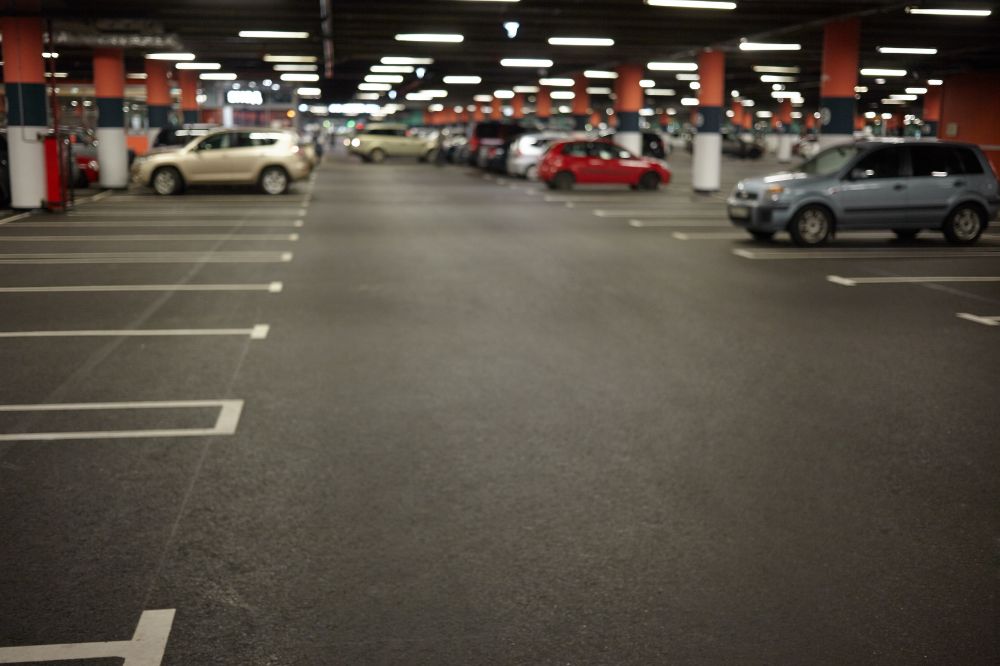

Imagine pulling into a dimly lit car park at night. Shadows obscure obstacles, and every corner feels uncertain. Proper lighting eliminates these risks and ensures safety for drivers, pedestrians, and property. In Australia, strict standards guide car park lighting to prevent accidents and meet legal requirements. This post explores the key Australian standard, its components, and practical applications.
Understanding AS/NZS 1158
The primary Australian standard for car park lighting is AS/NZS 1158, titled “Lighting for roads and public spaces.” This standard sets precise requirements for illuminance, uniformity, and glare control in outdoor areas like car parks. It applies to both open and covered parking facilities across commercial, residential, and public sites.
AS/NZS 1158 divides car parks into categories based on usage and risk levels. For example, high-traffic shopping centre car parks demand brighter, more uniform lighting than low-use office lots. Compliance ensures visibility for manoeuvring vehicles and spotting hazards. Property owners and managers must follow these guidelines to avoid fines, insurance issues, and liability claims.
Illuminance Levels by Zone
Illuminance measures light intensity in lux. AS/NZS 1158 specifies minimum lux levels for different car park zones to balance safety and energy efficiency.
- Parking bays: Require 5 to 10 lux average, with a uniformity ratio of 1:20 (minimum to average light). This prevents dark spots where pedestrians might trip.
- Driveways and aisles: Need 10 to 20 lux, especially in circulation paths. Wider aisles in busy areas hit the higher end.
- Entrances and exits: Demand higher levels. AS 1680, often referenced alongside, mandates 800 lux during daylight for the first 15 meters and 160 lux at night, dropping to 160 lux for the next 4 meters.
- Pedestrian walkways: Aim for 12 lux or more to support safe foot traffic.
These levels vary by category. Category P1 (public transport interchanges) requires up to 24 lux in key areas, while P12 (private residential) suffices with 2.5 lux. Regular audits confirm ongoing compliance as bulbs age.
Uniformity and Glare Control
Uniformity ensures even light distribution and helps in avoiding patchy illumination. AS/NZS 1158 mandates ratios like 1:15 to 1:40 depending on the category. Poor uniformity creates glare pockets or shadows, increasing accident risks.
Glare control limits direct light into drivers’ eyes. The standard caps glare through shielding and pole placement. Vertical illuminance at 1.5 meters height measures this, targeting under 30 cd/m² for luminaires. LED fixtures with precise optics excel here, outperforming older high-pressure sodium lamps.
Indoor and Covered Car Parks
Covered or undercover car parks follow AS/NZS 1680.2.1 for interior lighting. General areas need 80 to 160 lux, with ramps at 200 lux. Emergency lighting under AS/NZS 2293.1 requires 1 lux minimum during outages, with spacing tables guiding fixture layout.
The Building Code of Australia integrates these for multi-level structures. For instance, loading docks hit 80 lux, while entrances maintain 800 lux entry gradients. Ventilation and smoke detection often influence fixture positioning.
Why Compliance Matters for Safety
Well-lit car parks reduce crime and accidents. Studies show proper lighting cuts vehicle-pedestrian collisions by up to 40%. It deters vandalism and boosts user confidence, especially for women and elderly visitors.
Non-compliance risks council penalties and failed inspections. Insurers may deny claims in substandard lots. Regular maintenance, like cleaning lenses and replacing failed LEDs, sustains standards over time.
Energy Efficiency and Modern Solutions
AS/NZS 1158 encourages sustainable designs. LEDs achieve targets with 50% less power than halogens. Smart controls, like motion sensors and daylight harvesting, dim lights in low-use zones, slashing bills.
Solar-powered poles suit remote lots, with batteries ensuring 160 lux all night. Australia’s push for net-zero aligns these upgrades with rebates under state schemes.
Integrating Line Marking with Lighting
Lighting works best with clear Carpark Line Marking. Reflective paints glow under standard lux levels, guiding drivers precisely. Western Suburbs Line Marking handles this expertly in Sydney’s western suburbs, ensuring durable, compliant results (used once as specified).
Professionals assess site gradients and traffic flow before marking. Thermoplastic lines withstand heavy wear, complementing LED uniformity for top safety.
Maintenance Best Practices
Annual lux testing with meters verifies compliance. Clean fixtures quarterly to combat dust buildup, which cuts output by 30%. Upgrade to IP65-rated LEDs for wet areas.
Document audits for regulators. Partner with certified electricians versed in AS/NZS standards.
Choosing the Right Fixtures
Select poles at 6-12 meters in height for wide coverage. Tiltable heads adjust for uniformity. Look for BUG-rated optics (Back, Uplight, Glare) compliant with the standard.
Budget $200-500 per bay for retrofits. Long-term savings from 50,000-hour lifespans offset costs.
Local Regulations and Variations
While AS/NZS 1158 is national, councils add rules. Sydney requires extra pedestrian paths at 20 lux. Check state building codes for strata titles.
Queensland emphasises cyclone-proof mounts. Always consult local planners early.
Future Trends in Car Park Lighting
Smart city tech integrates AI cameras for adaptive brightness. 5G controls enable remote monitoring. By 2030, 80% of Australian car parks may use connected LEDs.
Sustainability drives phosphor-converted ambers, mimicking sodium warmth without mercury.
Proper car park lighting transforms risky spaces into safe havens. Adhering to AS/NZS 1158 and related standards protects users and assets. Property managers, prioritise audits and upgrades today for compliance tomorrow.