
In the world of project management, staying on track is critical for success. One of the most essential tools that helps teams monitor progress and maintain control is the Project Baseline. But what is a project baseline, and why does it matter so much?
In this blog, we’ll break down the concept, explore its components, and explain how tools like Baseliner Ai can help streamline your project estimation and planning process.
What Is a Project Baseline?
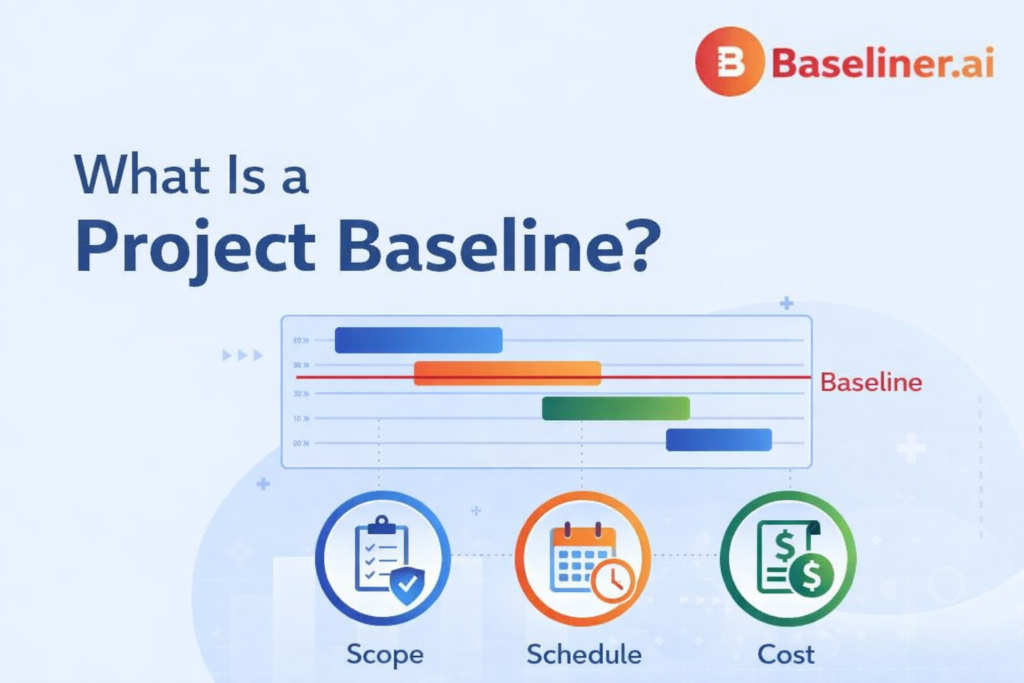
A Project Baseline is the approved version of a project plan that serves as a reference point throughout the project lifecycle. It includes the original scope, schedule, and cost estimates against which actual performance is measured.
In simple terms, a project baseline acts like a benchmark. It allows project managers to compare planned progress with actual results, helping them identify deviations and take corrective action when necessary.
Importance of Project Baseline in Project Management
Understanding the project baseline in project management is crucial because it provides structure and accountability. Without a baseline, it becomes difficult to determine whether a project is on track or off course.
Here’s why it’s important:
1. Performance Measurement
A project baseline helps measure how well the project is progressing. By comparing actual performance with the baseline, teams can easily identify delays or cost overruns.
2. Better Decision-Making
When deviations occur, project managers can make informed decisions based on accurate data rather than assumptions.
3. Stakeholder Communication
A clear baseline ensures everyone involved understands the project expectations, timelines, and deliverables.
4. Risk Management
It helps in identifying potential risks early by highlighting variances from the original plan.
Key Components of a Project Baseline
A complete Project Baseline typically consists of three main elements:
1. Scope Baseline
This defines what the project will deliver. It includes:
- Project objectives
- Deliverables
- Work Breakdown Structure (WBS)
2. Schedule Baseline
This outlines the project timeline, including:
- Task start and end dates
- Milestones
- Dependencies
3. Cost Baseline
This represents the approved budget for the project:
- Estimated costs
- Resource allocation
- Budget distribution over time
Together, these components form a solid foundation for tracking and managing project performance.
How to Create a Project Baseline
Creating a project baseline involves careful planning and approval. Here’s a step-by-step process:
Step 1: Define Project Scope
Clearly outline what the project aims to achieve and what is included (and excluded).
Step 2: Develop a Detailed Schedule
Break down tasks, assign timelines, and identify dependencies.
Step 3: Estimate Costs
Calculate the budget required for resources, tools, and manpower.
Step 4: Get Stakeholder Approval
Before setting the baseline, ensure all stakeholders agree on the plan.
Step 5: Set the Baseline
Once approved, lock the scope, schedule, and cost as your official baseline.
Modern tools like Baseliner Ai simplify this process by providing accurate estimations and helping teams create reliable baselines quickly.
When Should You Update a Project Baseline?
A project baseline should not be changed frequently. However, updates may be necessary when:
- There is a significant change in project scope
- Budget adjustments are approved
- Timeline shifts due to external factors
- Major risks impact the project plan
Always document changes and communicate them clearly to stakeholders to maintain transparency.
Common Mistakes to Avoid
Even though a Project Baseline is a powerful tool, teams often misuse it. Here are some common mistakes:
1. Setting Unrealistic Baselines
Overly optimistic timelines or budgets can lead to constant deviations.
2. Frequent Changes
Changing the baseline too often defeats its purpose as a performance benchmark.
3. Lack of Documentation
Failure to properly document baseline details can create confusion later.
4. Ignoring Variances
Not analyzing differences between planned and actual performance can result in bigger issues down the line.
Benefits of Using Baseliner Ai for Project Baselines
Using advanced tools like Baseliner Ai can significantly enhance your project planning process. Here’s how:
- Accurate Estimations: AI-driven insights improve cost and time predictions
- Faster Planning: Automates baseline creation, saving time
- Improved Accuracy: Reduces human errors in calculations
- Better Tracking: Helps monitor deviations in real-time
By leveraging such tools, teams can create stronger baselines and improve overall project outcomes.
Final Thoughts
So, what is a project baseline? It’s more than just a plan—it’s the backbone of effective project management. A well-defined Project Baseline allows teams to measure performance, manage risks, and ensure project success.
Understanding the role of a project baseline in project management can make the difference between a project that stays on track and one that spirals out of control.
With the help of intelligent tools like Baseliner Ai, creating and managing baselines has become easier, more accurate, and highly efficient.
If you want your projects to succeed consistently, start by building a strong baseline – and stick to it.
Take control of your business projects with Baseliner AI – the smarter way to handle project estimation and baselining. Sign up today and start your 30-Day Free Trial to plan faster, reduce risks, and deliver projects on time and within budget.