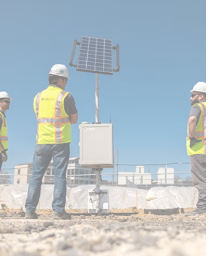

A successful project starts with good planning, especially if the ambient air quality around the project boundary needs to be monitored. A perimeter air monitoring plan helps determine where monitoring stations should be placed, what parameters should be measured, and how information will be collected throughout the project. Construction, demolition, redevelopment, and environmental remediation projects often use perimeter monitoring to understand changing air quality around off-site receptors. A dependable monitoring system is an important part of that plan because it provides reliable information throughout the project. The Classic 2.0 System supports real-time monitoring by combining several monitoring functions into one easy-to-use platform that delivers continuous information from project start to project completion. This approach gives project teams a simple way to review changing conditions while keeping monitoring activities organized from beginning to end.
A Good Plan Begins With the Right Monitoring Locations
Every project site is different. The size of the property, location of receptors, nearby buildings, and surrounding areas all influence where monitoring stations should be placed. A perimeter air monitoring plan begins by identifying suitable locations around the project boundary so that changing air quality can be observed from multiple directions. Careful planning helps create a monitoring layout that covers the e perimeter and provides dependable information throughout the project.
The Classic 2.0 System supports this process by working as a real-time monitoring solution that can be positioned around the perimeter of the site. Once the monitoring locations are selected, the equipment begins collecting data in real time. This simple setup allows project teams to start monitoring quickly while maintaining a clear understanding of conditions around nearby off-site receptors. The equipment is easy to relocate if project conditions change, making it well-suited for short-term monitoring programs.
Multiple Measurements From One Reliable System
A complete monitoring program often requires more than one type of measurement. Using several independent devices can make field operations more difficult and increase the amount of equipment that must be managed each day. A single monitoring platform helps simplify daily operations and keeps project information organized.
The Classic 2.0 System combines several monitoring functions into one platform. The portable field gas chromatograph (GC) measures compound-specific volatile organic compounds in real time. It operates in total VOC mode and automatically switches to compound-specific analysis after reaching a selected trigger value. The system also measures particulate matter, including PM10, PM2.5, and total suspended particulates. An on-site meteorological tower records wind speed, wind direction, air temperature, and relative humidity. This information helps determine which monitoring stations are upwind, downwind, or crosswind throughout the monitoring period, allowing users to better understand changing air conditions around the project boundary.
Real-Time Information Supports Better Project Decisions
Reliable information becomes more valuable if it is available throughout the project instead of only after field work has ended. Continuous monitoring helps project teams review changing conditions and maintain complete project records. Easy access to monitoring information also supports better communication throughout the monitoring period.
A well-prepared perimeter air monitoring plan and planning process includes access to timely monitoring information. The Classic 2.0 System provides continuous monitoring through a mobile application, allowing users to review monitoring results from almost any location. Real-time access also helps project teams compare readings from different monitoring stations and maintain organized project records during the entire monitoring period. Having information available throughout the project allows monitoring activities to remain consistent from start to finish.
Simple Deployment Saves Valuable Project Time
Short-term monitoring equipment should be easy to install, simple to operate, and practical for short-term projects. Long installation periods can delay project schedules and reduce efficiency. A system designed for short-term work should begin operating soon after installation.
The Classic 2.0 System is designed for rapid deployment around project boundaries. After monitoring locations are selected, the equipment can begin collecting information with minimal delay. AirLogics also provides user training and technical guidance so clients understand system operation from the first day of the rental period. This straightforward approach allows users to begin monitoring with confidence while keeping project activities moving according to schedule.
Flexible Rentals Match Short-Term Monitoring Needs
Many construction and environmental projects continue for only a limited period. Purchasing specialized monitoring equipment is not always the most practical option for short-term work. Rental equipment provides flexibility while reducing long-term ownership responsibilities.
The Classic 2.0 System is available through flexible short-term rentals that match individual project schedules. Clients receive dependable monitoring equipment only for the time it is required. Once monitoring activities are complete, the equipment is returned. This rental model allows organizations to use advanced monitoring technology without the long-term responsibility of equipment ownership, storage, or maintenance. It is a practical solution for projects that require dependable monitoring without permanent equipment investment.
Final Note:
At AirLogics, our goal is to provide dependable real-time perimeter monitoring solutions that are simple to use and easy to manage. Our Classic 2.0 System combines compound-specific VOC monitoring, particulate measurement, meteorological data collection, mobile application access, and expert support into one complete rental solution. We provide setup guidance, user training, and technical assistance throughout every project so clients can monitor changing conditions around off-site receptors with confidence. Whether your project requires a complete perimeter monitoring system for construction, demolition, redevelopment, or environmental remediation activities, our rental solutions are designed to provide reliable monitoring from beginning to end.