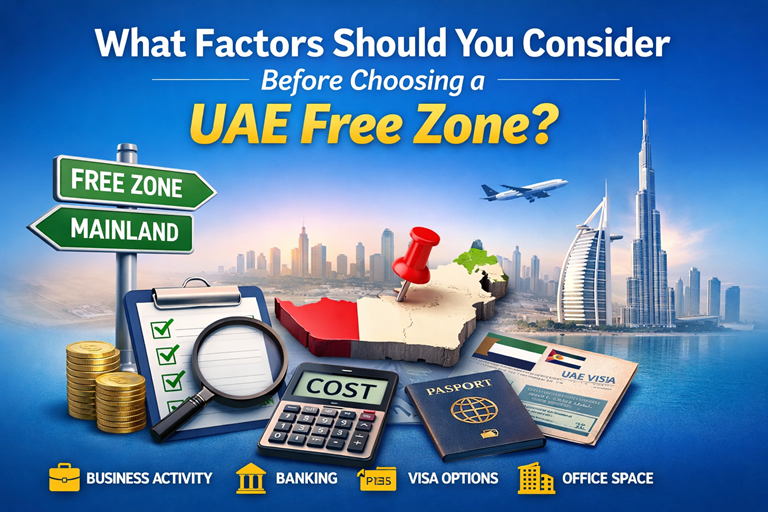

Setting up a business in a UAE free zone is one of the most popular options for entrepreneurs and international investors. With benefits like 100% foreign ownership, tax advantages, and simplified processes, free zones offer an attractive entry into the UAE market. However, with 40+ free zones available, choosing the right one can be challenging. A well-informed decision is crucial for smooth UAE Freezone Company Formation and long-term business success.
1. Nature of Your Business Activity
The first and most important factor is your business activity. Not all free zones support every type of business. Some are industry-specific, focusing on sectors like technology, media, logistics, or finance. You must ensure your chosen free zone allows your exact activity and provides the right ecosystem to support it.
2. Cost of Setup and Renewal
Cost is a major consideration, especially for startups. Free zones differ in license fees, visa costs, and renewal charges. While some offer low-cost packages, it’s important to understand what’s included. A cheaper option may exclude key services or add hidden costs later, increasing your overall investment.
3. Business Location and Accessibility
Location impacts your daily operations. If you are based in Dubai, choosing a Dubai free zone can simplify coordination, meetings, and logistics. Other emirates like Sharjah may offer lower costs, but accessibility and convenience should be evaluated based on your business needs.
4. Ease of Opening a Corporate Bank Account
Bank account opening is one of the most critical steps after company formation. Some free zones have stronger credibility with UAE banks, making the process faster and smoother. Others may require more documentation or time. Choosing the right jurisdiction can significantly impact your operational readiness.
5. Visa Eligibility and Requirements
Each free zone offers different visa quotas depending on your license and office type. If you plan to hire employees or sponsor family members, ensure the free zone meets your visa requirements. Limited visa options can restrict your ability to scale.
6. Office Space Requirements
Free zones provide flexible workspace options such as flexi-desks, co-working spaces, and private offices. While cost-effective, smaller setups may not suit businesses that require a physical office or larger team. Also, office space often determines visa eligibility.
7. Reputation and Credibility
The reputation of the free zone plays a role in how your business is perceived by clients, partners, and banks. Established free zones—especially in Dubai—tend to offer stronger credibility, while newer or lesser-known zones may be more affordable but less recognized.
8. Speed and Efficiency of Setup
Some free zones offer fast-track processes, allowing you to complete your company formation within days. Others may take longer due to additional approvals. If time is critical, prioritize jurisdictions known for efficiency.
9. Flexibility for Future Growth
Your business needs may evolve over time. Choose a free zone that allows easy upgrades, additional visas, or expansion of activities. Switching later can be costly and time-consuming, so scalability is key.
10. Transparency and Hidden Costs
Always request a detailed cost breakdown. Some packages exclude essentials like visa processing, Emirates ID, or medical tests. Transparency is crucial to avoid unexpected expenses during or after setup.
Final Thoughts
Choosing the right free zone is not just about cost—it’s about aligning with your business goals, operations, and future plans. A strategic approach to UAE Freezone Company Formation can help you avoid common pitfalls and ensure long-term success in the UAE market. Seeking expert guidance from business setup consultants in UAE can further simplify the process and help you make the right choice from the start.
FAQs
1. Which is the best free zone in the UAE for startups?
The best free zone depends on your business activity, budget, and operational needs. Dubai free zones are known for ease of business and banking, while options like SRTIP in Sharjah are more cost-effective for startups.
2. Is SRTIP a good option for UAE Freezone Company Formation?
Yes, SRTIP (Sharjah Research, Technology and Innovation Park) is a reliable and budget-friendly option, especially for tech and innovation-driven businesses. However, you should compare it with Dubai free zones based on your priorities.
3. Are there hidden costs in UAE free zone licenses?
In some cases, yes. Low-cost packages may exclude visa fees, medical tests, or other administrative charges. It’s important to get a full cost breakdown before proceeding.
4. Is it easier to open a bank account in Dubai free zones compared to Sharjah?
Generally, Dubai free zones are considered more bank-friendly and widely recognized. However, free zones like SRTIP are improving and can still be a viable option depending on your business profile.
5. Can I upgrade or expand my business later in a free zone?
Yes, most free zones allow upgrades such as adding activities, increasing visa quotas, or moving to larger office spaces. Choosing a flexible free zone like SRTIP or a well-established Dubai free zone can support long-term growth.