
Introduction
Both the Intensive Care Unit (ICU) and the Post Operative Recovery Room are essential hospital areas designed for close patient observation, but they serve very different purposes. While both units use monitoring systems and trained medical staff, the level of care, duration of stay, and complexity of treatment vary significantly. Understanding these differences helps clarify how hospitals manage patients during critical and post-surgical phases of treatment.
Purpose of Care
The primary difference lies in the goal of each unit.
A Post Operative Recovery Room focuses on short-term stabilization after surgery or anesthesia. The goal is to ensure the patient regains consciousness safely and vital signs return to normal before transfer or discharge.
An ICU provides long-term, life-sustaining care for critically ill patients who require continuous medical intervention and advanced support systems.
Duration of Monitoring
Recovery rooms are designed for short stays, typically lasting a few hours after surgery.
ICU stays, however, can last from several days to weeks depending on the severity of the patient’s condition.
This difference reflects the short-term vs long-term nature of care.
Level of Patient Condition
Patients in recovery rooms are generally in a stable or improving condition after surgery.
In contrast, ICU patients are often unstable, critically ill, or dependent on life-support systems.
This makes ICU care more complex and intensive.
Monitoring Intensity
ICU monitoring is continuous and highly intensive, often involving real-time data tracking and frequent clinical interventions.
In recovery rooms, monitoring is frequent but focused mainly on stabilization rather than ongoing critical care management.
Equipment Used
ICU Equipment Includes:
- Mechanical ventilators
- Advanced multi-parameter monitors
- Infusion pump systems
- Centralized monitoring stations
- Hemodynamic monitoring devices
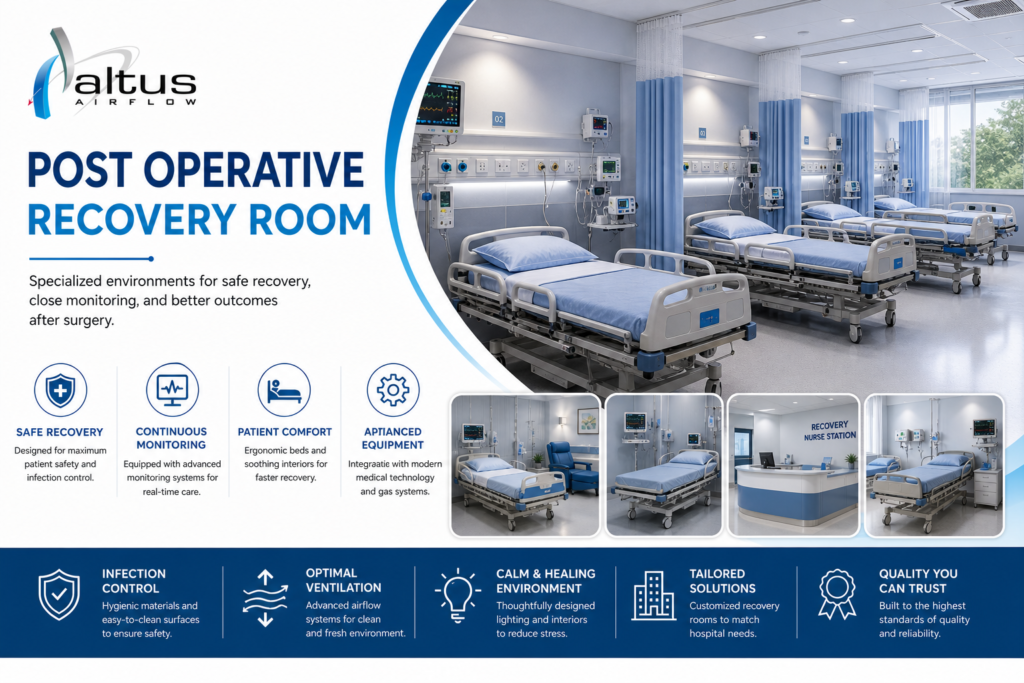
Recovery Room Equipment Includes:
- Basic to advanced vital sign monitors
- Oxygen delivery systems
- ECG and pulse oximeters
- Short-term respiratory support equipment
ICU equipment is more advanced and supports life-sustaining treatment.
Staff-to-Patient Ratio
ICUs require a low staff-to-patient ratio (often 1:1 or 1:2) due to the complexity of care.
Recovery rooms generally have higher patient coverage per staff member since patients are in the stabilization phase.
Type of Medical Intervention
ICU patients receive ongoing, intensive interventions such as ventilation support, medication titration, and organ function management.
Recovery room care mainly involves monitoring, pain control, and post-anesthesia stabilization.
Response to Emergencies
ICU teams deal with frequent and complex emergencies requiring advanced critical care decisions.
Recovery room emergencies are usually related to anesthesia recovery, pain management, or immediate post-surgical complications.
Data Monitoring and Technology
ICUs use advanced digital systems with continuous data tracking, predictive alerts, and integrated hospital systems.
Recovery rooms rely on real-time monitoring focused on immediate post-operative stability rather than long-term trend analysis.
Patient Goals
In ICU care, the goal is to stabilize and treat life-threatening conditions.
In recovery rooms, the goal is to safely transition the patient from surgery or anesthesia to the next stage of care.
Conclusion
The key differences between ICU monitoring and Post Operative Recovery Room care lie in intensity, duration, patient condition, and purpose. ICUs provide long-term, high-intensity care for critically ill patients requiring continuous life support, while recovery rooms focus on short-term stabilization after surgery or anesthesia. Both play essential roles in hospital care systems but operate at different levels of clinical complexity and monitoring depth.
FAQs
1. What is the main difference between ICU and recovery room care?
Post Operative Recovery Room provide long-term critical care, while recovery rooms focus on short-term post-surgical stabilization.
2. How long do patients stay in a recovery room?
Most patients stay for a few hours until they are stable enough for transfer or discharge.
3. Are ICU patients more critical than recovery room patients?
Yes, ICU patients are generally in more serious and unstable conditions.
4. Which unit has more advanced monitoring systems?
ICUs use more advanced and continuous monitoring systems compared to recovery rooms.
5. Why are recovery rooms important after surgery?
They ensure safe recovery from anesthesia and help detect early post-operative complications.
Read Our Previous Blog———–>What is the average observation time in a post-operative recovery room?