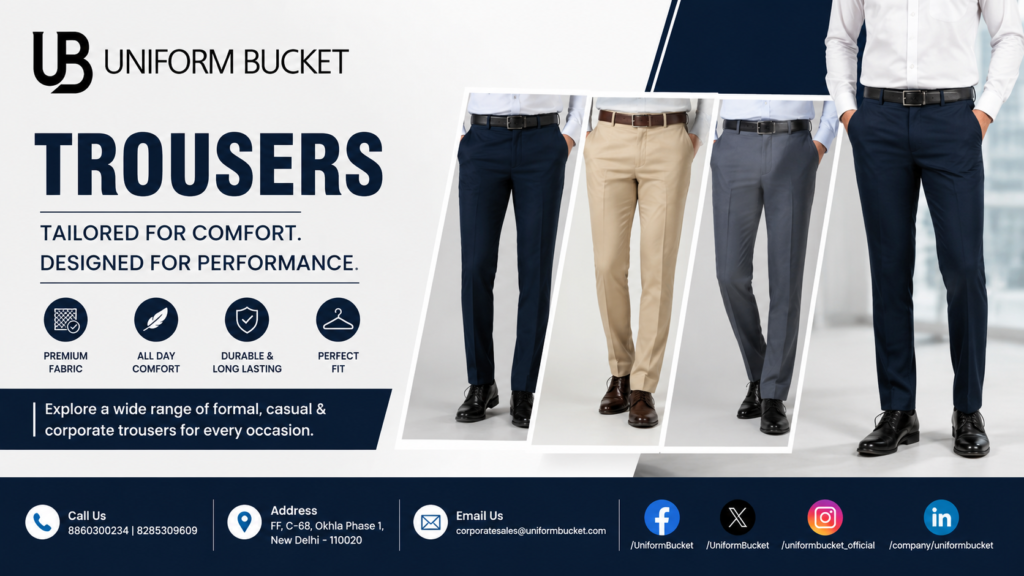

When discussing industrial uniforms, the upper body garments often receive a lot of attention due to high-visibility requirements or flame-resistant coatings. However, industrial uniform trousers are arguably the most critical component of a worker’s daily attire. In heavy-duty environments trousers, the lower half of the body is constantly subjected to abrasions, kneeling, bending, and exposure to hazardous elements. Standard garments simply cannot withstand this level of physical stress. This article delves into the specific features, types, and benefits of industrial trousers, highlighting why they are a non-negotiable aspect of workplace safety.
Why Standard Trousers Fail in Industrial Settings
To understand the value of specialized work trousers, one must first recognize the limitations of everyday clothing. Regular trousers are constructed using lightweight fabrics and basic stitching techniques designed for casual office environments or light chores. When exposed to the harsh realities of a construction site, manufacturing floor, or mechanical workshop, these standard garments fail rapidly. They tear easily when brushing against sharp metal edges, the seams split when workers crouch or climb, and they offer zero protection against chemical splashes, sparks, or extreme cold. Investing in purpose-built industrial trousers eliminates these vulnerabilities, ensuring that the worker’s legs are comprehensively protected.
Key Features of High-Quality Industrial Trousers
A pair of industrial trousers is a highly engineered piece of safety equipment. When evaluating options for a workforce, employers and safety managers should look for several defining characteristics:
Reinforced Fabric Blends: The best industrial trousers utilize a blend of cotton and polyester. Cotton provides breathability and comfort against the skin, while polyester adds exceptional tensile strength and resistance to tearing. Many high-end options feature a “ripstop” weave, which integrates a reinforcing grid pattern into the fabric to prevent small tears from spreading.
Heavy-Duty Stitching and Seams: Standard single-line stitching is inadequate for industrial use. Quality trousers feature triple-stitched seams on the inner legs, seat, and crotch. Additionally, “bar tacking” (a dense, reinforced stitching pattern) is applied to high-stress points like belt loops, pocket corners, and the base of the fly to prevent snapping under pressure.
Integrated Tool Storage: Industrial workers require immediate access to hand tools, measuring tapes, and fasteners. Rather than relying on bulky separate tool belts, modern industrial trousers feature deep, reinforced side pockets, hammer loops, rule pockets, and dedicated utility pockets designed to distribute the weight of tools evenly across the hips and thighs.
Reinforced Hems: The bottom edge of trousers takes a beating from dragging against rough surfaces and workplace footwear. A folded, double-stitched hem ensures the bottom of the trouser leg does not fray or unravel prematurely.
The Critical Importance of Knee Protection
Knee injuries are among the most common long-term ailments affecting industrial workers. Constant kneeling on hard, uneven, or gravel surfaces can cause severe joint degradation. Consequently, modern industrial trousers are designed with knee protection in mind.
Knee Pad Pockets: High-quality trousers feature discreet, slotted pockets built directly into the fabric at the knee area. These allow workers to insert hard-shell or foam knee pads.
Articulated Design: To accommodate knee pads without restricting movement, the trousers are designed with an articulated or “pre-curved” knee shape. This ensures that when the worker bends or crouches, the fabric moves naturally with the joint rather than pulling tight and causing discomfort.
Specialized Trousers for Specific Hazards
Just like full-body industrial uniforms, trousers must be tailored to the specific hazards of the work environment. Wearing the wrong type of trouser in a hazardous setting can be just as dangerous as wearing no protective gear at all.
Flame-Resistant (FR) Trousers: Used by welders, electricians, and oil refinery workers. These trousers are treated with specialized chemical retardants or woven from inherently non-flammable fibers. In the event of a flash fire or electrical arc, the fabric will not melt onto the skin and will self-extinguish, significantly reducing the severity of burns.
High-Visibility Trousers: Essential for road construction crews, railway workers, and airport ground staff. These trousers are manufactured from brightly colored fluorescent fabric and feature retroreflective tape strategically placed around the lower legs. This ensures that moving vehicles and heavy machinery operators can clearly see the worker from a distance, even in low-light or foggy conditions.
Waterproof and Cold-Weather Trousers: For workers in outdoor construction, agriculture, or cold storage facilities. These trousers feature a waterproof yet breathable membrane that prevents rain and snow from penetrating the fabric. They often include an internal thermal lining to retain body heat, ensuring the worker remains dry and warm during long shifts.
Chemical-Resistant Trousers: Necessary in chemical processing plants, agriculture, and hazardous material cleanup. These are crafted from non-porous synthetic materials that act as an impermeable barrier, preventing corrosive liquids, acids, and solvents from reaching the wearer’s skin.
Ergonomics and the Importance of Proper Fit
Safety features are useless if the trousers do not fit correctly. Ill-fitting workwear creates severe safety hazards. If trousers are too baggy, the excess fabric can easily catch on moving machinery parts, pulling the worker into the mechanism. If the trousers are too tight, they restrict blood flow and limit the worker’s range of motion, leading to fatigue, loss of balance, and eventual accidents.
Industrial trousers must offer a functional fit. Features like a gusseted crotch (an extra diamond-shaped piece of fabric sewn into the crotch seam) drastically improve mobility, allowing workers to climb ladders or step over obstacles without straining the fabric or their joints. Furthermore, a robust waistband system—whether it utilizes a standard belt, suspenders, or an adjustable side-tab system—ensures the trousers remain securely in place at the natural waistline, regardless of the physical demands of the task.
Conclusion
Industrial uniform trousers are the unsung heroes of workplace safety apparel. They endure the brunt of physical labor, protect against environmental hazards, and house the essential tools required to complete complex tasks. By prioritizing reinforced fabrics trousers, integrating knee protection, and selecting the correct hazard-specific materials, companies can drastically reduce workplace injuries and increase daily productivity. Providing employees with high-quality, properly fitted industrial trousers is not just a matter of corporate compliance; it is a fundamental investment in the health, safety, and long-term mobility of the workforce.
Click Here Us On More Social Media Links:-
Follow Us On Facebook :- https://www.facebook.com/UniformBucket
Follow Us On Twitter :- https://x.com/UniformBucket
Follow Us On Instagram :- https://www.instagram.com/uniformbucket_official/
Follow Us On Linkedin :- https://in.linkedin.com/company/uniformbucket
Call Us :- 8860300234 | 8285309609
Address :- FF, C-68, Okhla Phase 1, New Delhi – 110020
Email Us :- corporatesales@uniformbucket.com