
Introduction
The rapid growth of online shopping has transformed the way businesses manage inventory, shipping, and customer fulfillment. Whether you’re a startup selling products online or an established brand expanding into new markets, efficient logistics plays a critical role in customer satisfaction and business growth.
This is where ecommerce logistics solutions come into the picture. These solutions help businesses streamline the movement of products from manufacturers to warehouses and ultimately to customers’ doorsteps.
In this guide, we’ll explain what ecommerce logistics solutions are, how they work, their benefits, and how to choose the right logistics partner for your business.
What Are Ecommerce Logistics Solutions?
Ecommerce logistics solutions refer to the processes, technologies, and services involved in storing, managing, packing, shipping, and delivering products purchased through online stores.
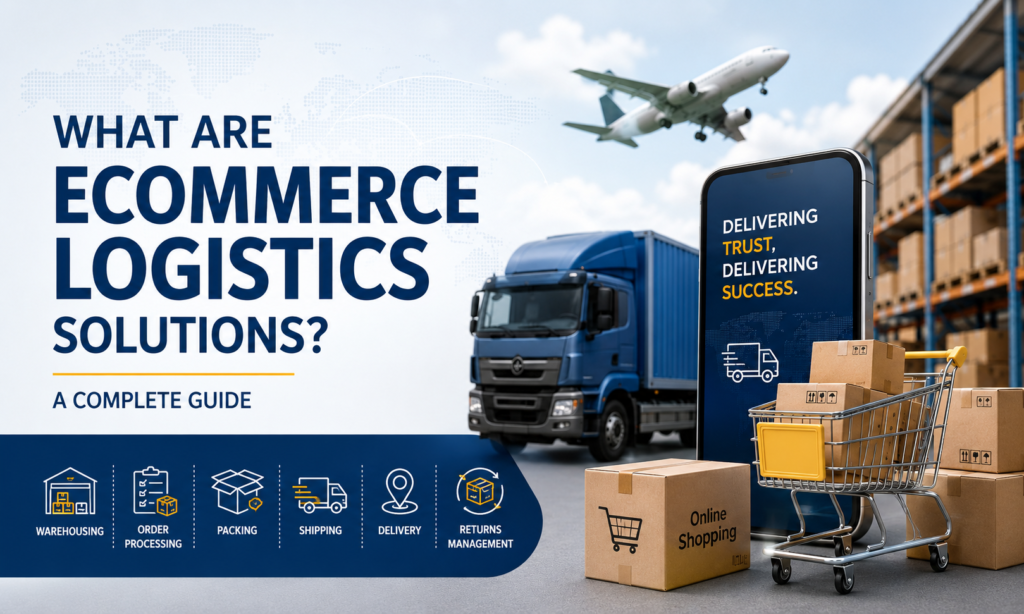
These solutions cover the entire supply chain, including:
- Inventory Management
- Warehousing and Storage
- Order Processing
- Picking and Packing
- Shipping and Transportation
- Last-Mile Delivery
- Returns Management
The primary goal of ecommerce logistics is to ensure products reach customers quickly, accurately, and cost-effectively.
How Ecommerce Logistics Solutions Work
1. Inventory Storage
Products are stored in strategically located warehouses or fulfillment centers. This allows businesses to maintain stock levels and fulfill orders efficiently.
2. Order Processing
When a customer places an order through an ecommerce platform, the order details are automatically sent to the logistics system for processing.
3. Picking and Packing
Warehouse staff or automated systems locate the products, pack them securely, and prepare them for shipment.
4. Shipping and Transportation
Orders are handed over to courier partners or transportation providers who move packages to their destination.
5. Last-Mile Delivery
The final step involves delivering the package directly to the customer’s doorstep.
6. Returns Handling
Modern ecommerce logistics solutions also manage product returns, exchanges, and reverse logistics efficiently.
Key Components of Ecommerce Logistics Solutions
Warehousing
Warehouses provide secure storage for products before shipment. Many logistics providers offer multiple warehouse locations to reduce delivery times.
Inventory Management
Real-time inventory tracking helps businesses avoid stockouts and overselling while maintaining optimal inventory levels.
Order Fulfillment
Order fulfillment includes receiving, processing, packing, and shipping customer orders accurately.
Transportation Management
This involves selecting the best shipping methods, carriers, and routes to ensure timely deliveries.
Reverse Logistics
Managing product returns efficiently improves customer satisfaction and reduces operational costs.
Benefits of Ecommerce Logistics Solutions
Faster Deliveries
Customers expect quick deliveries. Efficient logistics networks help businesses meet these expectations.
Reduced Operational Costs
Outsourcing logistics eliminates the need for investing in warehouses, staff, and transportation infrastructure.
Improved Customer Experience
Accurate order fulfillment and timely deliveries increase customer trust and loyalty.
Scalability
As order volumes grow, logistics providers can scale operations without disrupting business performance.
Real-Time Tracking
Customers can track their shipments, leading to greater transparency and satisfaction.
Wider Market Reach
Businesses can expand nationally and internationally with established logistics networks.
Common Challenges in Ecommerce Logistics
Despite its advantages, ecommerce logistics can face several challenges:
- Inventory inaccuracies
- Shipping delays
- High delivery costs
- Seasonal demand fluctuations
- Managing returns efficiently
- International shipping complexities
Partnering with an experienced logistics provider helps businesses overcome these challenges effectively.
Types of Ecommerce Logistics Solutions
In-House Logistics
Businesses manage warehousing, inventory, packing, and shipping internally.
Best For: Large enterprises with significant resources.
Third-Party Logistics (3PL)
A specialized logistics provider handles storage, fulfillment, and shipping operations.
Best For: Growing ecommerce businesses seeking scalability.
Fulfillment Centers
Dedicated facilities process and ship orders on behalf of ecommerce sellers.
Best For: Businesses with high order volumes.
Dropshipping Logistics
Products are shipped directly from suppliers to customers without holding inventory.
Best For: Startups and low-investment ecommerce businesses.
How to Choose the Right Ecommerce Logistics Partner
Consider the following factors when selecting a logistics provider:
Network Coverage
Ensure the provider offers delivery services in your target locations.
Technology Integration
Look for integrations with platforms such as Shopify, WooCommerce, Magento, and Amazon.
Delivery Speed
Evaluate average delivery timelines and fulfillment efficiency.
Tracking Capabilities
Real-time shipment tracking improves customer communication.
Return Management
Choose a provider with a streamlined reverse logistics process.
Pricing Structure
Compare warehousing, fulfillment, shipping, and return costs before making a decision.
Customer Support
Reliable support ensures quick resolution of logistics issues.
Future Trends in Ecommerce Logistics
The ecommerce logistics industry continues to evolve with new technologies, including:
- Artificial Intelligence (AI)
- Warehouse Automation
- Robotics
- Predictive Analytics
- Drone Deliveries
- Sustainable Packaging
- Same-Day Delivery Services
Businesses adopting these innovations can improve efficiency and gain a competitive advantage.
Conclusion
Ecommerce logistics solutions are the backbone of successful online businesses. From inventory management and warehousing to order fulfillment and last-mile delivery, these solutions ensure products reach customers quickly and efficiently.
As ecommerce competition continues to grow, investing in reliable logistics services can help businesses reduce costs, improve customer satisfaction, and scale operations effectively. Choosing the right ecommerce logistics partner is not just an operational decision—it’s a strategic investment in long-term business growth.