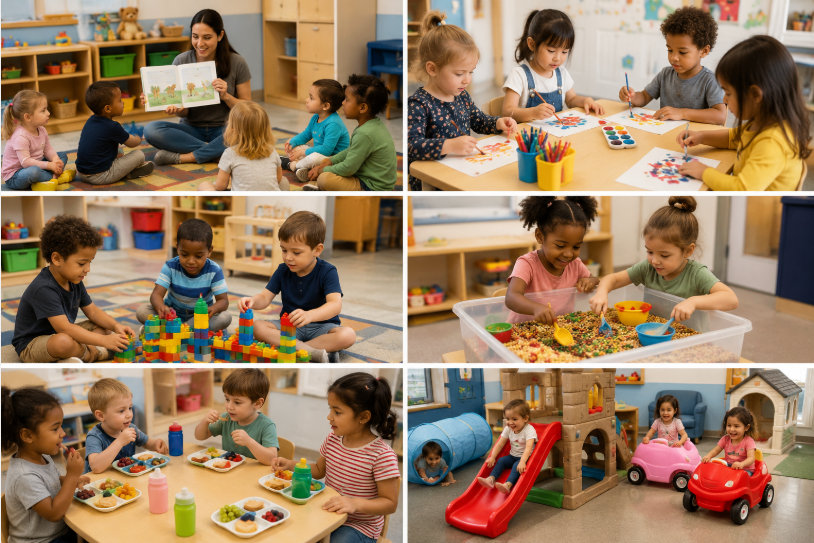

Parents dropping off a child for the very first time often wonder what actually fills the hours between morning drop-off and evening pickup. Breaking a typical day down removes much of that uncertainty before the first day even begins.
Daycares in San Antonio generally structure a full day around a consistent rhythm: arrival and free play, structured learning activities, meals, rest time, and outdoor play, rather than an unstructured block of unsupervised time. While every classroom operates a little differently, most programs rely on familiar routines that help children understand what comes next and feel comfortable in their surroundings.
How Mornings Typically Begin
A typical morning starts with arrival and a period of free play as children settle in, followed by a structured learning activity tied to the day’s specific curriculum theme. This early structure helps children transition smoothly from home into the classroom setting.
The first part of the day also gives teachers an opportunity to greet children individually and ease them into group activities. Some children arrive excited and ready to participate immediately, while others need additional time to adjust. Consistent morning routines help create a calm environment where children can gradually become engaged with the day’s activities.
Why Structured Activities Matter Early in the Day
Morning learning sessions are often scheduled when children are most alert and ready to focus. Activities may involve storytelling, creative projects, simple problem-solving exercises, music, or group participation designed around a weekly theme.
The purpose of these activities extends beyond simply keeping children occupied. A predictable sequence of events helps children become familiar with expectations, develop social skills, and gain confidence in a classroom environment. Repeating similar patterns from one day to the next creates a sense of stability that many young children rely on.
Why Meals and Rest Time Follow a Consistent Schedule
Mealtimes and rest periods happen at consistent times each day, which helps young children build a predictable internal rhythm that supports both behavior and mood throughout the rest of the afternoon.
Regular schedules also reduce uncertainty during the day. Children quickly learn when snacks, lunch, and quiet time will occur, making transitions smoother and helping them feel more secure. Rest periods provide an opportunity to recharge after a busy morning of activities and interaction.
Even children who do not sleep during designated quiet times often benefit from having a period set aside for calmer activities. Maintaining this routine supports the overall flow of the day and helps classrooms remain organized.
A General Outline of a Typical Day
- Morning arrival and free play as children settle in
- A structured learning activity tied to the day’s theme
- A consistent mealtime and rest period schedule
- Outdoor play and additional structured activities in the afternoon
Although the exact timing of each activity may vary, many programs follow this general rhythm because it balances learning, social interaction, movement, and rest.
Why Afternoon Activities Round Out the Day
After rest time, afternoons typically include outdoor play and additional structured activities before pickup begins, giving children a chance to expend energy and engage socially before heading home for the evening.
Outdoor time often provides a change of pace from classroom activities. Children have opportunities to move, interact with peers, and participate in group games or other age-appropriate activities. Returning to the classroom afterward typically involves quieter activities that help prepare children for the transition home.
As pickup approaches, classrooms often shift into a calmer routine. This period allows children to finish activities, reconnect with parents, and end the day in a familiar and predictable way.
Why Transitions Between Activities Deserve Careful Handling
The moments between activities, cleaning up one task before starting another, moving from indoor to outdoor space, are often where young children genuinely struggle most, and a well-run classroom builds in clear routines specifically to ease these transitions rather than leaving them chaotic and unstructured.
Transitions may appear minor from an adult perspective, but for young children they can be some of the most challenging parts of the day. Predictable signals, repeated routines, and clear expectations help children move from one activity to the next with less frustration and confusion.
Strong routines during these moments also contribute to the overall atmosphere of the classroom. A consistent structure helps children understand what is expected and reduces unnecessary stress throughout the day.
Why Age Group Actually Shapes the Specific Daily Structure
An infant’s day looks considerably different from a preschooler’s, built around individual feeding and nap schedules rather than a single group timeline everyone follows together. Understanding that a facility’s daily schedule genuinely adapts by age group, rather than applying one fixed structure to every child, matters when evaluating whether a specific program actually fits a child’s needs.
Older children are generally able to participate in longer group activities and follow a more structured schedule, while younger children require greater flexibility. Programs that recognize these differences are better equipped to support children at different stages of development.
The Bottom Line
Daycares in San Antonio generally follow a consistent daily rhythm, structured learning, predictable mealtimes, rest, and active play, rather than an unstructured stretch of supervised time. Understanding this typical flow helps parents know exactly what to expect well before their child’s very first day.