
Introduction
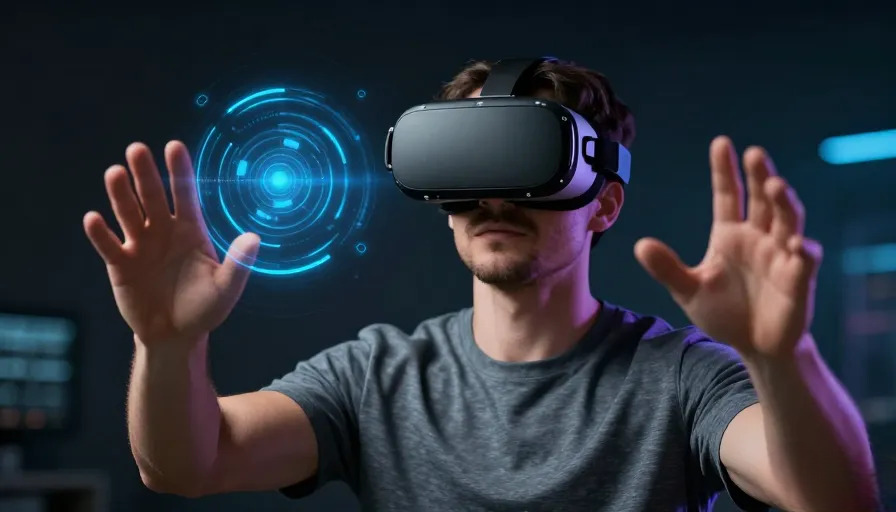
Manufacturing planning has become increasingly complex as industries aim to optimize production efficiency, reduce operational costs, and enhance product quality. Traditional planning methods often rely on 2D blueprints, simulations, and manual process mapping, which can be time-consuming and prone to errors. Virtual Reality Solutions provide an innovative approach by enabling immersive and interactive visualization of manufacturing processes. By incorporating VR into planning stages, organizations can simulate production lines, assess workflows, and identify potential inefficiencies before physical implementation.
Virtual Reality Solutions allow engineers, designers, and managers to explore factory layouts, machinery placement, and workflow sequences in a realistic 3D environment. This early-stage visualization reduces errors, minimizes costly rework, and enhances collaboration between departments. Using VR platforms, teams can experience operational scenarios from multiple perspectives, making it easier to optimize processes and improve overall productivity.
Enhancing Workflow Design Through VR
Effective manufacturing planning requires thorough understanding of operational sequences, equipment interaction, and resource allocation. Virtual Reality Solutions help map workflows in an immersive environment, allowing stakeholders to visualize and adjust processes in real time.
Key benefits include:
• Identifying bottlenecks and inefficiencies in production lines
• Evaluating machinery placement for maximum space utilization
• Simulating material handling and storage requirements
• Testing assembly line setups before physical deployment
Through these simulations, manufacturers can reduce trial-and-error costs and ensure smoother operations.
Virtual Prototyping and Product Development
Virtual Reality Solutions also play a crucial role in product design and prototyping. Engineers can create 3D models of new products and evaluate manufacturability before committing to production. VR enables:
• Visualization of complex components in real scale
• Testing assembly sequences and compatibility
• Collaborative design reviews with remote teams
• Early detection of design flaws that affect production
This reduces physical prototyping costs and accelerates product development timelines.
Risk Assessment and Safety Planning
Workplace safety is an integral part of manufacturing planning. Virtual Reality Solutions allow teams to simulate operational risks, machinery interactions, and emergency scenarios. Safety planning benefits include:
• Identifying potential hazards in factory layouts
• Training staff in safe operation without real-world exposure
• Evaluating ergonomics and human-machine interaction
• Assessing fire exits, evacuation routes, and emergency protocols
By incorporating safety simulations, organizations can minimize accidents and improve compliance with regulatory standards.
Collaboration and Remote Planning
Manufacturing projects often involve multidisciplinary teams across multiple locations. Virtual Reality Solutions support remote collaboration by providing shared immersive environments where participants can:
• Review floor plans and production line layouts together
• Annotate and modify designs in real time
• Conduct virtual walkthroughs with suppliers and stakeholders
• Align team decisions without travel constraints
This collaborative approach reduces delays and ensures that all team members are aligned with planning objectives.
Data Integration and Analytics
Modern VR platforms integrate with manufacturing data systems, providing valuable insights for planning. Virtual Reality Solutions can connect to ERP systems, CAD models, and production analytics tools to enhance decision-making.
Benefits of data-driven VR planning include:
• Real-time simulation of resource utilization
• Scenario analysis for production schedules
• Cost estimation based on layout and workflow configurations
• Performance benchmarking for continuous improvement
Integrating analytics ensures that planning decisions are informed, accurate, and measurable.
Space Utilization and Layout Optimization
Efficient use of factory space is critical to operational efficiency. Virtual Reality Solutions allow planners to test multiple layout configurations virtually, optimizing floor space and reducing unnecessary movement.
Key considerations include:
• Machinery spacing and accessibility
• Material flow from storage to assembly
• Employee movement and workstation ergonomics
• Flexible configurations for future expansion
Optimized layouts improve production throughput and reduce operational bottlenecks.
Training and Skill Development
VR environments are effective for staff training, especially when introducing new machinery or processes. Virtual Reality Solutions provide:
• Hands-on practice in a safe, controlled environment
• Scenario-based training for problem-solving skills
• Interactive tutorials for process standardization
• Reduced downtime during on-the-job training
Employees trained in VR environments gain confidence and skills before interacting with real machinery.
Cost Reduction and Efficiency
Implementing Virtual Reality Solutions in manufacturing planning reduces long-term costs by:
• Minimizing layout errors and rework
• Reducing physical prototyping expenses
• Decreasing production downtime
• Streamlining workflow implementation
By anticipating challenges before physical execution, VR reduces waste and improves return on investment.
Future Directions in Manufacturing VR
The integration of Virtual Reality Solutions with emerging technologies such as AI, IoT, and augmented reality is transforming manufacturing planning. Future VR applications may include:
• Predictive workflow simulations using AI analytics
• Real-time IoT data visualization for operational planning
• Interactive AR overlays on production floors for live guidance
• Fully digital twin factories for continuous process optimization
These innovations promise more responsive, efficient, and resilient manufacturing systems.
Final Thought
Virtual Reality Solutions provide manufacturing organizations with immersive, interactive, and data-driven tools for planning, prototyping, and workflow optimization. By simulating production lines, evaluating safety scenarios, and enabling remote collaboration, VR platforms help organizations make informed decisions, reduce costs, and enhance operational efficiency. Integrating VR into manufacturing planning ensures a more sustainable, flexible, and effective approach to industrial operations, preparing organizations to meet future challenges while improving productivity and safety.