
Point level detection is a critical control and safety function in industrial processes. Whether preventing tank overfill, protecting pumps from dry-running, or triggering alarms in auxiliary systems, accurate threshold detection ensures operational stability and equipment protection. In compact vessels, pipelines, and modular skid systems, installation space is often limited, requiring small yet reliable switching devices. The VEGAPOINT 11 is designed to meet these demands by delivering dependable point level detection in a compact and robust industrial design.
What the VEGAPOINT 11 Is
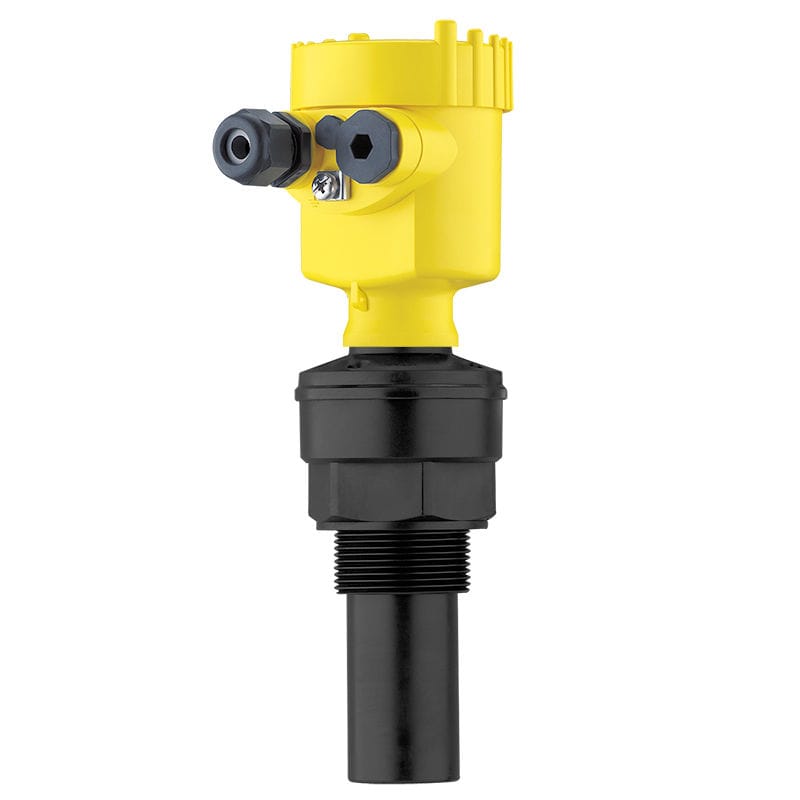
The VEGAPOINT 11 is a compact capacitive level switch engineered for point level detection in liquids and selected light bulk materials. It detects the presence of material at a predefined level by measuring changes in electrical capacitance at the sensor tip. When process material contacts the probe, the dielectric properties around it change, causing a measurable shift in capacitance. The device electronics interpret this shift and activate a switching output.
Manufactured under the VEGA instrumentation portfolio, the VEGAPOINT 11 is built for industrial environments requiring space-efficient installation, mechanical durability, and consistent switching performance. Its compact housing allows installation in tight spaces without compromising reliability.
Importance of Compact Point Level Detection
Industrial systems often include small tanks, dosing units, auxiliary vessels, and pipeline sections where full-sized level instruments are impractical. Compact level switches enable reliable level detection without redesigning mechanical layouts. They are frequently used in pump protection circuits, overflow prevention systems, and automated process control sequences.
High-level detection prevents product loss and environmental incidents. Low-level detection safeguards rotating equipment such as pumps and mixers from damage caused by insufficient material. In many systems, compact point level switches act as independent safety devices alongside continuous level transmitters, enhancing process redundancy and operational safety.
Measurement Principle and Operating Characteristics
The VEGAPOINT 11 operates using a capacitive measurement principle. The sensor tip forms part of a capacitor whose capacitance changes when it transitions from air to liquid contact. This change is detected by internal electronics, which switch the output once a defined threshold is reached.
This principle allows reliable detection of both conductive and non-conductive liquids. It performs effectively in applications with moderate temperature and pressure variations. The compact sensor design minimizes areas prone to material accumulation, supporting consistent long-term switching performance.
Because the device contains no moving mechanical parts, it offers stable operation with reduced susceptibility to wear-related failure.
Typical Industrial Applications
The VEGAPOINT 11 is widely used in small storage tanks, process vessels, and pipelines. It is suitable for water, oils, chemicals, and other industrial liquids requiring high-level or low-level detection.
In water and wastewater treatment facilities, it supports pump control and overflow protection in compact stations. In chemical processing environments, it is used in dosing systems and auxiliary tanks. Manufacturing sectors, including food processing and pharmaceuticals, apply compact level switches in hygienic and space-constrained applications.
Its minimal footprint makes it well suited for modular process skids and packaged systems where efficient use of space is essential.
Key Benefits in Industrial Environments
One of the primary advantages of the VEGAPOINT 11 is its compact and robust construction. It provides dependable switching performance in confined installation areas, enabling efficient mechanical design.
The device offers straightforward installation and commissioning, reducing setup time. Its stable switching characteristics support reliable alarm activation and pump control. By preventing overflow and dry-run conditions, it contributes to improved equipment protection and enhanced process safety.
Low maintenance requirements further increase its suitability for industrial environments where access may be limited or servicing intervals need to be extended.
Installation and Integration Considerations
Proper installation ensures consistent switching performance. The VEGAPOINT 11 should be positioned where process material can reliably contact the sensor tip at the desired threshold level. Consideration should be given to tank geometry, inlet flow patterns, and potential turbulence.
The device provides standard switching outputs compatible with common industrial automation systems. It can be integrated into alarm circuits, pump control systems, or programmable logic controllers. During device selection and specification, instrumentation teams often consult technical guidance and application support from industry-focused suppliers such as The Transmitter Shop to confirm alignment between process conditions and device capabilities.
Selection Considerations
When specifying the VEGAPOINT 11, engineers should evaluate process temperature and pressure limits, compatibility of wetted materials with the process medium, and the required switching configuration. Environmental conditions such as humidity, vibration, and chemical exposure should also be assessed to ensure long-term reliability.
For applications where safety or regulatory compliance is critical, redundancy planning and documentation of performance verification should be incorporated into the instrumentation strategy.
Maintenance and Long-Term Reliability
The VEGAPOINT 11 is designed for low-maintenance operation. Its capacitive sensing principle eliminates moving components, reducing mechanical wear and potential failure points. Routine inspection of the sensor tip and process connection is typically sufficient to maintain reliable performance.
In stable operating environments, maintenance intervals can be extended, lowering overall lifecycle costs. Maintaining accurate records of installation and inspection activities supports traceability and consistent operational performance.
Industries That Use Compact Capacitive Level Switches
Compact capacitive level switches such as the VEGAPOINT 11 are widely used in water treatment, chemical processing, food and beverage manufacturing, pharmaceuticals, and general industrial production. They are particularly valuable in applications where space efficiency, reliability, and straightforward integration are key design priorities.
Their versatility and durability make them suitable for modern industrial systems where dependable threshold detection is required within limited installation space.
Conclusion
The VEGAPOINT 11 is a compact and reliable level switch designed for industrial point level detection in space-constrained environments. Its capacitive measurement principle provides stable switching performance across a wide range of liquid applications. By supporting equipment protection, preventing overflow and dry-run conditions, and simplifying installation, the VEGAPOINT 11 enhances operational safety and efficiency. In industrial systems where dependable threshold detection is essential and space is limited, it remains an effective and practical instrumentation solution.