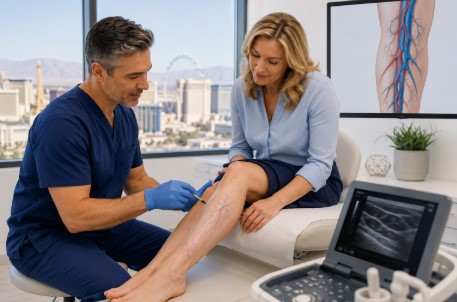

The circulatory system is one of the body’s most extensive and operationally critical networks — and when something goes wrong within it, the consequences can range from chronic discomfort to life-threatening emergency. A vascular doctor is the specialist trained to diagnose and treat the full spectrum of diseases affecting the arteries, veins, and lymphatic system — combining medical management, minimally invasive endovascular procedures, and open surgical intervention to address conditions that general medicine cannot manage alone.
What a Vascular Doctor Specialises In
A qualified vascular doctor manages conditions across both the arterial and venous systems. Arterial disease — including peripheral arterial disease, carotid artery stenosis, aortic aneurysm, and acute limb ischaemia — represents the life-threatening end of the specialty’s clinical scope. Venous disease — including varicose veins, chronic venous insufficiency, deep vein thrombosis, and venous ulceration — tends to be less immediately dangerous but significantly impacts quality of life and can progress to serious complications when left unmanaged.
The breadth of a vascular specialist’s practice is one of its defining characteristics. Unlike many medical specialties that focus on a single organ or disease category, a vascular doctor must maintain clinical competency across conditions ranging from the cosmetically bothersome to the surgically urgent — a scope that demands both extensive procedural training and sound clinical judgement.
Key Warning Signs That Warrant a Referral
Many patients reach a vascular doctor only after symptoms have been present — and often progressing — for months or years. Recognising the warning signs earlier leads to better outcomes across almost every vascular condition:
- Leg pain with walking that resolves with rest: Classic claudication — a symptom of peripheral arterial disease requiring assessment
- Cold or discoloured feet or toes: Suggests compromised arterial circulation requiring urgent evaluation
- Persistent leg swelling, heaviness, or skin discolouration: Indicators of venous insufficiency or lymphatic disease
- A visible pulsating abdominal mass: A potential sign of aortic aneurysm — warrants immediate assessment
- Sudden severe headache or facial weakness: Carotid artery disease can contribute to stroke — seek emergency evaluation
The Diagnostic Process
A thorough vascular doctor consultation combines a detailed clinical history, physical examination, and non-invasive vascular testing to build an accurate picture of the patient’s condition before any treatment decision is made. Duplex ultrasound is the most commonly used imaging tool — it provides real-time visualisation of blood flow, vessel anatomy, and disease severity without radiation exposure or the need for contrast agents.
For more complex arterial conditions, CT angiography or MR angiography provides the three-dimensional anatomical detail needed for surgical or endovascular treatment planning. The combination of clinical assessment and appropriate imaging allows the vascular specialist to recommend a treatment pathway — from lifestyle modification and medical management through to catheter-based intervention or open surgery — based on the specific severity and anatomy of each patient’s condition.
Choosing the Right Specialist
The right vascular doctor is one whose credentials, procedural experience, and clinical environment match the complexity of the patient’s condition. Board certification in vascular surgery, fellowship recognition from a national vascular society, and a practice with access to the full range of diagnostic and interventional capabilities — from vascular ultrasound to hybrid operating theatre facilities — are the markers of a practice equipped to manage the full spectrum of vascular disease.
Patients should not hesitate to ask a prospective specialist directly about their procedural volume for the relevant condition, their complication rates, and the facility’s care pathway from diagnosis through to follow-up. A transparent and forthcoming response to these questions is itself a positive indicator of a quality practice.
Final Words
Vascular disease is serious — but highly treatable when identified and managed by the right specialist at the right stage. Patients in the Las Vegas area seeking expert vascular care should contact Vegas Vascular Specialists to arrange a consultation with a team dedicated to delivering accurate diagnosis, the right treatment at the right time, and exceptional long-term vascular outcomes.