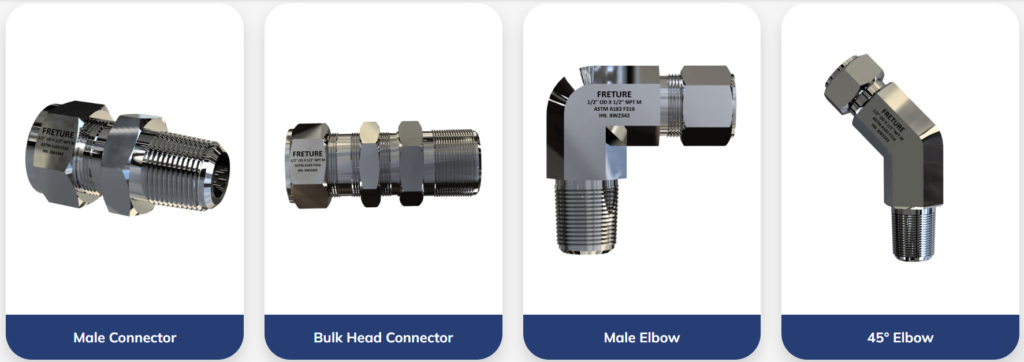

Instrumentation tube fittings play a critical role in industrial fluid and gas handling systems. They are widely used in industries such as oil & gas, chemical processing, power plants, pharmaceuticals, and petrochemicals to ensure leak-free and reliable connections between tubing and instrumentation components.
However, selecting the wrong tube fitting can lead to serious operational problems, including leakage, pressure loss, vibration failure, corrosion damage, and costly downtime. Many industries face recurring maintenance issues simply because the fitting selection process overlooked important technical factors.
This article explains the top 7 mistakes to avoid while selecting instrumentation tube fittings and how proper selection can improve system safety, efficiency, and long-term performance.
1. Ignoring Material Compatibility
One of the most common mistakes is selecting tube fittings without considering media compatibility.
Different process fluids can react with fitting materials, causing:
- Corrosion
- Cracking
- Contamination
- Premature failure
For example:
- Stainless steel fittings are suitable for many industrial applications.
- Exotic alloys may be required for highly corrosive chemicals.
- Brass fittings may not perform well in aggressive environments.
Always evaluate:
- Chemical composition
- Operating environment
- Corrosion resistance requirements
Proper material selection significantly increases system reliability.
2. Choosing Incorrect Tube Size
Using the wrong tube size can affect:
- Flow performance
- Pressure stability
- System efficiency
Oversized or undersized fittings may result in:
- Leakage
- Vibration issues
- Improper sealing
Important factors to verify:
- Tube outside diameter (OD)
- Wall thickness
- Pressure rating compatibility
Precision matching between tubing and fittings is essential for leak-free operation.
3. Overlooking Pressure and Temperature Ratings
Every instrumentation fitting is designed for specific operating limits.
Selecting fittings without verifying pressure and temperature ratings may lead to:
- Seal failure
- Deformation
- Unsafe operating conditions
High-pressure applications especially require fittings engineered for:
- Extreme pressure cycles
- Thermal expansion
- Process fluctuations
Always ensure the fitting specifications match actual process conditions.
4. Using Low-Quality or Non-Standard Fittings
Low-cost fittings often compromise:
- Dimensional accuracy
- Surface finish
- Thread quality
- Ferrule performance
Poor-quality fittings increase the risk of:
- Leakage
- Maintenance frequency
- System failure
Industries should prioritize:
- Precision-manufactured fittings
- Standard-compliant products
- Reliable sealing systems
Quality fittings improve long-term operational safety and reduce downtime.
5. Ignoring Vibration and Dynamic Conditions
Many industrial systems experience:
- Mechanical vibration
- Pulsation
- Thermal cycling
Improper fitting selection under these conditions can cause:
- Tube loosening
- Fatigue cracks
- Joint leakage
Applications involving compressors, pumps, or rotating equipment require fittings specifically designed for vibration resistance.
Proper installation and support also help improve fitting lifespan.
6. Improper Installation Practices
Even high-quality fittings can fail if installed incorrectly.
Common installation mistakes include:
- Over-tightening
- Under-tightening
- Improper tube insertion
- Reusing damaged ferrules
Incorrect assembly affects sealing integrity and may result in gradual leakage.
Following manufacturer installation guidelines is essential for achieving optimal performance.
7. Neglecting Future Maintenance Requirements
Some fitting selections focus only on initial installation costs without considering maintenance accessibility.
Difficult-to-maintain systems can increase:
- Downtime
- Labor costs
- Replacement frequency
Selecting fittings with:
- Easy assembly
- Reliable reusability
- Long service life
helps improve operational efficiency over time.
Why Proper Tube Fitting Selection Matters
Correct instrumentation tube fitting selection offers several advantages:
- Leak-free performance
- Improved process safety
- Reduced maintenance costs
- Better pressure integrity
- Longer equipment life
- Enhanced operational reliability
In critical industrial applications, even small fitting failures can cause major operational disruptions.
Industries That Rely on Instrumentation Tube Fittings
Instrumentation tube fittings are widely used in:
- Oil & Gas Plants
- Chemical Industries
- Refineries
- Pharmaceutical Facilities
- Power Plants
- Process Automation Systems
- Water Treatment Plants
These industries require precision-engineered fittings for reliable fluid control systems.
Why Choose Freture Techno Pvt. Ltd. for Instrumentation Tube Fittings?
Freture Techno Pvt. Ltd. offers high-performance instrumentation tube fittings designed for demanding industrial applications.
Key advantages include:
- Precision-engineered construction
- Excellent leak-tight sealing
- Corrosion-resistant materials
- High pressure compatibility
- Reliable long-term performance
- Industry-standard manufacturing quality
Their tube fitting solutions are designed to deliver safety, durability, and operational efficiency across critical process industries.
Conclusion
Selecting the right instrumentation tube fittings is essential for maintaining safe and reliable industrial operations. Mistakes such as improper material selection, ignoring pressure ratings, or using low-quality fittings can lead to leakage, maintenance issues, and system failures.
By understanding these common selection mistakes and choosing high-quality fittings, industries can improve system performance, reduce downtime, and ensure long-term operational reliability.
FAQ
What are instrumentation tube fittings used for?
Instrumentation tube fittings are used to create secure and leak-free connections in industrial fluid and gas systems.
Why is material compatibility important in tube fittings?
Improper material selection can lead to corrosion, contamination, and premature fitting failure.
Can vibration affect tube fittings?
Yes, vibration can loosen fittings and cause fatigue failure if the fitting is not designed for dynamic conditions.
Which industries use instrumentation tube fittings?
Industries such as oil & gas, chemical processing, pharmaceuticals, and power generation widely use instrumentation tube fittings.