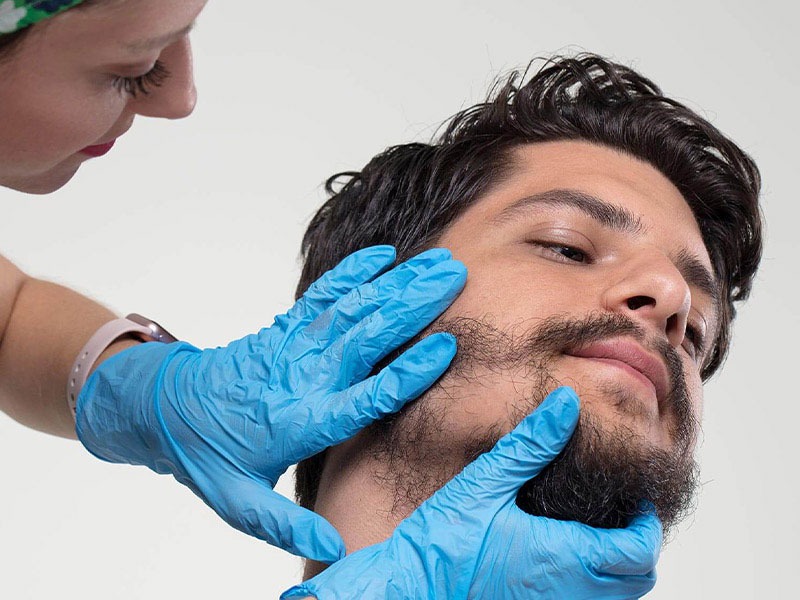

Facial hair restoration has evolved into a highly refined field of aesthetic science, where precision, biology, and artistry intersect to create natural-looking results. Modern techniques focus on replicating the exact behavior of facial hair as it grows, rather than simply placing grafts under the skin. This approach ensures that the final outcome blends seamlessly with existing facial features and enhances masculine definition. At the core of this transformation lies a method that relies on careful follicular selection, strategic implantation angles, and long-term growth predictability, making Beard Hair Transplant in Dubai a widely discussed advancement in aesthetic dermatology. The goal is not just to restore hair but to recreate natural beard density, symmetry, and direction in a way that aligns with individual facial structure and hair characteristics.
Follicular Unit Science and Donor Dominance Principle
The foundation of beard implantation techniques is the concept of follicular unit extraction and donor dominance. Hair follicles are naturally grouped into units containing one to four hairs, and these units are carefully selected from regions of the scalp where growth patterns are genetically resistant to shedding. Once transplanted, these follicles retain their original genetic coding, which allows them to continue growing in the beard area permanently. This biological stability is what makes modern implantation techniques reliable over time.
The principle of donor dominance ensures that transplanted follicles maintain the same growth cycle behavior regardless of their new location. These cycles include the anagen (growth phase), catagen (transition phase), and telogen (resting phase). By understanding and leveraging these cycles, specialists can predict long-term beard density and manage expectations regarding initial shedding and regrowth phases.
Precision in Recipient Site Creation
One of the most critical scientific aspects of beard implantation is the creation of recipient sites, which are micro-incisions made in the facial skin to receive follicular grafts. These sites are not randomly placed; they are designed with extreme precision to mimic natural beard growth patterns. Direction, depth, and angle are carefully controlled to replicate how facial hair naturally emerges from the skin.
Even a slight deviation in angulation can result in an unnatural appearance, making technical accuracy essential. The science behind this process is rooted in dermatological understanding of skin elasticity, vascular supply, and follicle anchoring depth. Proper site creation also ensures adequate blood flow to the transplanted follicles, which is crucial for survival and integration into the surrounding tissue.
Mimicking Natural Growth Patterns and Density Design
Natural beard growth is irregular, with varying densities across different facial zones such as the cheeks, jawline, chin, and mustache area. Advanced implantation techniques replicate this irregularity rather than forcing uniform density. This is achieved by strategically distributing single-hair and multi-hair follicular units based on facial contour and aesthetic requirements.
Density design is guided by both anatomical mapping and artistic judgment. Areas requiring sharp definition, such as the jawline, may receive higher density, while transitional zones are kept softer to maintain realism. This approach ensures that the beard does not appear artificially structured but instead grows in a pattern consistent with natural facial hair evolution.
Vascular Integration and Healing Biology
Once follicles are implanted, the body initiates a complex healing response that determines graft survival. The vascular system plays a central role in this process, as newly placed follicles must quickly establish a blood supply to receive oxygen and nutrients. This stage, known as revascularization, is critical for long-term success.
During the initial healing period, micro-inflammation occurs as the skin adapts to the transplanted follicles. This is a natural biological response and is part of the regeneration process. Over time, collagen remodeling strengthens the surrounding tissue, securing the grafts in place. The scientific understanding of wound healing phases allows for optimized implantation techniques that minimize trauma and maximize graft retention.
Directional Control and Aesthetic Engineering
A key factor in achieving natural results is directional control, which refers to the precise orientation of each implanted follicle. Facial hair does not grow in a single uniform direction; instead, it follows curved and converging patterns depending on facial musculature and bone structure. Replicating these subtle variations requires advanced mapping techniques and careful execution during implantation.
Aesthetic engineering in beard restoration also involves symmetry balancing, where both sides of the face are analyzed to ensure proportional growth patterns. This does not mean perfect symmetry, but rather a natural asymmetry that mirrors authentic beard development. Such detailed planning ensures that the final appearance integrates seamlessly with facial expressions and movement.
Long-Term Growth Adaptation and Hair Cycle Stabilization
After implantation, transplanted follicles undergo an adaptation phase where initial shedding is common. This is part of the normal hair cycle reset before entering a new growth phase. Over several months, follicles stabilize and begin producing consistent terminal hair, contributing to fuller beard development.
The long-term outcome depends on the stability of follicular behavior and the precision of implantation techniques. Once stabilized, the transplanted beard behaves like natural facial hair, responding to hormonal and physiological changes over time. This biological consistency is what makes modern restoration methods highly effective and sustainable.
Natural Results Through Advanced Implantation Science
The success of modern beard restoration lies in combining biological understanding with surgical precision and aesthetic judgment. Every step, from follicle extraction to implantation angle design, is guided by scientific principles that prioritize natural growth behavior and long-term viability. This integration of science and artistry allows individuals to achieve facial hair patterns that are both authentic and permanent.
In the evolving field of hair restoration, techniques continue to advance toward even more refined outcomes, improving density control, healing efficiency, and natural appearance. With these innovations, Beard Hair Transplant represents a sophisticated solution for those seeking scientifically grounded and naturally expressive beard restoration outcomes.