
Bringing a child into the world is an incredible, life-altering experience, but the physical changes that accompany pregnancy and childbirth can be equally dramatic. Many women expect that with enough time, clean eating, and rigorous exercise, their post-pregnancy body will naturally bounce back to its original shape. However, after months or even years of dedicated effort, many mothers find that certain physical changes remain completely unchanged by diet and workout routines.
Understanding why these stubborn post-pregnancy changes occur comes down to structural biology rather than a lack of willpower. When diet and exercise reach their limits, exploring a comprehensive Mommy Makeover Dubai transformation offers a realistic, effective path toward restoring your core strength, body symmetry, and youthful contours.
The Anatomical Changes Pregnancy Causes
To understand why clean eating and gym sessions cannot resolve every post-baby body issue, it is essential to look at what actually happens to muscles, skin, and fat tissues during pregnancy.
1. Diastasis Recti (Abdominal Muscle Separation)
As the fetus grows, the uterus expands, putting tremendous internal pressure on the abdominal wall. This pressure stretches the connective tissue (the linea alba) that holds the left and right rectus abdominis muscles together. In many pregnancies, these muscles separate—a condition known as diastasis recti.
Because this is a issue of stretched connective tissue and separated muscle tissue, no amount of sit-ups, planks, or calorie counting can draw those separated muscles back together. In fact, performing traditional core exercises incorrectly can sometimes worsen the separation or create a permanent lower abdominal “pooch.”
2. Loss of Skin Elasticity
Skin expands dramatically to accommodate a growing baby. During this phase, collagen and elastin fibers deep within the dermis are stretched to their limit and often rupture, leading to stretch marks and loose, hanging skin.
Once skin loses its structural elasticity, it behaves much like an overstretched rubber band. Diet and exercise can help reduce the layer of subcutaneous fat underneath the skin, but they cannot contract excess, stretched skin tissue back into a tight position.
3. Changes in Breast Tissue Volume and Architecture
During pregnancy and lactation, hormonal shifts cause glandular tissue in the breasts to expand significantly. Once breastfeeding ends, the glandular tissue shrinks, but the surrounding skin pocket remains stretched. This mismatch leads to sagging (ptosis), loss of upper-pole volume, and a deflated appearance.
Since breasts are primarily composed of glandular tissue and fat rather than muscle, targeted weightlifting can strengthen the pectoral muscles underneath, but it cannot restore lost glandular volume or lift sagging breast tissue.
4. Hormonal Shift and Stubborn Fat Deposits
Pregnancy alters hormone levels—including estrogen, progesterone, and prolactin—which can permanently change how and where your body stores subcutaneous fat. These stubborn fat pockets around the lower abdomen, flanks, and lower back are biologically designed to resist burn-off during standard caloric deficits.
Why Diet and Exercise Aren’t Always Enough
Fitness and nutrition are crucial for overall health, energy levels, and cardiovascular strength, but their capabilities are fundamentally limited by anatomy:
-
Exercise builds muscle mass, but it cannot repair torn fascia: Strengthening a separated muscle doesn’t reattach the connective tissue lining.
-
Diet burns fat, but it can worsen skin laxity: Losing weight reduces volume beneath loose skin, which can actually make loose, crepey skin appear more pronounced.
-
Fitness cannot address tissue ptosis: Gravity and stretched skin dictate breast position; muscle growth beneath sagging tissue does not lift the breast envelope itself.
Recognizing these anatomical limitations helps shift the mindset away from frustration or self-blame, pointing toward targeted, structural solutions.
Restoring Structure with a Custom Makeover
When diet and exercise have achieved all they can healthily accomplish, specialized surgical and body contouring techniques step in to correct the underlying structural changes. A custom makeover addresses these root causes in a single, cohesive journey.
Abdominoplasty (Tummy Tuck)
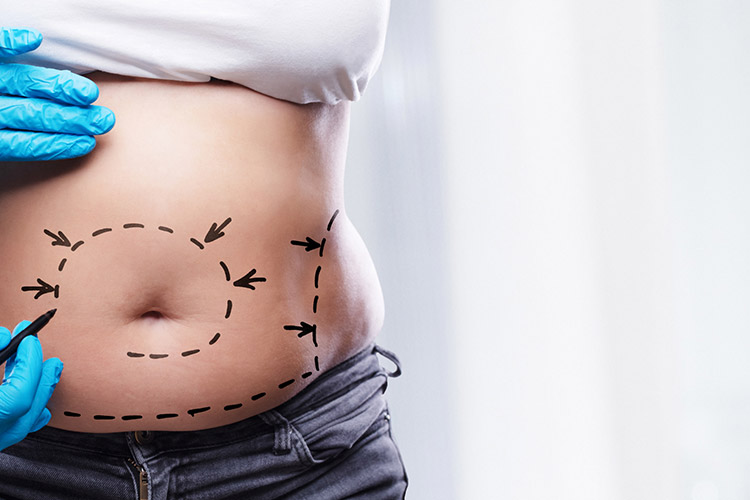
An abdominoplasty directly repairs diastasis recti by bringing the separated abdominal muscles back together along the midline and securing them with permanent internal sutures. Excess, stretched skin is excised, flattening the stomach and defining the waistline in ways exercise simply cannot achieve.
Breast Enhancement (Lift, Augmentation, or Reduction)
Breast surgery restores youthful volume, position, and symmetry. A breast lift (mastopexy) removes excess skin and elevates the nipple-areolar complex, while implants or fat transfer restore fullness to the upper portion of the breast.
Targeted Precision Liposuction
Liposuction removes hormone-resistant fat deposits along the waistline, hips, and lower back, sculpting a balanced, proportional silhouette that complements your overall frame.
What to Expect on Your Transformation Journey
Choosing to correct structural changes requires a structured, patient-centered approach focused on safety, precision, and comfortable recovery.
-
Bespoke Anatomical Assessment: Specialized surgeons evaluate muscle separation, skin elasticity, and body proportions to design a custom surgical plan tailored to your specific goals.
-
Integrated Procedure Execution: Combining abdominoplasty, breast surgery, and contouring in one session means going through a single surgical procedure and a unified recovery timeline.
-
Dedicated Post-Op Healing Support: Modern recovery suites emphasize comfortable positioning, specialized pain management, and proactive therapies like manual lymphatic drainage to reduce swelling and promote rapid healing.
Preparing for Long-Term Success
To ensure your structural transformation yields beautiful, lasting results:
-
Reach a Stable Baseline Weight: Maintain a steady weight for three to six months before proceeding with surgery.
-
Complete Your Family Building: Future pregnancies can re-stretch repaired abdominal muscles and skin, making it best to undergo surgery when your family is complete.
-
Plan for Proper Recovery: Secure dedicated support at home for household tasks and childcare during the initial two weeks post-op so your body can rest and repair properly.
Reclaim Your Core Confidence
Understanding the physiological changes of post-pregnancy helps clear away the myth that diet and exercise can fix everything. When you are ready to address stretched muscles, loose skin, and lost volume at their source, turning to a premier care center like the Mommy Makeover Lounge provides the expert surgical skill, compassionate guidance, and personalized recovery care needed to restore your body, strength, and confidence for years to come.