
Understanding Artificial Intelligence: Definition and Scope
Artificial Intelligence (AI) refers to the simulation of human intelligence processes by machines, especially computer systems. These processes include learning, reasoning, problem-solving, perception, and language understanding. AI aims to create systems capable of performing tasks that typically require human intelligence, such as speech recognition, decision-making, and visual perception.
The scope of AI ranges from simple automation tasks to complex systems like autonomous vehicles and advanced medical diagnostics. As technology advances, AI becomes increasingly integrated into everyday life, impacting industries, economies, and social interactions. The development of AI involves disciplines like computer science, mathematics, psychology, and neuroscience, fostering innovations that aim to enhance efficiency, accuracy, and convenience in various fields.
Types of Artificial Intelligence: Narrow and General AI
Artificial Intelligence is generally categorized into two types: Narrow AI and General AI. Narrow AI, also known as weak AI, is designed to perform specific tasks, such as voice assistants, recommendation algorithms, or image recognition systems. These systems operate within predefined parameters and lack consciousness or genuine understanding. On the other hand, General AI, or strong AI, aspires to replicate human intelligence across a wide range of activities, possessing consciousness, reasoning, and emotional understanding. While Narrow AI is widely implemented today, General AI remains a theoretical goal, with significant research needed to achieve it. The distinction highlights the current capabilities and future aspirations of AI development, shaping ongoing technological innovation and ethical debates.
Applications of Artificial Intelligence Across Industries
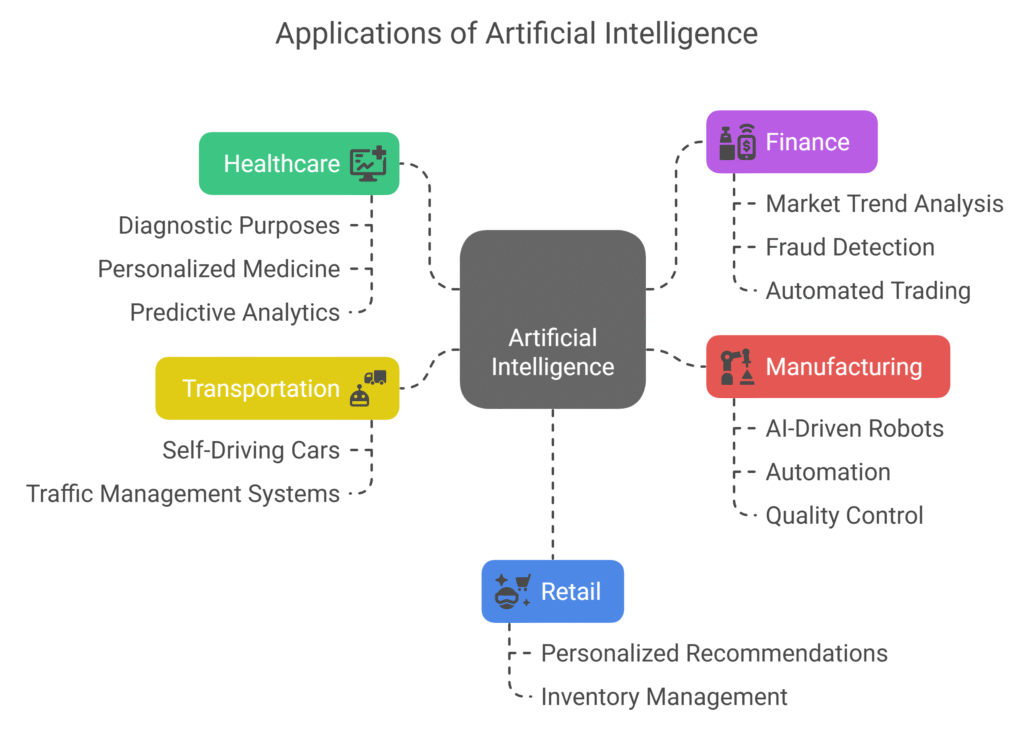
AI has revolutionized numerous industries by automating complex tasks and providing data-driven insights. In healthcare, AI assists in diagnosing diseases, personalizing treatment plans, and managing patient data, leading to improved outcomes. In finance, AI algorithms detect fraudulent transactions, automate trading, and assess credit risk efficiently. Retailers utilize AI for customer behavior analysis, inventory management, and personalized marketing. In manufacturing, AI-powered robots streamline production lines, ensuring precision and reducing costs.
Additionally, AI enhances transportation through autonomous vehicles, optimizes energy consumption in smart grids, and supports content moderation on social media platforms. These applications demonstrate AI’s versatility and its potential to improve productivity, safety, and user experiences across diverse sectors.
Ethical Challenges and Future of Artificial Intelligence
While AI offers numerous benefits, it also raises ethical concerns that require careful consideration. Issues such as job displacement due to automation, privacy violations, and biased decision-making algorithms pose significant risks. The development of autonomous weapons and surveillance systems further complicates ethical debates.
Ensuring transparency, accountability, and fairness in AI systems is essential for societal acceptance. Looking ahead, AI research aims to create more robust, explainable, and ethical systems. Collaboration among technologists, policymakers, and ethicists is crucial to develop regulations that maximize benefits while minimizing harms. The future of AI holds promise for solving complex global problems, but responsible development and deployment are vital to ensure it serves humanity positively.