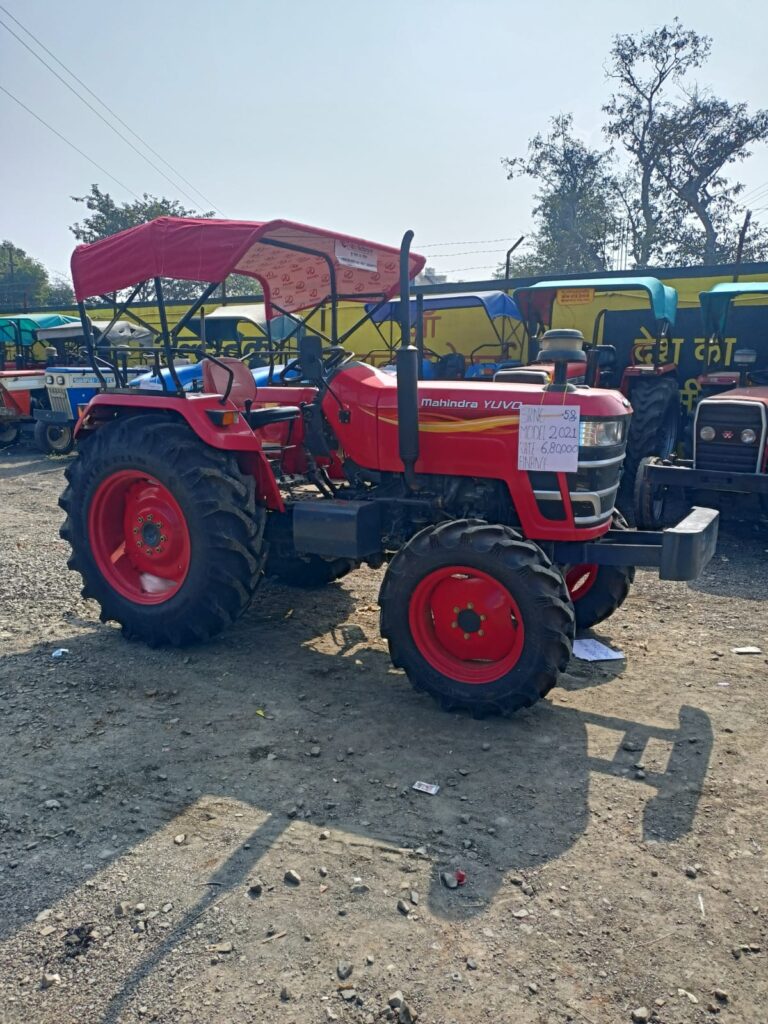

The First Thing You Notice About an Old Tractor
Stand next to an old tractor early in the morning and you’ll notice something immediately. It doesn’t look flashy. No polished screens. No plastic body panels. Just solid metal, worn paint, and the faint smell of diesel that seems to have soaked into the machine over the years.
Most of them carry scars—scratches on the bonnet, faded decals, maybe a bent mudguard. But those marks usually tell a story. A season of hard ploughing. Long hours pulling a loaded trolley through dusty village roads. Rain, mud, heat, and still the machine kept working.
People often assume old tractors are outdated. Farmers who actually use them tend to think differently.
Because when a tractor has already worked for fifteen or twenty years and still starts every morning, that says something.
Built in a Time When Machines Were Meant to Last
Older tractors were designed in a different era of engineering. The focus was simple: durability first.
You can feel it when you open the engine cover. Thick metal parts. Straightforward mechanical systems. No complicated electronics buried inside the machine. Just a fuel pump, gears, pistons, and a tough engine block doing its job.
Back then, manufacturers knew these tractors would end up in rough environments. Fields with stones. Uneven land. Dust that finds its way into everything.
So they built them heavier. Simpler too.
And that simplicity is exactly why many of those tractors are still alive today.
A farmer with basic tools can repair most problems right in the village workshop.
Why Farmers Still Prefer Old Tractors
Talk to farmers across rural India and you’ll hear the same thing again and again.
Old tractors may not be fancy, but they are dependable.
A lot of small and medium farmers actually prefer buying used tractors instead of new ones. The reason is straightforward. A new tractor costs a huge amount. Loans, EMI payments, interest—those things add pressure on a farming family.
An old tractor, on the other hand, can be bought at a much lower price.
And if the engine is still strong, it will easily handle daily farm work like ploughing, cultivating, rotavator work, or pulling trailers.
For many farmers, that balance between cost and performance makes old tractors a smart decision.
The Sound That Farmers Recognize Instantly
There’s a particular sound old tractors make. It’s not smooth like modern engines. It’s rougher. Deeper.
That steady “dhak-dhak-dhak” when the engine settles into rhythm.
Experienced farmers can actually judge the health of the tractor just by listening to that sound. If the engine note is even and strong, they know the machine is fine. If something sounds off—maybe a slight knock or uneven vibration—they catch it quickly.
It’s strange, but tractors become familiar almost like people.
After years of working together, farmers know exactly how their machine behaves.
Maintenance Is Easier Than You Think
One reason old tractors remain popular is the ease of maintenance.
Most of the mechanical systems are simple. No complicated sensors. No software diagnostics needed.
A local mechanic can usually handle:
- clutch repairs
- fuel pump adjustments
- engine servicing
- brake replacement
- gearbox issues
Spare parts are widely available in agricultural markets and tractor repair shops. And they’re often cheaper compared to parts for newer machines.
Some farmers even keep a small toolbox specifically for their tractor—spanners, grease gun, extra filters. Routine care goes a long way.
That’s how these machines survive decades.
Old Tractors and Fuel Efficiency
People often assume older engines consume more fuel. Sometimes that’s true, but not always.
Many classic tractor engines were designed with slow, heavy torque. They don’t rev high like modern engines. Instead, they produce strong pulling power at lower speeds.
In real field conditions, that kind of engine can actually be quite fuel efficient.
For tasks like:
- ploughing dry soil
- transporting crops
- pulling water tankers
- operating threshers
an old tractor often performs surprisingly well without burning excessive diesel.
Farmers who understand their machine’s working style know exactly how to use it efficiently.
Buying an Old Tractor Requires a Careful Eye
Not every used tractor is a good deal. Some machines are well maintained. Others are badly worn.
Experienced buyers usually check a few things before making a purchase.
The engine condition is the most important. If the tractor starts easily and doesn’t produce thick smoke, that’s usually a good sign.
They also inspect:
- engine sound
- hydraulic lifting power
- gear shifting smoothness
- clutch response
- tyre condition
Sometimes a tractor may look rough from the outside but the engine is perfectly healthy. That kind of machine can be a great investment.
The Hidden Value of Second-Hand Machines
There’s something practical about buying used equipment.
Depreciation has already happened. The first owner paid the biggest price. By the time a tractor becomes ten or fifteen years old, its value stabilizes.
So when someone buys a well-maintained old tractor, they often use it for several years and still manage to sell it later without losing much money.
In rural markets, tractors hold value better than many other vehicles.
Partly because demand never disappears.
Farm work always needs machines.
Old Tractors Still Handle Tough Farm Work
Modern tractors have advanced features, but the core job hasn’t changed.
A tractor still needs to pull heavy implements across fields.
Old tractors are particularly good at this because of their weight and torque. That solid build helps maintain traction in soil.
Many farmers use them for:
- ploughing
- cultivating
- rotavator work
- trolley transport
- water tanker hauling
These machines might move a little slower, but they rarely give up halfway through a job.
And reliability often matters more than speed during busy farming seasons.
The Emotional Connection Farmers Have With Their Tractor
Spend enough time in villages and you’ll see something interesting.
Farmers often talk about their tractors almost like family members.
A tractor that has worked the same land for twenty years becomes part of daily life. It has pulled harvest loads, carried wedding supplies, transported bricks during house construction.
Some farmers even refuse to sell their old tractor even after buying a new one.
They keep it in the shed.
Just in case.
That kind of attachment doesn’t come from machines that break down easily.
It comes from machines that prove themselves year after year.
Restoring Old Tractors Is Becoming Popular
Recently, some people have started restoring older tractors instead of discarding them.
The process can be surprisingly satisfying.
The engine is cleaned and rebuilt. Worn parts are replaced. The body gets fresh paint. Old wiring is fixed.
After restoration, a tractor that looked completely exhausted suddenly comes back to life.
And when it drives out of the workshop again, it feels like a second beginning for the machine.
In farming communities, that kind of restoration isn’t just about appearance. It’s about extending the working life of a reliable tool.
Why Old Tractors Still Make Economic Sense
Farming margins are not always large. Every expense matters.
When a farmer chooses between a brand-new tractor and a strong second-hand machine, the financial difference can be huge.
An old tractor allows farmers to:
- avoid large loans
- reduce financial risk
- invest money in seeds or irrigation instead
- maintain flexibility during uncertain crop seasons
For many families, that financial breathing space is more important than having the newest model in the village.
Function beats appearance.
Every time.
The Future of Old Tractors in Agriculture
Technology in agriculture will keep advancing. GPS systems, smart sensors, automated machinery—those developments are already happening.
But old tractors aren’t disappearing anytime soon.
In fact, in many farming regions they remain the backbone of daily agricultural work.
They’re affordable. Easy to repair. Tough enough for rough terrain.
And as long as spare parts are available and mechanics understand the engines, these machines will continue running.
Some tractors built decades ago are still working today.
Which says a lot about how well they were made.
Final Thoughts From Someone Who Has Worked Around Them
Old tractors may not attract attention the way new models do.
But spend time around farms and you’ll realize something important. The machines doing the real work are often the ones with faded paint and a long history.
They start slowly. They rumble across the field. Dust gathers on the tyres again.
Then the plough sinks into the soil, and the tractor keeps moving forward.
https://phoenixetmi962789.blogdigy.com/when-someone-talks-about-buying-an-old-tractor-63647484