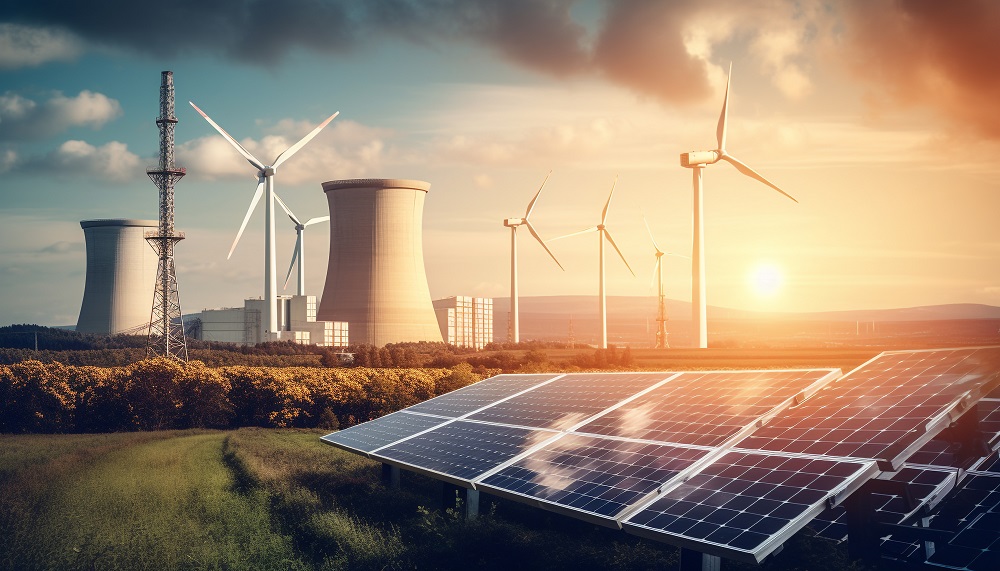

The transition to a sustainable future is often discussed in terms of carbon credits, climate policy, and technological breakthroughs in photovoltaic cell efficiency. However, there is a far more grounded, physical reality that dictates the success of the energy transition: the massive mobilization of earth, steel, and concrete. Behind every “Green Energy Giant” is a specialized partner—a construction firm capable of translating abstract environmental goals into high-performance, grid-scale assets.
The Infrastructure of Renewables is the literal foundation of the net-zero economy. For construction firms in 2026, this sector represents a shift from “traditional building” to “high-tech industrial engineering.” Whether it is a thousand-acre solar farm in West Texas or a massive offshore wind substation in the Atlantic, the role of the construction partner has become the most critical link in the energy supply chain.
1. The Civil Foundation: Preparing the Earth for Power
Before a single solar panel is tilted or a wind turbine blade is bolted, a massive civil engineering operation must take place. Green energy projects are unique because they often require a vast geographic footprint, often in remote or topographically challenging areas.
Mass Grading and Soil Stabilization
Solar energy construction, for instance, requires “precision grading.” While the land may look flat to the naked eye, even a slight deviation can cause shadows that significantly drop the efficiency of an entire row of panels. Construction firms use autonomous, GPS-guided dozers to move millions of cubic yards of earth, ensuring the site is perfectly leveled while maintaining natural drainage patterns to prevent erosion during flash floods.
Access Roads and Heavy Haul Logistics
Renewable sites are rarely near major highways. Construction firms must build miles of “Heavy Haul” roads capable of supporting the immense weight of wind turbine components. A single wind turbine blade can exceed 300 feet in length, and the nacelle (the generator housing) can weigh over 400 tons. Engineering a road that can handle these “super-loads” without collapsing or washing out is a feat of civil engineering that happens long before any green energy is produced.
2. Wind Energy: The Super-Structures of the Sky
Building for wind energy companies is perhaps the most physically demanding niche in the sector. It requires a blend of deep-foundation expertise and high-altitude crane operations.
Foundations and “The Pour”
The foundation of a modern wind turbine is a marvel of reinforced concrete. To keep a 500-foot tower stable against hurricane-force winds, construction firms must excavate “spread footings”—massive circular pits filled with miles of rebar and thousands of tons of concrete. These are often “continuous pours,” where a fleet of concrete trucks must arrive in a perfectly timed sequence for 24 hours straight to ensure the foundation cures as a single, seamless block of stone.
Lifting and Assembly
Once the foundation is set, the construction firm shifts into “vertical assembly.” Using specialized crawler cranes that rank among the largest in the world, teams must lift the tower sections, the nacelle, and the hub with millimeter precision. In 2026, these lifts are often assisted by wind-speed sensors and AI-driven stabilization tools to ensure safety at heights that dwarf most city skyscrapers.
3. Solar Energy: The Industrial Assembly Line
While wind is about “individual giants,” solar energy construction is about “massive repetition.” Building a utility-scale solar farm is more like managing a horizontal assembly line than a traditional job site.
Mechanical Installation and Robotics
A typical gigafarm might involve the installation of two million solar panels. To meet the aggressive timelines of green energy companies, construction firms have turned to robotics. Autonomous pile drivers now hammer the steel supports into the ground with sub-centimeter accuracy, while robotic “kitting” systems deliver panels to the exact spot they are needed, reducing manual handling and breakage.
The Electrical “Arteries”
The most complex part of solar construction is the “collection system.” Construction firms must dig miles of trenches to lay the medium-voltage cables that gather power from thousands of panels and deliver it to the central inverter skids. This requires surgical trenching technology to avoid disturbing local ecosystems and existing underground utilities.
4. The “Brain” of the Operation: Substations and BESS
A green energy site is useless if it cannot talk to the grid. This is where the construction scope moves from “heavy civil” to “high-voltage electrical.”
Substation Construction
Construction firms are responsible for building the substations that “step up” the voltage from the wind or solar site so it can travel hundreds of miles over transmission lines. This involves the installation of massive transformers, circuit breakers, and “Gas Insulated Switchgear” (GIS). These are highly sensitive environments that require specialized grounding systems to protect against lightning strikes and power surges.
BESS: Battery Energy Storage Systems
In 2026, the biggest trend in renewable infrastructure is the “Battery Barn.” Construction firms are now building massive climate-controlled facilities—or “BESS” farms—filled with lithium-ion or flow batteries. These projects involve complex HVAC engineering to prevent thermal runaway and sophisticated fire-suppression systems that are far more advanced than those found in standard commercial buildings.
5. Sustainability in the Build: Walking the Talk
Green energy companies demand that their partners be as sustainable as the energy they produce. This has forced construction firms to innovate in their own operations.
-
Low-Carbon Concrete: Using fly ash or slag to reduce the carbon footprint of turbine foundations.
-
Recycled Aggregates: Utilizing crushed concrete or recycled stone for access roads to minimize quarrying.
-
Electric Fleets: The rise of electric excavators and dozers on-site to reduce the “embodied carbon” of the construction process itself.
6. The Challenges: Labor, Logistics, and Policy
Despite the boom, the infrastructure of renewables faces significant hurdles.
The Interconnection Queue
The biggest bottleneck isn’t building the farm; it’s connecting it. Construction firms are increasingly taking on “Grid Modernization” projects, upgrading old transmission lines and building “High Voltage Direct Current” (HVDC) links to move power from the windy plains or sunny deserts to the coastal cities where it is needed most.
Specialized Labor Scarcity
A renewable energy construction worker isn’t just a laborer. They must be part electrician, part data analyst, and part heavy equipment operator. Construction firms are currently in a “war for talent,” investing heavily in trade academies to train the next generation of “Renewable Technicians” who can manage the high-tech tools of 2026.
Conclusion: The Foundation of a New Era
The Infrastructure of Renewables is the bridge between a fossil-fuel past and a sustainable future. Green energy companies provide the vision and the capital, but it is the construction firms that provide the muscle and the engineering precision to make that vision a reality.
By moving the earth, mastering the wind, and capturing the sun, these builders are doing more than just completing a contract. They are engineering the “hard assets” of a new global economy. In the years to come, the success of the energy transition will be measured not just in kilowatts, but in the miles of road, the tons of steel, and the thousands of acres of precisely graded land that these construction firms deliver every single day.