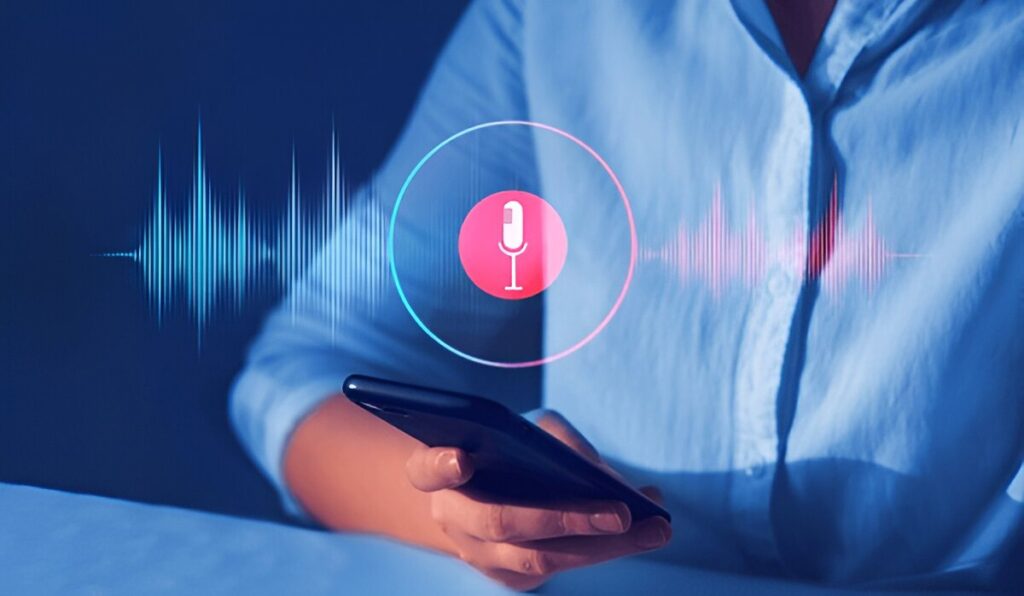

In the modern digital landscape, communication is the lifeblood of business, education, and social connection. Whether you are leading a global team meeting, recording a podcast, or participating in a customer support call, the quality of your audio can be the difference between success and failure.
For years, we have struggled with the “audio barrier”—background noise, thick accents that hinder understanding, and jarring inconsistencies in voice projection. However, the emergence of artificial intelligence has ushered in a new era of audio engineering. By leveraging AI-powered harmonization, accent translation, and sophisticated noise cancellation software, technology is finally removing the friction from human communication.
Silencing the Chaos: The Power of AI Noise Cancellation
Perhaps the most immediate challenge to voice clarity is the environment. Remote work has left many of us struggling with the sounds of lawnmowers, barking dogs, or the hum of a coffee shop. Traditional noise suppression often sacrificed voice quality to stifle those sounds, leaving the speaker sounding like they were talking through a tin can.
Modern noise cancellation software has changed this dynamic entirely. Unlike traditional filters that simply cut out certain frequencies, AI-driven solutions are trained on vast datasets of human speech and ambient noise. This allows the software to distinguish between a voice and a hum, or a voice and a sudden, sharp sound like a clattering dish.
The AI model acts as a real-time gatekeeper, isolating the speech signal and “reconstructing” it while simultaneously suppressing the environmental noise. The result is a clean, professional-sounding voice that remains rich and natural, regardless of whether the user is in a quiet studio or a bustling airport.
Bridging the Linguistic Divide: Accent Translation
Communication isn’t just about the clarity of the signal; it is about the comprehensibility of the delivery. In a globalized economy, colleagues often find themselves working with people who have vastly different accents. While linguistic diversity is a strength, it can occasionally lead to misunderstandings that slow down technical projects or affect customer experience.
Accent translation is the next frontier in AI-driven audio. Rather than forcing users to change how they speak, AI models can now process speech in real-time to normalize phonetic patterns. By translating the nuances of an accent into a more neutral phonetic profile, these tools ensure that the core message is conveyed accurately and efficiently.
It is important to note that this is not about erasing cultural identity or forcing a “standardized” way of speaking. Instead, it is about accessibility. These tools empower speakers—especially those communicating in their second or third language—to ensure their expertise shines through without the distraction of misheard words or repeated explanations. It levels the playing field, making global collaboration smoother and more inclusive.
The Invisible Polish: AI-Powered Harmonization
Have you ever listened to an audio recording where one person is shouting into their microphone while the other is barely audible? Or perhaps a recording that sounds thin and sharp in one segment and deep in another? This is a lack of audio “harmonization.”
AI-powered harmonization is the final piece of the clarity puzzle. This technology works behind the scenes to balance volume levels, equalize frequency responses, and smooth out the dynamics of a voice. If a speaker’s voice is naturally shrill or overly bass-heavy, the AI intelligently adjusts the profile to ensure a pleasant, consistent listening experience.
When you harmonize audio, you are essentially “leveling” the playing field. For podcast producers and meeting organizers, this means that every participant sounds like they were recorded in the same room. It reduces listener fatigue and keeps the audience focused on the content rather than the technical quality of the stream.
Why This Matters for the Future
The integration of these technologies—noise cancellation, accent translation, and harmonization—is transforming the way we perceive digital interaction. We are moving toward a frictionless future where the medium of communication becomes invisible.
When we remove the barriers created by background noise, accent confusion, and poor audio production, we achieve a higher level of empathy and understanding. In professional settings, this translates to faster project turnaround and better team cohesion. In education, it ensures that students can focus on the lesson rather than struggling to hear the teacher.
As AI continues to evolve, these tools will become even more lightweight and accessible, effectively turning every laptop and smartphone into a high-end recording studio. The era of “Can you hear me?” is coming to an end. It is being replaced by a world where every voice is heard with the clarity, warmth, and precision it deserves.
Final Thoughts
Audio technology is no longer just about amplification; it is about intelligence. By embracing AI-powered harmonization, advanced noise cancellation software, and supportive accent translation tools, we are not just improving sound quality—we are elevating the human connection. As these technologies continue to integrate into our daily workflows, the barriers to global communication will continue to fall, allowing us to connect with more clarity and impact than ever before.