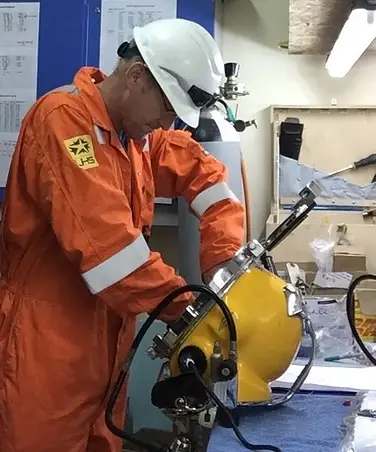

Spend enough time hanging around dive shops and you’ll notice a pattern. The instructors rotate in and out, the front desk staff change every season, but there’s usually one person everyone’s chasing down: the technician. The one who actually knows why a regulator is free-flowing, or whether that cylinder is safe to fill again. Good technicians are chronically overbooked, because there simply aren’t enough of them. That shortage is exactly why more people are now looking into a proper Dive Industry Technician Course instead of trying to piece the knowledge together on their own.
And this isn’t a small, niche concern tucked away in the corner of the diving world. Every single certified diver, on every dive, is putting their life in the hands of whoever last serviced their gear. When that servicing is done by someone who half-learned it on the job, guessing their way through a manual they’re not totally sure applies to this model, the risk isn’t hypothetical. It’s mechanical. It’s physical. And it’s completely avoidable with the right training.
The Trouble With “I Kind of Picked It Up”
For a long time, equipment servicing in diving has had this loose, informal reputation. A lot of technicians learned by standing next to someone else who was already doing it, copying habits without ever really knowing whether those habits were good ones. Manufacturers run their own certification courses too, which is genuinely useful, but it’s narrow by design. It teaches you one company’s regulator, one brand’s valve system. It doesn’t teach you the mechanical reasoning underneath it all, or how to diagnose a problem on a piece of equipment you’ve genuinely never touched before.
That’s the real value of a structured, accredited program. A proper Dive Industry Technician Course doesn’t just walk you through disassembling one specific regulator model step by step. It teaches you the physics of how gas moves through a delivery system, where cylinders tend to fail and why, what standards a technician is actually expected to meet, and maybe most importantly how to think like a technician instead of just following a checklist someone else wrote.
What the ASSET Scuba Service Technician Course Actually Covers
This is exactly the gap the ASSET Scuba Service Technician program was built to close. ASSET — the Association of Scuba Service Engineers and Technicians .doesn’t train you on one manufacturer’s product line and call it a day. The course is built around what a working technician will actually run into over a real career: regulators from a whole range of brands, cylinder inspection and testing, valve overhauls, BCD servicing, and, increasingly, the gas-blending side of things, including oxygen cleaning and nitrox systems.
What sets this apart from a lot of “learn on YouTube and hope for the best” approaches is the accreditation sitting behind it. When a course is recognized by a body like the CPD Standards Office, that certificate actually means something outside the room you trained in. Dive centers, resorts, and retailers know exactly what a graduate of an accredited ASSET Scuba Service Technician course can do, because that standard has been independently checked, not just self-declared. It takes the guesswork out of hiring, and honestly, it takes the guesswork out of your own confidence too you know precisely what you were trained to a standard of.
The structure usually moves from the fundamentalsth e mechanics, the theory, the “why does this even work” side of things into real hands-on bench time, taught by people who’ve spent years actually servicing gear, not just teaching from a manual. That combination matters more than people expect. You can read about how an O-ring should sit a hundred times, but you don’t really know until you’ve felt a properly seated one versus one that’s about to blow. That’s not something a PDF can teach you.
Scuba Equipment Service Certification: It’s Not Just a Formality
It’s easy to assume a Scuba Equipment Service Certification is just paperwork something you file away so a dive shop can tick a compliance box. In reality, it’s doing a lot more work than that. Certification is basically the glue holding together a global safety standard across an industry made up of thousands of independent operators who have zero direct oversight of each other.
Think about how spread out this industry actually is. A cylinder inspected and filled in Cyprus could end up on a liveaboard in the Red Sea six months later. A regulator serviced in one country gets thrown in a dive bag and used across a dozen different sites in a dozen different climates. Nobody’s physically checking every piece of gear before every single dive. The whole thing holds together because technicians trained to a consistent, recognized standard are doing the work correctly and putting their name behind it for divers they’ll never meet.
That’s the actual weight behind a real Scuba Equipment Service Certification. It’s not red tape for the sake of red tape. It’s the thing that lets an international industry run without someone standing over every technician’s shoulder. And for the technician personally, certification travels with you. If your training and credentials meet an internationally recognized standard, you’re not stuck working in one shop or one country because nobody local has ever heard of you. The certification does a lot of that vouching on your behalf.
Why So Many People Are Choosing Scuba Technician Training in Cyprus
If you’ve been searching around for Scuba Technician Training Cyprus options, there’s a solid reason the island keeps showing up. Cyprus sits at a genuinely convenient crossroads easy access from Europe, the Middle East, and North Africa with a dive industry active enough to give students real, practical context, but without the saturation that can make it hard to find a quality program in bigger markets.
Beyond just the geography, Cyprus offers something a lot of training locations don’t manage to combine: reliable conditions for consistent hands-on practice, a genuinely busy dive tourism scene that exposes students to realistic servicing volume, and training providers who’ve built proper relationships with international accreditation bodies rather than just running things as a local operation with a certificate printed in-house. Scuba Technician Training Cyprus programs, in other words, aren’t a watered-down regional substitute for training somewhere “bigger.” They’ve become a legitimate destination in their own right, and students travel in from well outside the region specifically because of that.
There’s a practical side worth mentioning too. Anyone weighing where to actually spend the weeks it takes to complete a technician course is also thinking about flights, accommodation, and whether the destination is livable for the duration of an intensive program. Cyprus checks those boxes in a way that makes committing to a full course feel realistic rather than like a logistical headache on top of everything else.
Is This the Right Move for You?
If you’re already working in diving instructing, working the counter, guiding ,picking up equipment servicing skills makes you significantly more valuable to whichever operation you’re with. Most shops end up outsourcing servicing work, or shipping gear off and waiting weeks for it to come back, purely because nobody on staff has the technical training to handle it in-house. Someone who can take that on internally doesn’t just fill a gap. They usually become one of the people the whole shop quietly depends on.
And if you’re coming into this from completely outside the dive world, pulled in by a mechanical mindset and a love of being in the water, this is genuinely one of the more direct routes into full-time work in the industry. A properly accredited Dive Industry Technician Course compresses what used to be years of informal apprenticeship into a defined, credentialed timeline you can actually plan around.
Diving, at its core, runs on trust that the gear works, trust that whoever serviced it knew what they were doing, and trust that corners weren’t cut somewhere along the way. Getting properly trained through something like an ASSET Scuba Service Technician course, and walking away with a real Scuba Equipment Service Certification, is how you become part of that chain of trust, instead of just hoping the gear holds up anyway.