
When designing a home or commercial office, visual aesthetics like lighting, color harmony, and furniture layout take priority. However, an invisible factor plays a massive role in our daily comfort: interior acoustics. Sound bounces off hard surfaces, creating echoes that elevate stress, disrupt sleep, and lower focus.
For property owners in the growing residential and commercial sectors of the Sacramento valley, managing sound is more important than ever. Whether you are setting up a dedicated home theater in Folsom, CA or soundproofing a busy medical office in Rancho Cordova, CA, your wall finishes shouldn’t just look good—they should help control sound.
The Physics of Noise: Echoes vs. Absorption
To understand how wallcoverings improve acoustics, it helps to look at how sound waves interact with everyday building materials:
-
The Problem with Bare Drywall: Standard gypsum drywall, popular in newer home builds throughout Elk Grove, CA, acts like an acoustic mirror. When sound waves hit bare, painted drywall, they bounce back into the room, creating an echo effect.
-
The Impact of Echoes: This continuous bouncing of sound waves increases background noise, making speech less clear and forcing people to speak louder, which raises ambient noise levels.
-
The Role of Absorptive Substrates: Instead of bouncing sound back, acoustic wallcoverings absorb sound energy. They trap sound waves within dense, porous fibers and convert that energy into tiny amounts of thermal heat, stopping the echo.
Selecting Materials for Better Sound Control
Not all wallpapers absorb sound equally. Achieving quieter rooms requires selecting specific materials engineered to handle acoustic vibrations:
-
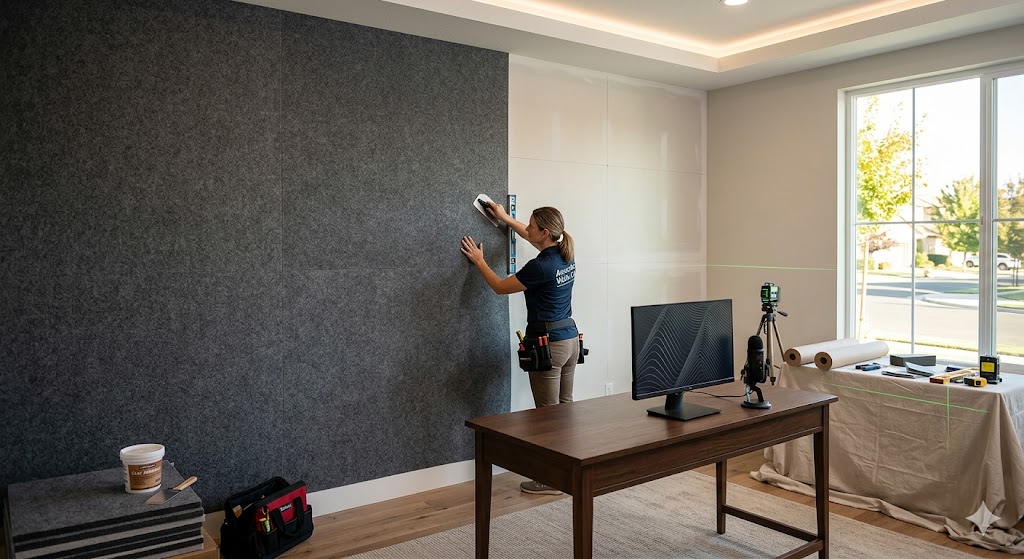
Acoustic Felt and Fabric Wallcoverings: Made from dense, recycled polyester fibers, these specialized materials are engineered specifically to absorb sound. They are highly effective at dampening mid-to-high frequency noises, such as ringing phones, typing, and chatter.
-
Natural Cork and Wood-Veneer Papers: Cork features a unique cellular structure filled with millions of microscopic air pockets. Installing a natural cork wallcovering creates a built-in acoustic buffer that dampens sound while adding a warm, organic texture to the room.
-
Heavy Textured Grasscloth: While traditional thin paper offers minimal acoustic benefit, premium woven grasscloth adds helpful texture. Its rough, uneven surface helps scatter sound waves in multiple directions, reducing harsh echoes in large rooms.
-
Type II Commercial Vinyl with Fabric Backing: For high-traffic commercial spaces in Sacramento, CA, heavy-duty vinyl paired with a thick fabric backing provides a dual benefit. It delivers excellent durability while helping soften background noise.
Strategic Room Design and Placement
You don’t need to wrap an entire house in acoustic material to enjoy a quieter environment. Strategic placement in key areas can make a major difference:
-
Dedicated Home Offices: Placing an acoustic wallcovering on the wall directly behind your desk prevents your voice from bouncing back into your microphone, ensuring crisp, clear audio during virtual meetings.
-
Shared Bedroom Walls: If your master bedroom shares a wall with a noisy living space or hallway in Galt, CA, adding a thick acoustic liner or textured textile paper can help block outside noise for a better night’s rest.
-
Media Rooms and Home Theaters: Applying acoustic-rated finishes to side walls helps absorb secondary sound reflections. This keeps audio balanced and clear, preventing your sound system from sounding muddy.
-
Long Hallways and High-Ceiling Entryways: High ceilings and long hallways tend to amplify sounds like footsteps. Adding textured wallpapers helps quiet these transit zones, keeping noise from traveling through the house.
The Removal Process: Setting Up a Clean Base
Achieving great acoustic performance requires starting with a flat, well-prepared wall surface. If you are updating a room that has old, damaged wallpaper, removing it safely is the critical first step:
-
Avoid Wet Scrapers: Using cheap scrapers and too much water can soften drywall and cause deep gouges. These imperfections will show through thin acoustic fabrics and compromise the look of your final wall.
-
Use Professional Enzyme Solutions: Professional teams use targeted enzyme formulas to dissolve old pastes cleanly. This keeps the original drywall surface smooth and intact.
-
Fix Underlying Imperfections: Once the old paper is gone, any dents or holes must be patched and sanded smooth. A pristine substrate ensures your new acoustic wallcovering adheres perfectly without any hidden air gaps.
Working with an Experienced Local Professional
Hanging specialized acoustic textiles, heavy cork, or wide-width commercial wallcoverings requires precise craftsmanship and deep material knowledge:
-
Exact Pattern and Seam Matching: Thick acoustic materials are less forgiving than standard papers. Misaligned seams or uneven tension can create gaps that ruin both the look and the soundproofing performance of the room.
-
Advanced Adhesive Selection: Heavy fabric and cork materials require specialized, high-tack clay adhesives to stay securely bonded to the wall over time, especially during hot valley summers.
-
Proper Licensing and Prep Work: A high-quality installation relies on thorough wall prep. Look for contractors holding a valid California C-33 license who prioritize priming and sealing walls correctly before hanging any material.
For homeowners and business owners looking to improve both the look and comfort of their space, partnering with a specialized team is essential. You can explore a full range of high-end residential and commercial services by visiting toprodeccor.com. Taking the time to properly evaluate and prepare your walls ensures an interior upgrade that looks beautiful and creates a quieter, more relaxing environment.
If you need to remove old, stubborn layers before starting your project, hiring a professional for wallpaper removal Elk Grove California will save you time, protect your walls, and provide a perfectly smooth foundation for your new acoustic finishes.
Frequently Asked Questions (FAQ)
-
Can acoustic wallpaper completely soundproof a room? No, acoustic wallpaper cannot completely soundproof a space or block loud, low-frequency thuds like traffic or bass. It is designed to improve room acoustics by absorbing mid-to-high frequency airborne sounds, such as voices and echoes, making the room noticeably quieter and more comfortable.
-
How thick is acoustic wallpaper compared to standard wallpaper? Acoustic wallpapers are significantly thicker than traditional paper or non-woven options. They typically range from 3mm to over 5mm in thickness, featuring dense polyester felt, cork, or foam backing layers designed to capture sound waves.
-
Is acoustic wallpaper difficult to clean and maintain? Maintenance depends entirely on the material. Synthetic acoustic felt and commercial vinyl can be gently vacuumed with a brush attachment or wiped down with a damp cloth. Natural materials like cork require gentler care and should be kept away from excessive moisture.
-
Can I install acoustic wallpaper over existing wood paneling or textured walls? No, acoustic wallcoverings require a clean, flat surface to bond correctly. Any wood paneling or heavy drywall texture must be removed, skim-coated, and sealed with a high-quality acrylic primer before installation to prevent air pockets and peeling.
-
Does acoustic wallpaper help with energy efficiency and insulation? Yes, because of their increased thickness and dense construction, acoustic wallcoverings provide a minor thermal insulation benefit. They help trap indoor air, making it slightly easier to maintain comfortable indoor temperatures during hot summer days and cold winter nights.