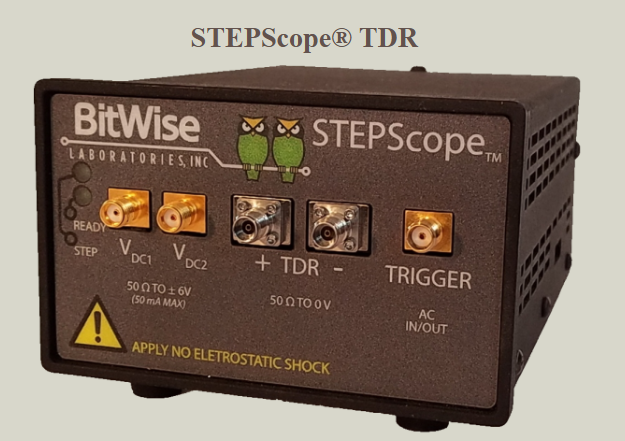

Modern electronic systems depend on fast, reliable signal transmission through cables and connectors. Whether in aerospace, telecommunications, automotive, or high-speed computing, even a small defect can lead to poor performance or complete system failure. This is where TDR testing for cables and connectors becomes an essential diagnostic method. By identifying impedance changes, discontinuities, and physical faults, Time Domain Reflectometry (TDR) helps engineers improve product quality and system reliability.
At BitWise Laboratories, advanced TDR testing solutions enable engineers to accurately analyze cables and connectors, ensuring optimal performance in demanding applications.
What Is TDR Testing?
Time Domain Reflectometry (TDR) is a signal integrity testing technique used to locate faults within transmission paths. During a TDR test, a fast electrical pulse is sent through a cable or connector. As the pulse travels, any change in impedance causes part of the signal to reflect back toward the source.
The reflected waveform provides valuable information about:
- Impedance discontinuities
- Open circuits
- Short circuits
- Damaged connectors
- Manufacturing defects
- Cable length
- Signal reflections
By analyzing these reflections, engineers can determine both the location and severity of faults without physically cutting or disassembling the cable.
Why Are Cables and Connectors Critical?
Cables and connectors form the communication backbone of nearly every electronic system. High-speed interfaces such as PCIe, USB, Ethernet, HDMI, and automotive communication networks require stable electrical characteristics to maintain data integrity.
Poor cable quality or defective connectors can introduce:
- Signal reflections
- Insertion loss
- Crosstalk
- Timing errors
- Increased bit error rates
- Reduced bandwidth
These issues become increasingly significant as operating frequencies continue to rise.
How Does TDR Testing Work?
TDR testing is based on measuring reflected electrical energy. When the transmitted pulse encounters a change in impedance, part of the signal returns to the measurement instrument.
The test process typically includes:
- Sending a high-speed pulse into the cable.
- Monitoring reflected signals.
- Measuring reflection timing.
- Calculating fault location.
- Identifying impedance variations.
- Evaluating overall transmission quality.
Because the reflection travel time is directly related to distance, engineers can accurately locate problems along the cable.
Common Problems Detected by TDR
One of the biggest advantages of TDR testing is its ability to identify multiple fault types with exceptional accuracy.
Common issues include:
Damaged Connectors
Mechanical wear, contamination, or poor manufacturing can affect connector performance. TDR quickly identifies these discontinuities.
Impedance Mismatch
Differences between cable impedance and connector impedance create reflections that reduce signal quality.
Broken Conductors
Internal cable damage may not be visible externally. TDR pinpoints the exact fault location.
Short Circuits
Accidental conductor contact creates strong reflections that are easily detected.
Open Circuits
Disconnected wires or damaged terminations produce distinct reflection signatures.
Benefits of TDR Testing
TDR provides several advantages for engineers working with high-speed electronic systems.
Fast Fault Isolation
Rather than replacing entire cable assemblies, engineers can identify the precise location of the defect.
Non-Destructive Testing
TDR does not damage the cable during inspection, making it suitable for production testing and maintenance.
Improved Product Quality
Manufacturers can verify cable performance before products are shipped.
Reduced Downtime
Quick diagnostics minimize repair time in mission-critical systems.
Enhanced Signal Integrity
By locating impedance discontinuities early, engineers improve overall communication performance.
Applications Across Industries
TDR testing supports a wide variety of industries where reliable signal transmission is essential.
These include:
- Data centers
- Aerospace systems
- Automotive electronics
- Military communication
- Telecommunications
- Medical devices
- Industrial automation
- Consumer electronics
- Semiconductor development
- High-speed computing
As transmission speeds continue increasing, accurate cable characterization becomes more important than ever.
Why Choose BitWise Laboratories?
BitWise Laboratories specializes in advanced signal integrity measurement solutions for engineers developing next-generation electronic systems. Its testing technologies help identify transmission problems that traditional measurement methods may overlook.
From research laboratories to manufacturing environments, BitWise Laboratories supports engineers with precision tools designed for high-speed cable analysis, connector validation, and impedance characterization. These capabilities allow design teams to detect issues early, reduce development costs, and improve final product reliability.
Whether validating prototype assemblies or troubleshooting production failures, TDR testing for cables and connectors provides accurate, repeatable results that support confident engineering decisions.
Best Practices for Effective TDR Testing
To achieve reliable measurements, engineers should follow proven testing practices:
- Use properly calibrated equipment.
- Select appropriate pulse rise times.
- Maintain consistent test connections.
- Minimize external electrical noise.
- Verify reference impedance values.
- Compare measurements against design specifications.
- Analyze both reflection magnitude and timing.
Following these guidelines improves measurement accuracy and ensures meaningful diagnostic results.
Conclusion
As electronic systems become faster and more complex, maintaining excellent signal integrity is essential for reliable performance. TDR testing for cables and connectors enables engineers to detect impedance mismatches, locate hidden faults, and validate transmission quality with exceptional precision. With advanced testing solutions from BitWise Laboratories, organizations can improve product reliability, reduce troubleshooting time, and ensure that high-speed communication systems perform at their best throughout their lifecycle.