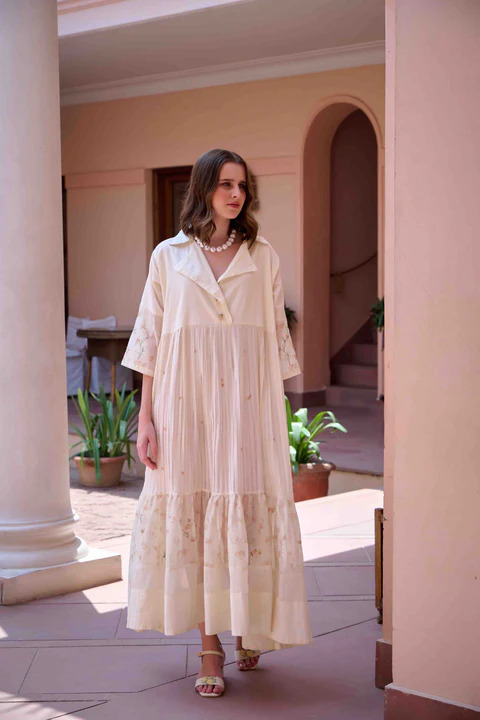

There’s a quiet shift happening in fashion-conscious closets everywhere. Fast, disposable pieces are giving way to garments with actual staying power — clothes chosen not just for how they look on day one, but for how they’ll hold up, feel, and age over years of wear. At the center of that shift sits an unlikely hero: the humble, handcrafted organic cotton dress.
This isn’t a nostalgia trend. It’s a genuine recalibration of what “good style” means, and it’s reshaping wardrobes from boardrooms to weekend markets.
The Problem With Fast Fashion Cotton
Not all cotton is created equal. Conventionally grown cotton is one of the most water- and pesticide-intensive crops in the world, and mass-manufactured cotton garments are often stitched under conditions that prioritize speed over quality. The result is a dress that looks fine on the hanger but pills, thins, or loses shape after just a handful of washes.
Key Style Rule: If a dress can’t survive ten washes without losing its shape, it was never actually a good investment — regardless of the price tag.
Organic and handcrafted alternatives flip that equation entirely.
What Makes Organic Cotton Different
Organic cotton is grown without synthetic pesticides or fertilizers, using significantly less water than conventional farming methods. Beyond the environmental benefit, it also produces a noticeably softer, more durable fiber — one that improves with wear rather than degrading.
The Tangible Benefits
- Softer hand-feel that doesn’t require chemical softening treatments
- Better breathability, since organic fibers retain more of their natural structure
- Longer lifespan, meaning fewer replacements and less textile waste over time
- Lower environmental footprint, from farming through to finished garment
The Case for Handcrafted Construction
Pair organic cotton with handcrafted construction, and you get a garment built with an entirely different philosophy than anything off a fast-fashion production line. Hand-finished seams, reinforced stitching, and small-batch quality control all mean a dress that’s designed to be worn for seasons, not just a single trip through your social media feed.
What to Look For
- Reinforced stitching at stress points like underarms and hems
- Natural dyes or low-impact dyeing processes
- Small-batch or made-to-order production, which reduces overproduction waste
- Visible craftsmanship — hand-stitched hems, natural button closures, artisanal detailing
This kind of intentional construction is exactly what defines a genuinely well-made handcrafted cotton dress collection — garments built with a level of care that mass production simply can’t replicate.
Sustainable Style Doesn’t Mean Sacrificing Fashion
One of the biggest misconceptions about sustainable fashion is that it requires trading style for ethics. In reality, the opposite is increasingly true. Organic cotton takes color and texture beautifully, and handcrafted details — hand-blocked prints, embroidery, natural dyeing techniques — often produce far more distinctive pieces than anything mass-manufactured.
Sustainable Doesn’t Mean Boring
- Hand-block printed florals with irregular, artisanal patterns
- Naturally dyed pieces in earthy, one-of-a-kind tones
- Embroidered necklines and cuffs that add texture without excess
Key Style Rule: The most distinctive pieces in your closet are rarely the mass-produced ones — they’re the ones with visible human hands behind them.
Why This Trend Has Staying Power
Unlike many fashion movements that fade after a season, the shift toward organic, handcrafted cotton is being driven by something more durable than trend cycles: genuine value. Shoppers are increasingly factoring cost-per-wear into their purchasing decisions, and a well-made cotton dress that lasts five years at three times the price of a fast-fashion equivalent quickly becomes the smarter investment.
How to Build a Sustainable Cotton Wardrobe
- Start with versatile silhouettes — a wrap dress, a shirt dress, a simple midi
- Prioritize natural, undyed, or low-impact dyed fabrics
- Choose brands transparent about their sourcing and labor practices
- Care for garments properly — cold washes, air drying, minimal ironing
- Repair rather than replace when small issues arise
The Environmental Math
A single organic cotton dress, cared for properly, can replace multiple fast-fashion purchases over its lifespan — reducing both textile waste and the resources required to manufacture replacement garments. Multiply that across a wardrobe, and the environmental impact becomes genuinely significant.
Final Thoughts
The rise of handcrafted, organic cotton dresses isn’t a passing aesthetic trend — it’s a meaningful shift in how style-conscious shoppers think about value, longevity, and impact. Choosing pieces built with intention, from fiber to final stitch, means investing in a wardrobe that looks better, feels better, and does less harm along the way. In a fashion landscape often defined by speed and disposability, that kind of quiet, considered choice is quickly becoming the most fashionable statement of all.