
While the sales floor often gets all the glory at a car dealership, the true engine of profitability lies in the back office. The Finance and Insurance (F&I) department, alongside the title clerks, handle the critical legal documentation that actually finalizes a vehicle sale. Mismanaging this paperwork can lead to delayed funding from banks, angry customers waiting for registration, and severe compliance penalties from the state Department of Motor Vehicles. To keep this engine running smoothly, absolute organizational precision is required.
The Chaos of Automotive Paperwork Selling a single vehicle generates a massive mountain of paperwork. Between the buyer’s order, the odometer statement, the implied warranty buyers guide, the loan application, and the vehicle title itself, the physical paper trail is extensive. When a dealership is moving hundreds of units a month, keeping these documents organized is a monumental task.
Historically, title clerks relied on generic manila folders or paperclips to keep documents grouped together. However, because titles are highly sensitive legal documents—essentially serving as the “deed” to the vehicle—they require a much higher level of security and organization than a standard piece of printer paper. If a title is lost or damaged in transit between the dealership, the bank, and the DMV, securing a duplicate can take weeks, completely halting the funding process.
Specialized Envelopes for Critical Documents To mitigate this risk, modern dealerships utilize heavy-duty, specifically printed car title envelopes. These envelopes are significantly thicker than standard office stationery, designed to protect the rigid title document from bending, moisture, and tearing.
More importantly, these envelopes feature pre-printed grids on the exterior. This allows the title clerk to immediately record essential tracking data on the outside of the packet, including:
- The Vehicle Identification Number (VIN)
- The Make, Model, and Year
- The Buyer’s Name
- The Lienholder (Bank) Information
- The Date of Sale
By glancing at the outside of the envelope, any manager or clerk can instantly identify the vehicle and the status of its registration without having to rifle through sensitive internal documents.
Protecting the Dealership’s Cash Flow A dealership cannot get paid by the bank until the title work is perfectly executed. By investing in professional auto dealer hardware and organizational supplies, general managers ensure their back-office staff can operate with maximum efficiency. Organized title management leads to faster funding, fewer rejected DMV applications, and a healthier overall cash flow for the business.
Conclusion Organization is not just about keeping a clean desk; it is about protecting the dealership’s bottom line. Utilizing specialized envelopes for vehicle titles ensures that the most critical legal documents are always secure, tracked, and processed rapidly.
Frequently Asked Questions (FAQ)
Q: Why can’t we just use standard manila folders for titles?
A: Standard folders are open on the sides, allowing small documents (like odometer statements or state-specific tax receipts) to easily slip out and get lost. Envelopes securely seal all related documents together.
Q: Are title envelopes large enough to hold folded contracts?
A: Yes, heavy-duty title envelopes are typically sized (often 6×9 or larger) to comfortably accommodate the title, folded buyer’s orders, and standard 8.5×11 contract copies.
Q: Do title envelopes require licking to seal?
A: Most premium automotive title envelopes feature a “peel-and-seal” or self-sealing latex flap to save time and eliminate the mess of moistening hundreds of envelopes.
Q: Can these envelopes be used during business hours?
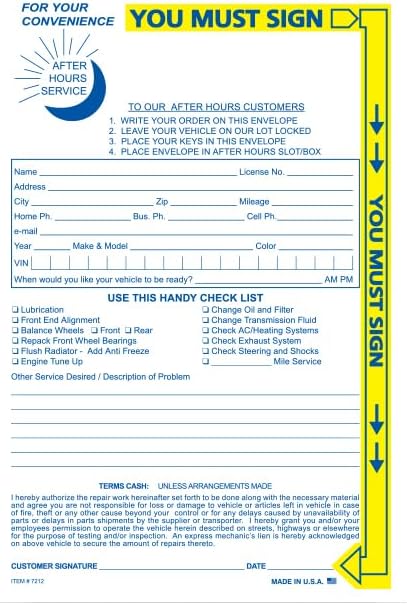
A: Absolutely. Many dealerships use “Early Bird” or drop envelopes during peak morning rushes to allow customers to quickly skip the line at the service advisor’s desk.
Q: Should I leave pens outside for customers to use?
A: Yes. A professional drop station should always include a weather-resistant pen attached via a security chain, ensuring customers can actually fill out the envelopes when they arrive.
Q: How do customers know what to do if there is no staff present?
A: The drop box area should feature highly visible, illuminated signage with clear, step-by-step instructions on how to fill out the envelope, where to park the vehicle, and where to drop the keys.