
Introduction
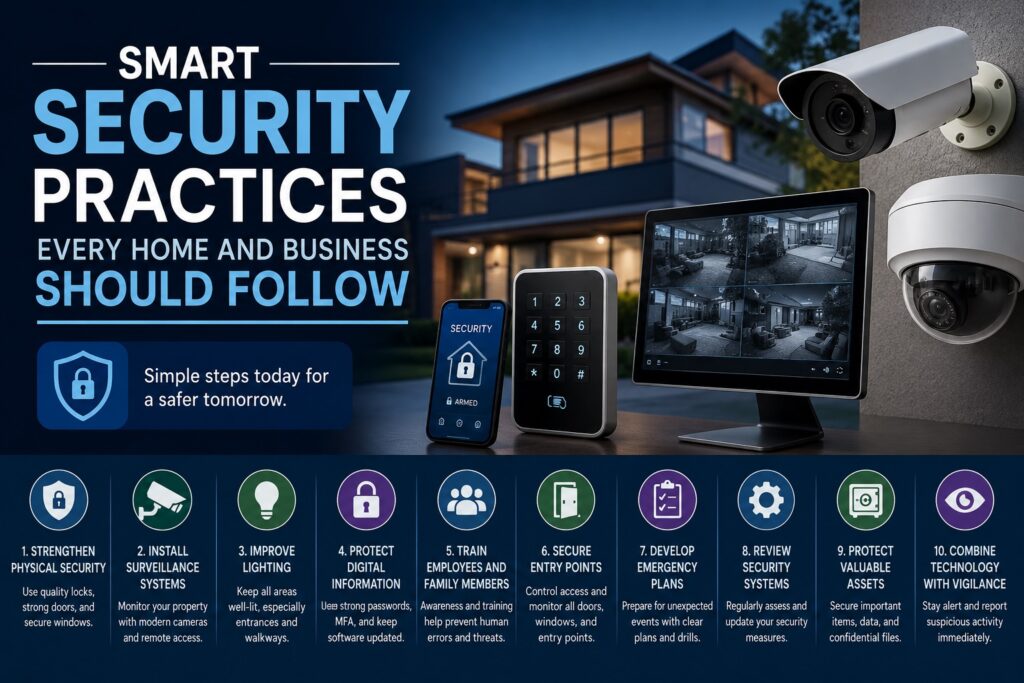
Security has become an essential part of everyday life for homeowners, businesses, and organizations alike. As technology advances and risks continue to evolve, protecting people, property, and valuable information requires more than simply installing locks or alarms. A comprehensive security strategy combines physical safeguards, digital protection, employee awareness, and regular maintenance to reduce vulnerabilities and respond effectively to potential threats.
Whether you’re securing a family home, a small business, or a large commercial facility, understanding the fundamentals of modern security can help prevent costly incidents and provide greater peace of mind. Here are some of the most important security practices everyone should consider.
1. Strengthen Physical Security
Physical security remains the first line of defense against unauthorized access. High-quality locks, reinforced doors, security windows, and proper fencing make it significantly more difficult for intruders to enter a property.
Businesses should also consider access control systems that limit entry to authorized personnel. Regular inspections ensure these security measures continue functioning properly over time.
2. Install Modern Surveillance Systems
Security cameras are valuable deterrents and provide important evidence if an incident occurs. Today’s surveillance systems offer high-definition video, motion detection, remote viewing, and cloud storage.
Position cameras at entrances, parking areas, hallways, and other critical locations to maximize coverage while complying with local privacy regulations.
3. Improve Lighting Around the Property
Poor lighting creates opportunities for criminal activity. Well-lit entrances, walkways, parking lots, and outdoor spaces increase visibility and discourage unauthorized access.
Motion-activated lighting is an energy-efficient option that provides illumination only when movement is detected.
4. Protect Digital Information
Cybersecurity is just as important as physical security. Businesses and individuals should use strong passwords, multi-factor authentication, updated antivirus software, and secure Wi-Fi networks to protect sensitive information.
Regular software updates help close security vulnerabilities before attackers can exploit them.
5. Train Employees and Family Members
Many security incidents occur because of human error rather than system failures. Educating employees or family members about security best practices reduces risks significantly.
Training topics may include:
- Recognizing phishing attempts
- Creating strong passwords
- Reporting suspicious activity
- Following access procedures
- Protecting confidential information
Awareness remains one of the most effective security tools available.
6. Secure Entry Points
Doors, windows, garages, and loading areas should be inspected regularly for signs of wear or damage. Smart locks and electronic access systems provide additional control and can record entry activity.
Businesses may also benefit from visitor management systems that monitor guests entering restricted areas.
7. Develop Emergency Response Plans
Preparation is essential during emergencies. Every organization should establish clear procedures for incidents such as fires, medical emergencies, severe weather, or security breaches.
Emergency plans should include evacuation routes, communication procedures, emergency contacts, and regular drills to ensure everyone understands their responsibilities.
8. Regularly Review Security Systems
Security needs change over time. As businesses grow or homes undergo renovations, existing security measures may no longer provide adequate protection.
Conduct periodic security assessments to identify vulnerabilities, test equipment, and update procedures based on current risks.
9. Protect Valuable Assets
Safes, secure storage rooms, encrypted digital storage, and inventory management systems help protect valuable equipment, important documents, and sensitive information.
Proper asset management reduces financial losses if theft or damage occurs.
10. Combine Technology with Vigilance
No security system can completely eliminate risk. Technology works best when combined with attentive people who remain alert to unusual behavior or suspicious activity.
Encouraging a culture of awareness helps identify potential problems before they become serious incidents.
Conclusion
Effective security requires a proactive and layered approach. By combining physical protection, cybersecurity, employee education, surveillance technology, and regular system reviews, individuals and organizations can significantly reduce potential risks. Security is not a one-time investment but an ongoing process that adapts to changing threats and technologies. Taking practical steps today can help safeguard your property, information, and people while providing confidence and peace of mind for the future.