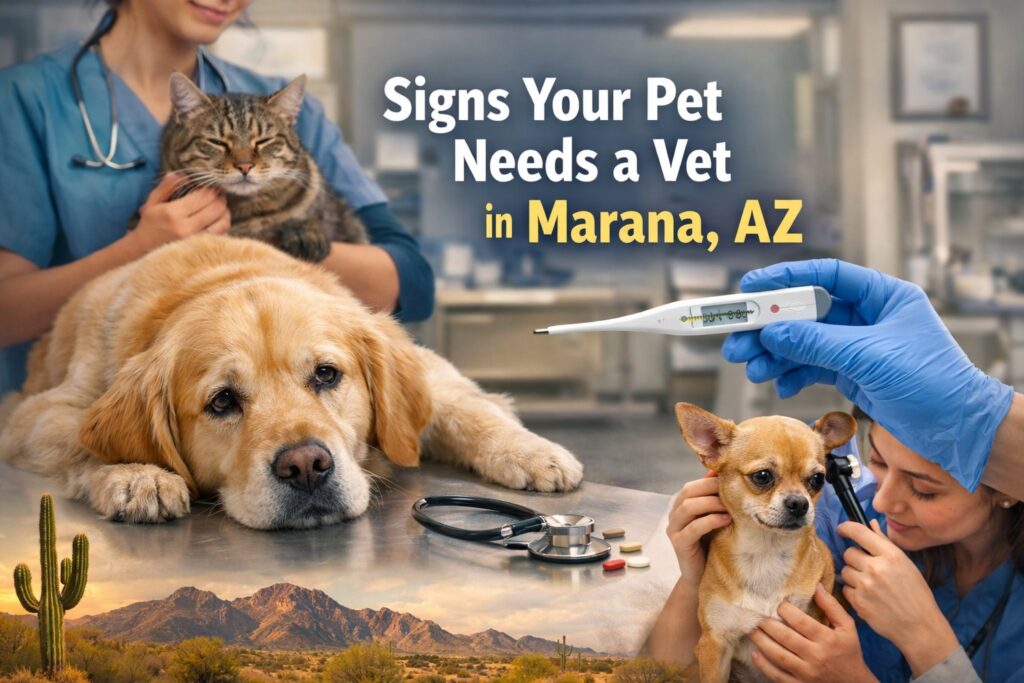

Most pet owners know that look. Your dog is quieter than usual. Your cat skips a meal. Something feels off, but you’re not sure if it’s serious enough to call the vet, or if it’ll pass on its own by morning.
It’s a question almost every pet parent wrestles with. And honestly, it’s one of the hardest parts of caring for an animal who can’t tell you where it hurts.
If you live in Marana, AZ, the good news is that access to quality veterinary care is close by. But knowing when to use it makes all the difference. This guide walks you through the signs that your dog or cat genuinely needs professional attention, what to expect from routine visits, and why staying ahead of health problems is almost always better than reacting to them.
Your Pet Is Trying to Tell You Something. You Just Have to Know What to Look For
Animals are masters at hiding discomfort. This is an instinct rooted in survival. In the wild, showing weakness attracts predators. So by the time your pet is visibly struggling, they may have been quietly dealing with something for a while.
That’s why pet owners need to be observant, not just reactive.
Here are the most common signs that a vet visit is warranted:
Changes in eating or drinking habits. A dog that suddenly refuses food for more than a day, or a cat drinking far more water than usual, can signal anything from stress to kidney disease or diabetes. Neither extreme is something to brush off.
Unexplained weight loss or gain. This is easy to miss if you’re not paying attention. But if your pet looks noticeably thinner, or heavier, without a change in diet, it’s worth investigating.
Lethargy that lasts more than a day. Every pet has lazy days. But if your usually energetic dog doesn’t want to get off the couch for 24-48 hours, or your cat stops engaging with things that normally interest them, that’s a sign something’s wrong.
Vomiting or diarrhea that repeats. One episode of vomiting isn’t always alarming. Repeated vomiting, or diarrhea that lasts more than a day, can lead to dehydration and may point to an underlying issue.
Coughing, sneezing, or labored breathing. Occasional sneezing is normal. But persistent coughing, wheezing, or any sign that your pet is working hard to breathe needs prompt attention.
Limping or difficulty moving. If your dog is favoring a leg, struggling to get up, or showing signs of joint pain, don’t wait to see if it resolves. Early intervention, whether through diagnostics, medication, or in some cases dog surgery in Marana, can prevent a small problem from becoming a serious one.
Changes in bathroom habits. Straining to urinate, blood in the urine, or going outside the litter box (especially in cats) can indicate infections, bladder issues, or blockages, some of which become emergencies quickly.
Lumps, bumps, or skin changes. Any new growth on your pet’s body should be examined. Most are benign, but some aren’t, and early detection is critical.
Bad breath, drooling, or pawing at the mouth. These are classic signs of dental problems. Dental disease is one of the most underdiagnosed conditions in pets, and it can affect organ health if left untreated.
If you’re seeing one or more of these signs in your dog or cat, it’s time to call your vet.
Why Routine Wellness Exams Matter More Than You Think
Here’s something most pet owners don’t realize: a lot of the conditions listed above could have been caught earlier, sometimes much earlier, with a routine checkup.
A dog wellness exam in Marana isn’t just about vaccines. It’s a full-body assessment. A trained vet checks your pet’s weight, teeth, eyes, ears, coat, lymph nodes, heart, and lungs. They look at things you can’t see at home. And because they see your pet regularly, they notice changes over time that might not be obvious to you.
Think of it like an annual physical for yourself. You don’t wait until something is obviously wrong to see a doctor. The same logic applies to your pets, and arguably even more so, since they age faster and hide symptoms so well.
For puppies and kittens, these visits are especially important. Early wellness exams establish a health baseline, set up a proper vaccine schedule, and catch developmental issues while they’re still manageable.
For senior dogs and cats, annual exams become even more critical. Older pets are more prone to arthritis, kidney disease, thyroid conditions, and cancer. Catching these things early gives you more options and, in many cases, more time.
Cat Vaccinations in Marana: What Every Cat Owner Should Know
Cats are famously independent, and cat owners are sometimes guilty of thinking that independence means cats don’t need as much veterinary attention as dogs. That’s a misconception worth clearing up.
Cat vaccinations in Marana are a core part of responsible cat ownership. Core vaccines like rabies and FVRCP (which covers feline distemper and upper respiratory viruses) are recommended for all cats, regardless of whether they go outdoors. Indoor cats are not immune to illness. They can still be exposed to pathogens through open windows, other animals, or items brought in from outside.
Non-core vaccines, such as those for feline leukemia, may be recommended depending on your cat’s lifestyle and risk level. Your vet will help you figure out the right schedule.
Beyond vaccines, routine cat exams also screen for common conditions like hyperthyroidism, kidney disease, and dental issues, all of which become more common as cats age.
When Surgery Becomes Necessary and What to Expect
The word “surgery” understandably worries pet owners. But when it’s necessary, dog surgery in Marana is often the most direct path to relief and recovery.
Common procedures include spay and neuter surgeries, mass removals, orthopedic repairs, and soft tissue surgeries for conditions like bladder stones or intestinal blockages. At a well-equipped local clinic, these procedures are performed with modern anesthesia protocols, in-house monitoring, and thorough pre-surgical bloodwork to reduce risk.
Recovery varies depending on the procedure and your pet’s age and health status. Your vet will walk you through pain management, activity restrictions, wound care, and what signs to watch for during healing. Post-surgical follow-up visits are usually part of the process.
If your vet recommends surgery, ask questions. Understand the diagnosis, the procedure, the risks, and the expected outcome. A good veterinary team welcomes those conversations.
Personalized Care Makes a Real Difference
There’s a meaningful difference between a clinic that treats your pet like a number and one that actually knows your animal, their history, their quirks, their baseline temperament.
At Tangerine Pet Clinic in Marana, care is built around that kind of relationship. As a local, independent practice focused exclusively on dogs and cats, the team takes time to understand each patient individually. That means fewer unnecessary procedures, better communication, and a calmer experience for pets who find vet visits stressful.
Their fear-free approach, using gentle handling, quiet spaces, and patience, isn’t just a nice touch. It makes medical exams more accurate and recovery from procedures smoother, because a calm pet is easier to examine and treat effectively.
When to Call vs. When to Go Now
Not every symptom requires an emergency visit. But some do. Here’s a quick general guide:
Call and schedule an appointment soon (within 1-2 days) if:
- Your pet is eating less or differently for more than a day
- You notice gradual weight changes
- Your pet is limping but still bearing weight
- There’s mild or intermittent vomiting
Seek urgent care right away if:
- Your pet collapses or can’t stand
- There is blood in vomit, stool, or urine
- Your pet is straining to urinate with no output (especially cats, as this can become fatal quickly)
- Your pet has a suspected broken bone
- There is a wound that won’t stop bleeding
- Your pet seems disoriented or is having seizures
When in doubt, a quick call to your local Marana vet clinic can help you decide what level of urgency is appropriate.
A Simple Rule for Pet Health in Marana
If something feels off about your pet, trust that instinct. You know your animal better than anyone. Pair that intuition with regular wellness visits, current vaccines, and a vet relationship built on real communication, and you’re doing right by the animal that trusts you completely.
Preventive care is less expensive, less stressful, and almost always more effective than treating something that’s been allowed to progress. Book that wellness exam. Keep up with vaccines. And if you see something that worries you, don’t wait.
FAQ Section (Schema-Friendly)
Q: How often should I bring my dog or cat to the vet in Marana?
A: Most healthy adult pets benefit from an annual wellness exam. Puppies, kittens, and senior pets typically need visits more frequently, sometimes every 6 months, depending on their age and health status.
Q: Are cat vaccinations required even for indoor cats in Marana?
A: Core vaccines like rabies and FVRCP are generally recommended for all cats, including indoor ones. Exposure risk still exists through windows, other pets, or contact with outdoor items. Your vet can help determine the right vaccine plan for your cat.
Q: What is included in a dog wellness exam in Marana?
A: A standard dog wellness exam includes a full physical assessment covering weight, teeth, eyes, ears, heart, lungs, skin, and lymph nodes. It also includes a review of vaccine status, parasite prevention, and any concerns you have about your pet’s behavior or health.
Q: When does a pet actually need surgery?
A: Surgery is recommended when a condition cannot be effectively treated with medication alone, such as mass removals, bladder stones, spay/neuter procedures, or injuries. Your vet will discuss all options and explain why surgery is the recommended path before proceeding.
Q: How do I know if my pet’s symptoms are an emergency?
A: Signs like inability to urinate, collapse, uncontrolled bleeding, or seizures require immediate care. For milder symptoms like reduced appetite or mild limping, calling your vet to describe the situation and get guidance is the right first step.