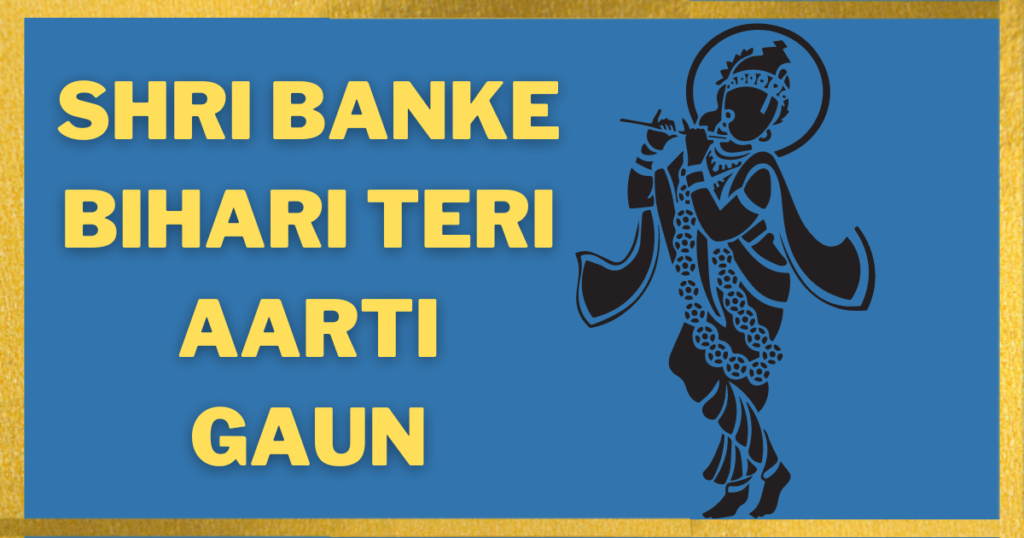

Divine Radiance: Embracing the Spiritual Essence of Banke Bihari
The spiritual landscape of India is a vibrant tapestry of devotion, melody, and profound faith. At the heart of this landscape lies Vrindavan, the playground of Lord Krishna, where every dust particle is said to echo with the sound of his flute. For millions of devotees, the ultimate expression of this love is found in the rhythmic chants and soul-stirring hymns dedicated to the deity. Among these, the Shri Banke Bihari Teri Aarti Gaun Aarti stands as a cornerstone of daily worship, acting as a bridge between the mortal soul and the divine presence of the “Bent Enjoyer.”
The Mystique of Banke Bihari Ji
To understand the weight of the words in the Shri Banke Bihari Teri Aarti Gaun Aarti, one must first understand the unique persona of Banke Bihari. Unlike many other forms of Krishna, the idol here stands in the Tribhanga posture—bent in three places. This posture isn’t just an artistic choice; it symbolizes a relaxed, playful, and charming stance that captures the heart of any onlooker.
The temple in Vrindavan is unlike any other. There are no bells rung to wake the Lord, as it is believed he was kept awake all night by the devotion of his followers. Instead, the worship is quiet, intimate, and deeply emotional. The aarti is the climax of this interaction, a moment where the curtain is drawn back and forth, ensuring the Lord’s intense gaze doesn’t overwhelm the devotee, nor does the devotee’s gaze “disturb” the deity.
Deep Dive into the Lyrics and Meaning
The opening lines, “Shree Baanke Bihaaree teree aaratee gaan, he giridhar teree aaratee gaoon,” set a tone of total surrender. When a devotee sings the Shri Banke Bihari Teri Aarti Gaun Aarti, they aren’t just performing a ritual; they are engaging in a conversation.
The Symbolism of the Adornments
The aarti beautifully describes the physical form of Krishna:
-
Mor Mukut (Peacock Feather Crown): Represents the beauty of nature and the Lord’s connection to all living beings.
-
Bansee (Flute): The instrument that calls the soul away from material distractions toward spiritual awakening.
When we recite Shri Banke Bihari Teri Aarti Gaun Aarti, we visualize the Chhavi (image) of the Lord. The lyrics “Chhavi dekhen balihaaree main jaoon” translate to a feeling of being completely sacrificed or lost in the sheer beauty of the divine form. It is a psychological state of “Bhakti” where the ego dissolves, leaving only the seeker and the sought.
The Spiritual Impact of Chanting
In the modern world, where stress and digital noise are constant, the practice of singing the Shri Banke Bihari Teri Aarti Gaun Aarti serves as a form of “Sound Yoga” or Nada Yoga. The repetitive nature of the verses helps in centering the mind.
Emotional Catharsis
For many, the act of singing “Aaratee gaoon priy tumhen rijhaoon” (I sing this aarti to please you, my dear) provides a sense of belonging. It transforms the vast, unknowable Universe into a “Priy” (dear friend or lover). This personal connection is what makes the Shri Banke Bihari Teri Aarti Gaun Aarti so enduring. It turns a religious ceremony into a deeply personal emotional release.
Community and Vibration
In the temple halls of Vrindavan, when hundreds of voices join together to sing the Shri Banke Bihari Teri Aarti Gaun Aarti, the collective vibration is palpable. It creates an atmosphere of “Satsang”—the company of truth. This collective energy is believed to purify the environment and the hearts of those present.
How to Incorporate the Aarti into Daily Life
You don’t have to be in the narrow lanes of Vrindavan to experience the grace of the Lord. Many families have integrated the Shri Banke Bihari Teri Aarti Gaun Aarti into their home shrines.
-
Preparation: Light a diya (lamp) with ghee or oil. The flame represents the soul’s yearning for the light of knowledge.
-
Focus: Keep an image or idol of Banke Bihari in mind. Visualize the Mor Mukut as described in the verses.
-
Bhav (Emotion): The most important element isn’t the perfect pronunciation of the Sanskrit or Hindi words, but the Bhav. As the Shri Banke Bihari Teri Aarti Gaun Aarti suggests, the goal is to “please” the Lord through sincerity.
The Eternal Appeal of the “Shyam Sundar”
The aarti refers to Krishna as Shyam Sundar—the one who is dark and beautiful. This paradox of darkness being beautiful is a profound spiritual metaphor. It suggests that even in the “darkness” of our troubles or the unknown aspects of life, there is a divine beauty waiting to be discovered.
By regularly engaging with the Shri Banke Bihari Teri Aarti Gaun Aarti, devotees report a sense of “Kripa” or grace. It is a reminder that despite the chaos of the outside world, there is a steady, flute-playing presence that guides the soul back to peace.
Whether you are a lifelong devotee or someone exploring Indian spirituality for the first time, the verses of the Shri Banke Bihari Teri Aarti Gaun Aarti offer a window into a world of pure, unadulterated love. It is more than just a song; it is a vessel of ancient wisdom, a tool for meditation, and a beautiful tribute to the eternal charm of Lord Krishna.
As the final verses fade and the camphor flame rises, the devotee is left with a sense of stillness. That stillness is the true gift of the Shri Banke Bihari Teri Aarti Gaun Aarti—a moment of connection that transcends time and space.