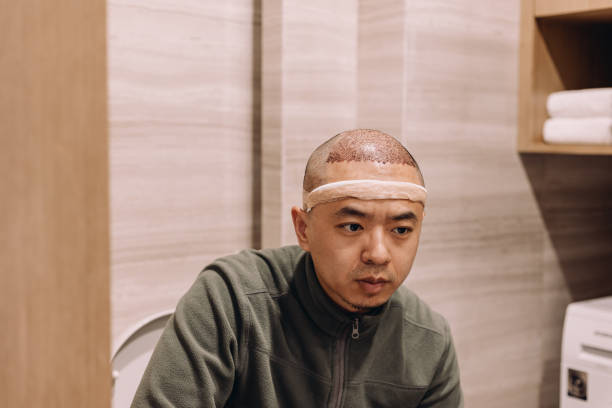

The success of a Scarless Hair Transplant in Dubai depends as much on the patient’s post-operative discipline as it does on the surgeon’s skill. While the FUE method eliminates the need for sutures, the newly implanted follicles remain “free-floating” in the scalp for the first several days, relying on a delicate fibrin bond to stay in place. Maintenance during this window is not just about hygiene; it is about ensuring the biological integration of live tissue into a new environment.
In clinical settings, we observe that the first 14 days dictate the final density of the result. This guide provides a medically grounded maintenance protocol, detailing the physical sensations of aftercare and the safety measures required to protect your new follicles in the unique Dubai climate.
The Critical First 72 Hours: Graft Stabilization
During the first three days following a Scarless Hair Transplant in Dubai, your primary clinical goal is “Zero Contact.” The follicles are highly susceptible to mechanical trauma.
How do you maintain the scalp in the early stages?
-
Hydration Sprays: You will be provided with a specialized saline or copper peptide spray. Clinicians recommend misting the recipient area every 30 to 60 minutes. This prevents the formation of hard scabs that can “choke” the graft.
-
Elevation Sleep: You must sleep at a $45^circ$ angle. This utilizes gravity to prevent fluid (edema) from settling in your forehead and eyelids.
-
The “Hands-Off” Rule: No touching, picking, or scratching. Even a light fingernail snag can permanently dislodge a follicle that hasn’t yet established a blood supply.
Is Post-Op Maintenance Uncomfortable?
What are the actual sensations during the first week of aftercare?
Maintenance involves a series of tactile sensations as the skin begins its rapid regeneration phase.
Step-by-Step Maintenance Sensations:
-
The “Tight” Phase (Days 1–3): The scalp feels heavy and “stretchy.” This is the peak of the inflammatory response. The saline spray will feel cool and provide instant, temporary relief.
-
The “Prickle” Phase (Days 4–7): As the donor micro-dots heal, you will feel a significant “pins and needles” or itchy sensation. This is a sign of nerve repair. We recommend a gentle “patting” with a clean damp cloth rather than scratching.
-
The First Wash (Day 5): The first time you wash your hair, it may feel “foreign.” Using the “cup-and-pour” method avoids the pressure of a showerhead, which can feel like needles on a fresh transplant.
-
Sensation Returns: By day 10, the “numbness” from the surgery begins to fade, replaced by normal scalp sensitivity.
“The first few days were a bit of a chore with the constant spraying, but it kept the scabs soft. When I did my first real wash on day ten and saw the scabs just slide away without any bleeding, I knew the grafts were safe.” — Mateo
Safety Considerations: Environmental Hazards in Dubai
How do you protect your transplant in a desert climate?
The Dubai environment presents specific challenges for a Scarless Hair Transplant in Dubai, primarily due to heat and UV intensity.
-
Sweat Management: Excessive sweating can lead to folliculitis (infection of the hair follicle). For the first 14 days, you must remain in climate-controlled environments and avoid any activity that causes a “brow-drip” sweat.
-
UV Shielding: New grafts have no melanin protection. Direct sun exposure can cause “hyperpigmentation” of the micro-dots. We advise using a broad umbrella or a very loose-fitting “trucker” hat only after Day 7.
-
Dust and Pollutants: Construction dust or sand can irritate the micro-wounds. If you must be outdoors, ensure the scalp is covered by a clean, loose surgical cap.
Comparison: Maintenance Intensity Timeline
| Phase | Maintenance Effort | Primary Action |
| Days 1 – 3 | High | Saline misting / Elevated sleep |
| Days 4 – 10 | Moderate | Gentle “pat” washing / Scab management |
| Days 11 – 30 | Low | Protecting from sun / Avoiding gym |
| Months 2 – 4 | Minimal | Monitoring “Shock Loss” / Normal washing |
Long-Term Maintenance: Ensuring Vitality
What happens after the skin has healed?
After the first month of a Scarless Hair Transplant in Dubai, maintenance shifts from “wound care” to “follicle support.”
-
Nutritional Support: In clinical settings, we often recommend Biotin or Zinc supplements to provide the building blocks for the new hair shafts emerging at month four.
-
Avoidance of Harsh Chemicals: No hair dye or chemical straighteners for at least 8 weeks. The new scalp tissue is more permeable and sensitive to chemical burns.
-
Scalp Massage: Once you reach Month 3, gentle scalp massages can improve local micro-circulation, potentially speeding up the “breakthrough” growth of new hairs.
“My doctor told me that the surgery was 50% of the job and my aftercare was the other 50%. Staying out of the sun and being patient during the ‘itchy’ week made all the difference in how clean my scalp looks now.” — Farid
FAQs:
When can I use a normal showerhead?
We recommend waiting until Day 14. The direct pressure of a high-flow showerhead can still be too aggressive for the newly anchored follicles before this point.
Can I use Minoxidil or Finasteride after FUE?
Most clinicians suggest pausing topical Minoxidil for 14 to 21 days to avoid irritating the healing micro-wounds. Oral medications can usually be continued without interruption.
What if I accidentally hit my head?
If you bump your head and see bleeding in the recipient area, a graft may have been lost. Contact the clinic immediately for a clinical assessment of the site.
When can I wear a helmet for biking or a motorcycle?
You must wait at least 4 to 6 weeks. The friction and “shear force” of a tight helmet are dangerous for the maturation of the new hair roots.
Why Choose Tajmeels Clinic?
At Tajmeels Clinic, we believe that the best results are grown, not just planted. Our commitment to your Scarless Hair Transplant in Dubai includes a comprehensive “Recovery Suite” of products and scheduled follow-ups to ensure your maintenance is on track. We provide a professional, medical environment where we teach you the exact techniques for washing, sleeping, and protecting your new hair. By combining our surgical precision with your diligent aftercare, we ensure your journey to a full head of hair is safe, successful, and permanent.