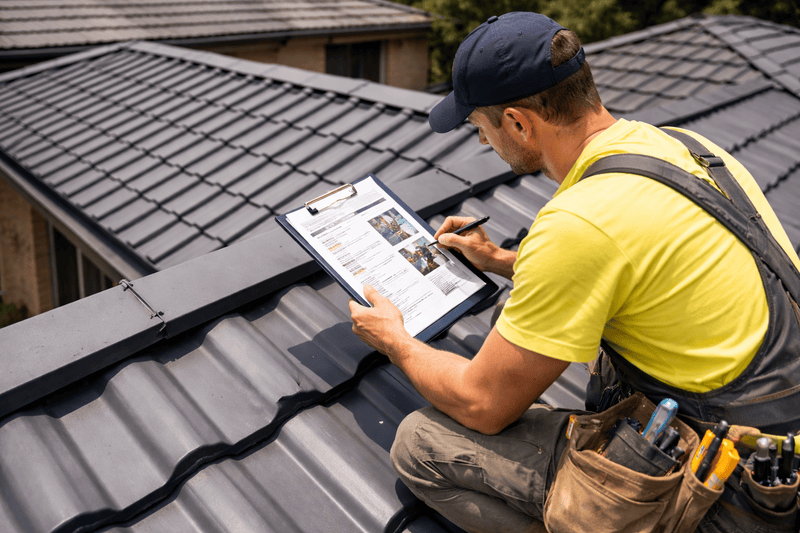

Roof reports and maintenance plans are often discussed in the context of large commercial buildings, yet they are just as relevant for residential properties, strata complexes and industrial facilities. A roof is one of the most critical structural components of any building, but it is also one of the least visible. Because problems tend to develop out of sight, issues are often discovered late, when damage is already advanced and costly to address. Structured reporting and forward-planned maintenance provide a way to manage this risk proactively rather than reactively.
Across Australia, roofing systems are exposed to fluctuating temperatures, heavy rainfall, wind events and airborne debris. Over time, these conditions place cumulative stress on fixings, seams, flashings and protective coatings. Roof reports and maintenance plans offer a documented, methodical approach to understanding how a roof is performing now and what it is likely to need in the future.
What roof reports actually assess
A roof report is more than a visual inspection. It is a detailed assessment of the roof’s current condition, typically covering materials, drainage, fixings, penetrations and signs of deterioration. The purpose is not simply to identify defects, but to document their severity, location and potential impact if left unaddressed.
For metal roofing systems in particular, early indicators such as coating breakdown, fastener fatigue or minor corrosion may not immediately cause leaks. However, these issues often progress quietly until they affect structural integrity or internal spaces. A thorough report provides clarity about which issues require immediate attention and which can be monitored over time.
Property owners and facility managers often reference resources like PMR Roof reports and maintenance plans to understand how professional reporting frameworks are structured and what information they typically include.
Why maintenance plans matter as much as inspections
While a roof report captures a snapshot in time, a maintenance plan looks ahead. It translates inspection findings into a staged program of upkeep, repairs and reviews. This approach recognises that roofs rarely fail suddenly without warning. Instead, they deteriorate gradually, offering opportunities for intervention if monitored correctly.
Maintenance plans typically prioritise tasks based on risk and urgency. High-risk issues that may lead to water ingress or safety concerns are addressed first, while lower-risk items are scheduled for future attention. This helps spread costs over time and avoids the financial shock of unexpected major repairs.
In many cases, maintenance plans also account for the roof’s age and remaining service life. Rather than investing heavily in a roof nearing the end of its lifespan, a plan may recommend interim measures alongside budgeting for eventual replacement.
Supporting budgeting and asset management
One of the most practical benefits of roof reports and maintenance plans is their value in budgeting. Unplanned roof failures often result in emergency repairs, business disruption or internal damage that far exceeds the cost of preventative maintenance.
For commercial and strata properties, clear documentation supports long-term asset management strategies. Maintenance plans provide a defensible basis for capital expenditure forecasts and help decision-makers justify proactive spending. Even for residential owners, having a clear understanding of future roof needs allows for better financial planning.
Information provided through Pure Metal Roofing reports and maintenance plans often highlights how planned maintenance can reduce lifecycle costs by explaining not just what needs attention, but when and why.
Identifying patterns rather than isolated issues
A key advantage of ongoing reporting is the ability to identify patterns. A single blocked gutter may be a one-off issue, but recurring blockages in the same area may point to design limitations, tree overhangs or insufficient fall.
Similarly, repeated fastener issues may indicate movement, thermal expansion stresses or installation-related weaknesses. Roof reports compiled over time allow these trends to be recognised and addressed at their source rather than repeatedly treating symptoms.
This pattern-based insight is particularly valuable for large roof areas, where isolated repairs without broader context may fail to resolve underlying causes.
The role of maintenance in extending roof lifespan
Roofs are often replaced earlier than necessary due to neglected maintenance. Small, manageable issues such as sealant failure or minor corrosion can escalate if left unattended, ultimately shortening the roof’s service life.
Maintenance plans aim to slow this progression. Regular cleaning, minor repairs and protective treatments may significantly extend the functional lifespan of a roofing system. This does not mean eliminating eventual replacement, but rather delaying it in a controlled and cost-effective way.
For metal roofs, maintaining protective coatings and addressing early corrosion are particularly important. A well-maintained metal roof may perform effectively for decades beyond its initial expectations.
Compliance, insurance and due diligence
Roof reports also play a role in compliance and risk management. In commercial and industrial settings, documented inspections may support workplace safety obligations by demonstrating that roof structures and access points are being monitored.
From an insurance perspective, evidence of regular maintenance may strengthen claims by showing that reasonable care has been taken to manage known risks. Conversely, a lack of documentation may complicate claims if damage is attributed to long-term neglect.
During property transactions, roof reports provide transparency for buyers and sellers alike. They reduce uncertainty and may prevent disputes arising from undisclosed defects discovered after settlement.
Tailoring plans to different building types
Not all roofs require the same maintenance approach. Residential homes, warehouses, schools and retail centres each face different usage patterns and exposure risks. Roof reports and maintenance plans should reflect these differences rather than applying generic schedules.
For example, roofs with frequent foot traffic for plant maintenance may require more regular inspections than those with limited access. Similarly, buildings in coastal or industrial environments may need closer monitoring due to increased corrosion risk.
Guidance associated with puremetalroofing.com.au Roof reports and maintenance plans often emphasises the importance of tailoring maintenance strategies to roof type, environment and usage rather than relying on fixed intervals alone.
Reducing reactive maintenance and disruption
Reactive maintenance tends to occur at inconvenient times, often during severe weather or peak operational periods. Leaks during storms, for example, may force temporary closures or emergency call-outs.
Planned maintenance reduces this disruption by addressing vulnerabilities before they become failures. It also allows work to be scheduled during suitable conditions, improving repair quality and safety.
For businesses, this predictability supports continuity. For homeowners, it reduces stress and the likelihood of internal damage that disrupts daily life.
Building knowledge and accountability over time
Roof reports create a record of decisions and actions taken. Over time, this record builds a clear history of how the roof has been managed, what interventions have occurred and how effective they were.
This knowledge is valuable when responsibility changes hands, such as when property managers rotate or ownership transfers. It ensures continuity and avoids repeating assessments or missing known issues due to lack of information.
Maintenance plans also promote accountability by setting clear expectations around inspection intervals and response times. This reduces the risk of maintenance being deferred indefinitely.
A preventative approach to roof care
Roof reports and maintenance plans represent a shift from reactive problem-solving to preventative care. Rather than waiting for visible damage, they encourage early intervention based on documented condition and risk assessment.
This approach aligns with broader asset management principles, where longevity, safety and cost control are prioritised over short-term savings. While not every issue can be prevented, many can be mitigated through timely attention and informed planning.
For property owners seeking stability rather than surprises, structured reporting and maintenance provide a practical foundation for managing one of a building’s most important assets.