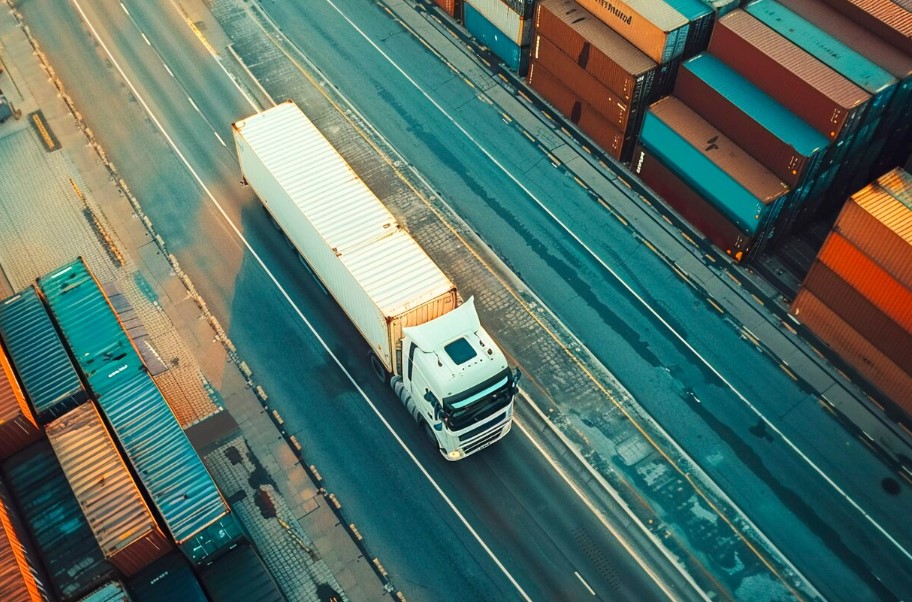

Every product you buy whether it’s groceries, furniture, or electronics likely traveled part of its journey on a truck. Road freight transportation is the backbone of modern commerce, connecting manufacturers to distributors, warehouses to retail stores, and businesses to end consumers.
Despite the rise of air cargo and ocean shipping, road freight remains the most widely used method of moving goods locally and regionally. It’s flexible, cost-effective, and reaches places that trains and ships simply can’t. Whether you’re a business owner trying to cut logistics costs, a supply chain professional, or just someone curious about how goods move around the world, this guide breaks it all down in plain language.
What Is Road Freight Transportation?
Road freight transportation refers to the movement of goods by motor vehicles primarily trucks, vans, and lorries over roads and highways. It covers everything from a small van delivering packages across town to a full articulated truck hauling machinery across international borders.
It operates in two main forms:
- Full Truckload (FTL): A single shipment fills the entire truck. Best for large volumes moving from one point to another without stops.
- Less Than Truckload (LTL): Multiple shippers share space on the same truck. Cost-effective for smaller loads that don’t need an entire vehicle.
There’s also groupage freight, where smaller consignments from various senders are consolidated into one shipment. This is popular for cross-border European trade and is a smart option for businesses that ship regularly but in smaller quantities.
Unlike air or sea freight, road freight transportation doesn’t require goods to be transferred between different transport modes to complete a final delivery. That door-to-door capability is one of its biggest advantages.
Why Is Road Freight Transportation Important?
The global economy depends heavily on road freight. In many countries, trucks carry more than 70% of all domestic freight by volume. Without road freight, supply chains would collapse almost overnight.
Here’s why it matters:
It connects the entire supply chain. Even if goods travel by sea or rail for part of their journey, trucks almost always handle the first and last mile of delivery. They pick up goods from factories and deliver them to final destinations that larger transport modes can’t access.
It supports small and medium businesses. A shipping company doesn’t need to own a port or a rail terminal to offer road freight services. This low barrier to entry supports a competitive market with options for businesses of all sizes.
It enables just-in-time delivery. Industries like automotive manufacturing and retail rely on precise, timed deliveries to keep production running and shelves stocked. Road freight, with its flexibility and point-to-point routing, makes this possible.
It drives regional economic development. Areas with strong road freight infrastructure attract investment. Good connectivity to motorways and distribution networks often determines where companies choose to set up logistics hubs, warehouses, and factories.
Benefits of Road Freight Transportation
When companies choose road freight, they’re not just picking a delivery method — they’re choosing a set of advantages that other modes struggle to match.
1. Door-to-Door Service
Road freight goes where rail and ships can’t. Whether it’s a remote warehouse, an inner-city shop, or a rural farm, trucks can deliver directly without the need for intermediate handling.
2. Flexibility in Scheduling
Road freight operators can adjust routes and timings more easily than fixed-schedule trains or ships. If a delivery needs to happen overnight or on a weekend, road freight can accommodate that.
3. Cost-Effective for Short and Medium Distances
For distances under 500–800 km, trucking is often cheaper than air freight and more practical than rail, especially when factoring in loading, transfer, and handling costs at terminals.
4. Real-Time Tracking
Modern road freight carriers use GPS tracking and digital fleet management systems. Shippers can monitor their cargo in real time, improving visibility and reducing uncertainty.
5. Wide Network Coverage
Road networks exist virtually everywhere. This makes road freight transportation the most universally accessible logistics option, particularly in regions where rail infrastructure is underdeveloped.
6. Scalable for All Cargo Sizes
From a few pallets to a full truckload of heavy machinery, road freight scales easily. Specialized vehicles handle oversized loads, temperature-sensitive goods, and hazardous materials too.
How Does Road Freight Transportation Work?
Understanding the process helps businesses make better decisions and avoid costly mistakes.
Step 1: Booking and Documentation
The shipper contacts a freight carrier or logistics broker to book transportation. Key documents include the Bill of Lading (BOL), commercial invoice, packing list, and for international shipments customs declarations.
Step 2: Pickup and Loading
The carrier dispatches a truck to collect the goods. Cargo is inspected, loaded, and secured properly to prevent damage during transit. Loading quality directly affects whether goods arrive in the same condition they left.
Step 3: Transit and Route Planning
The driver follows a planned route, often optimized for time, fuel efficiency, and legal weight limits. For international road freight, the vehicle may cross multiple border checkpoints, requiring proper customs paperwork at each.
Step 4: Customs Clearance (for International Shipments)
Cross-border road freight involves customs declarations, import/export duties, and compliance with the destination country’s regulations. Delays here are common when documentation is incomplete or incorrect.
Step 5: Delivery and Proof of Delivery (POD)
Upon arrival, the recipient inspects the goods and signs a Proof of Delivery document. Any damage or discrepancies are noted at this stage. The POD is an important legal record for both shipper and receiver.
Step 6: Invoice and Payment
The carrier issues a freight invoice based on the agreed rate — typically calculated by weight, volume, distance, or a combination of these factors.
Common Problems and Solutions
Road freight, like any logistics method, comes with its share of challenges. Knowing them in advance helps you prepare.
Problem: Delivery Delays
Traffic congestion, road closures, and border delays are common causes. Solution: Build buffer time into your logistics planning. Use carriers that provide real-time tracking so you can respond to delays proactively.
Problem: Cargo Damage
Improper packing or poor load securing causes most damage claims. Solution: Use proper packaging materials, clearly label fragile items, and ensure your carrier uses qualified drivers and well-maintained vehicles.
Problem: Freight Cost Volatility
Fuel prices, driver shortages, and seasonal demand spikes can push freight rates up unpredictably. Solution: Consider long-term contracts with carriers for rate stability, and consolidate shipments to reduce cost per unit.
Problem: Documentation Errors
Missing or incorrect paperwork causes customs delays that can halt shipments for days. Solution: Work with an experienced freight forwarder who understands the documentation requirements for each trade lane.
Problem: Environmental Regulations
Increasing emissions regulations affect which vehicles can enter certain zones (like Low Emission Zones in UK and EU cities). Solution: Partner with carriers who operate modern, compliant fleets and are investing in alternative fuel vehicles.