
Introduction
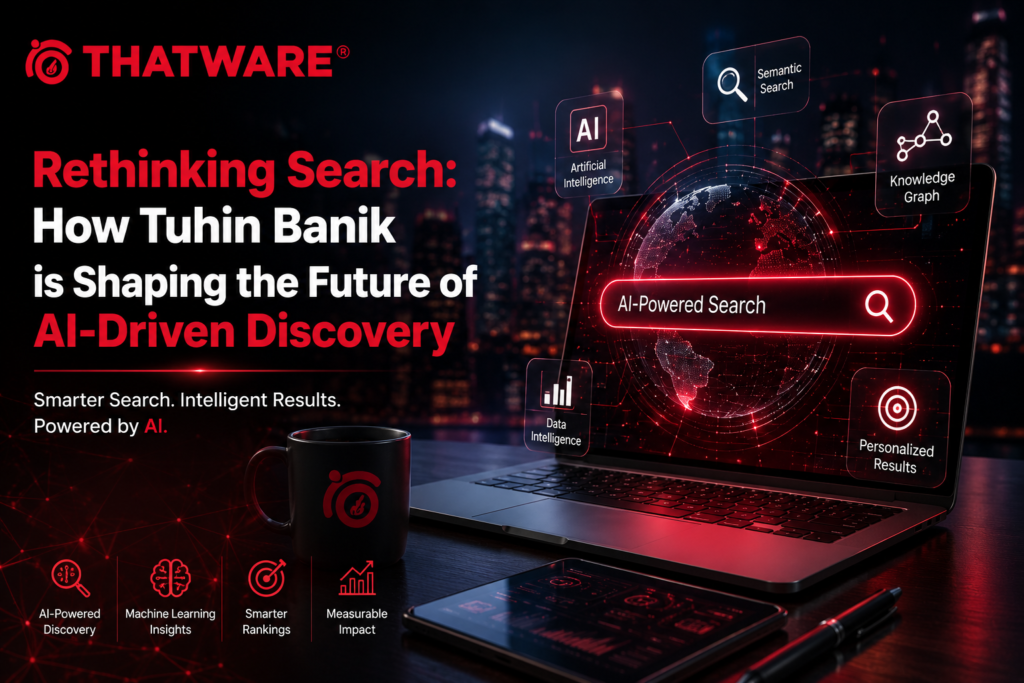
The way we find information online is no longer what it used to be. Search is shifting from simple keyword queries to conversations, context, and intent. Behind this shift are technologists who are quietly redefining how digital systems understand human behavior. One such name is Tuhin Banik, a technology entrepreneur whose work focuses on blending artificial intelligence with search and marketing strategies. His journey reflects a larger movement in the industry, where data, machine learning, and human intent are becoming deeply interconnected.
This blog explores how Banik’s ideas and experiments are influencing the future of search, and what it means for businesses trying to stay visible in an AI-driven world.
The Early Curiosity That Sparked Innovation
Long before artificial intelligence became a buzzword, Banik was drawn to understanding how systems work. His interest in electronics and communication technologies pushed him toward deeper academic exploration. Over time, he developed expertise in areas like machine learning, natural language processing, and data science.
What makes his story interesting is not just his technical background, but how he applied it. Instead of keeping his research limited to theory, he focused on solving real-world problems. He believed technology should adapt to human needs, not the other way around. This mindset later became the foundation of his work in search and digital marketing.
Building a New Approach to Digital Visibility
When Banik launched ThatWare, his goal was not to follow the existing SEO playbook. At that time, most strategies relied heavily on keyword placement and manual data analysis. While those methods worked to some extent, they were becoming less effective as search engines evolved.
Through ThatWare, Banik introduced a different approach. He focused on using artificial intelligence to understand how users interact with content. Instead of asking what people type into search bars, his systems tried to understand why they search in the first place.
This shift allowed businesses to move beyond static optimisation and adopt more dynamic strategies. By analysing patterns, behavior, and intent, companies could improve their visibility in a more meaningful way.
Moving Beyond Keywords to Intent and Context
One of the biggest changes in search today is the move toward intent-based discovery. Traditional SEO focused on matching exact keywords. Modern systems, powered by LLM technologies, go much deeper.
They interpret language, context, and even user behavior. This means search engines are no longer just tools that list links. They are becoming systems that understand questions and provide direct answers.
Banik recognised this shift early. His work explores how businesses can align their content with these intelligent systems. Instead of writing for algorithms, the focus is now on creating content that answers real questions in a natural way.
This is where frameworks like Answer Engine Optimisation come into play. They help businesses position their content so it appears directly in AI-generated responses rather than just traditional search results.
The Rise of Smarter Search Systems
Search engines today are evolving into something much more advanced than directories. They are becoming assistants that can predict what users want, often before they finish typing.
This transformation is driven by a combination of machine learning, large datasets, and advanced analytics. Banik’s work with Quantum SEO explores how these elements can be used to uncover hidden patterns in search behavior.
The idea is simple but powerful. Instead of reacting to trends, businesses can anticipate them. This allows for better decision-making and more effective digital strategies.
For those interested in understanding how this transformation is unfolding, you can explore more insights on next generation search technology trends.
Balancing Innovation with Responsibility
While the possibilities of artificial intelligence are exciting, Banik often emphasizes the need for caution. Technology is not just about innovation. It also comes with responsibility.
AI systems influence how people access information, what they see, and how they make decisions. This makes transparency and ethical considerations extremely important.
Banik believes that AI should work alongside humans, not replace them. The goal is to enhance human intelligence, making systems more efficient and responsive without removing the human element.
This balanced perspective is important, especially as businesses rush to adopt new technologies without fully understanding their long-term impact.
What Businesses Need to Understand Today
For companies trying to stay competitive, the shift in search behavior is not something they can ignore. The rules are changing, and strategies need to evolve accordingly.
Here are a few key takeaways from Banik’s approach:
- Focus on user intent rather than just keywords
- Create content that answers real questions
- Use data to understand behavior patterns
- Adapt quickly to changing search algorithms
- Invest in AI-driven tools and strategies
These principles are becoming essential for businesses that want to maintain visibility in a rapidly changing digital environment.
The Future of Search and Discovery
Looking ahead, search will likely become even more personalised and predictive. Voice search, conversational interfaces, and AI-generated responses will continue to grow.
Users will expect faster, more accurate answers. They will interact with systems in a more natural way, using everyday language instead of structured queries.
For businesses, this means one thing. Adaptation is no longer optional. Companies that embrace AI and data-driven strategies will have a clear advantage.
Banik’s work highlights this reality. His focus remains on experimenting, learning, and pushing boundaries. The goal is not just to keep up with change, but to stay ahead of it.
Conclusion
The evolution of search is reshaping how people interact with information online. What once depended on keywords now relies on context, intent, and intelligent systems. Tuhin Banik’s work offers a glimpse into this transformation and provides a roadmap for businesses navigating this new landscape.
His approach shows that success in the digital world is no longer about chasing algorithms. It is about understanding people, leveraging technology, and adapting to change.
As search continues to evolve, one thing is clear. The future belongs to those who are willing to rethink how discovery works and embrace the possibilities of artificial intelligence.