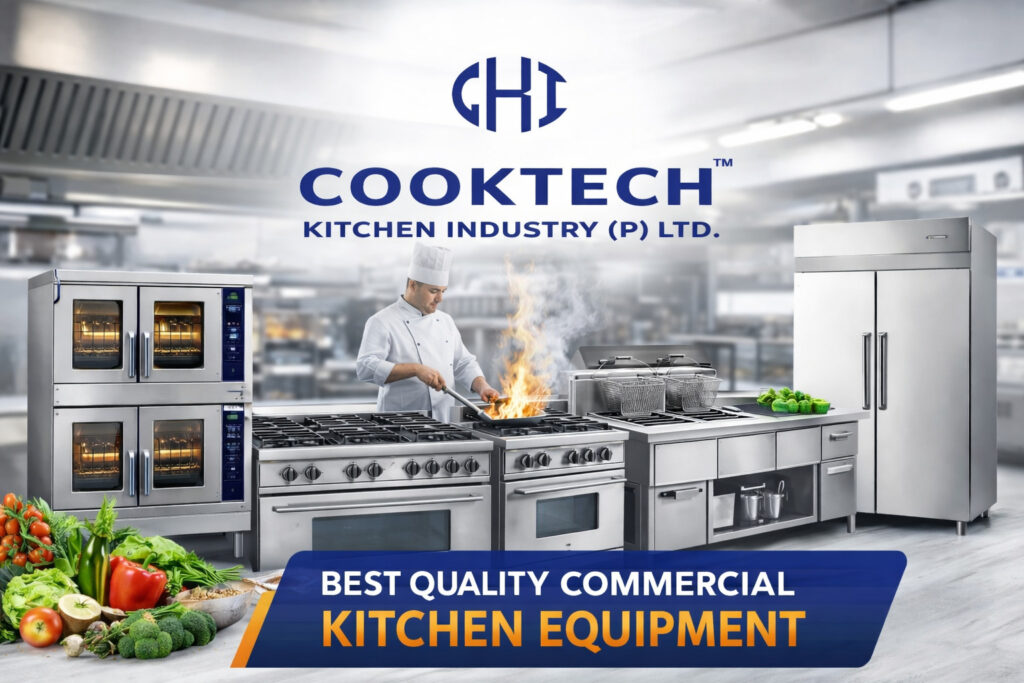

Restaurant kitchen is a workplace where speed, accuracy, and cleanliness converge. Your menu may be excellent, but the quality of your restaurant kitchen equipment determines the smoothness of your workflow. Every step in your workflow, from preparation to serving, is directly proportional to your equipment. Thus, restaurant kitchen equipment is a crucial factor for any food business.
A well-designed restaurant kitchen is not only beneficial for increasing efficiency but also for managing your time, cutting down waste, and maintaining food quality.
Role of Kitchen Equipment in a Restaurant
In a commercial kitchen, work never stops. Orders come in quickly, and staff must deliver food on time. Good equipment supports this fast pace and reduces pressure on workers.
Proper kitchen equipment helps in:
-
Speeding up cooking and preparation
-
Maintaining hygiene standards
-
Reducing manual effort
-
Improving workflow inside the kitchen
-
Delivering consistent taste in every dish
Without reliable equipment, daily operations can become difficult and unorganized.
Basic Categories of Kitchen Equipment
Every restaurant kitchen needs a combination of different equipment to function properly. Each category serves a specific purpose.
Cooking Appliances
Cooking is the main activity in any kitchen. The type of equipment depends on your menu.
Common cooking appliances include:
-
Gas stoves and commercial burners
-
Ovens for baking and roasting
-
Grills for fast cooking
-
Fryers for snacks and fast food
These appliances should be strong enough to handle continuous use.
Cooling and Storage Equipment
Keeping food fresh is very important for both taste and safety.
Essential cooling equipment:
-
Refrigerators for daily use
-
Deep freezers for long storage
-
Chillers for beverages and desserts
Proper storage prevents spoilage and reduces unnecessary losses.
Preparation Tools
Preparation takes a lot of time if done manually. Equipment makes the process faster and easier.
Important preparation tools:
-
Cutting and chopping machines
-
Mixers and grinders
-
Dough kneading machines
These tools help save time, especially during busy hours.
Workstations and Storage Units
A well-organized kitchen improves efficiency.
Common items include:
-
Stainless steel work tables
-
Storage shelves and racks
-
Cabinets for utensils and ingredients
Organized workspaces make it easier for staff to perform tasks quickly.
Cleaning Equipment
Cleanliness is very important in any restaurant.
Cleaning equipment includes:
-
Sink units
-
Dishwashing machines
-
Waste disposal systems
A clean kitchen ensures food safety and creates a healthy working environment.
Things to Consider Before Buying Equipment
Before purchasing kitchen equipment, proper planning is necessary.
-
Menu planning: Choose equipment according to your food type
-
Space availability: Make sure everything fits properly
-
Usage level: Buy equipment that can handle your daily workload
-
Quality check: Strong and durable materials are always better
-
Service support: Easy maintenance is important
Making the right decision at the beginning helps avoid future problems.
Advantages of a Well-Equipped Kitchen
A kitchen with proper equipment offers many benefits:
-
Faster service during peak hours
-
Better food presentation and taste
-
Less stress for kitchen staff
-
Reduced chances of breakdowns
-
Improved customer satisfaction
A smooth kitchen operation directly affects the growth of your business.
Simple Maintenance Practices
Taking care of equipment is as important as buying it.
-
Clean machines after every use
-
Avoid overloading equipment
-
Keep checking gas and power connections
-
Fix small issues before they become big problems
-
Schedule regular servicing
Regular care keeps your kitchen running without interruptions.
Common Problems in Poorly Equipped Kitchens
A kitchen without proper equipment often faces challenges:
-
Delays in order preparation
-
Uneven cooking results
-
Increased workload on staff
-
Higher repair costs
-
Hygiene issues
These problems can affect customer experience and business reputation.
Conclusion
The role played by Restaurant Kitchen Equipment In Gurgaon cannot be underestimated. Every process takes place within the kitchen. This means that every process, including cutting, cooking, cleaning, and storage, takes place within the kitchen.
If you want your restaurant business to grow and perform well, you should concentrate on building a strong kitchen setup. This means acquiring the correct equipment and creating a working space for your team.