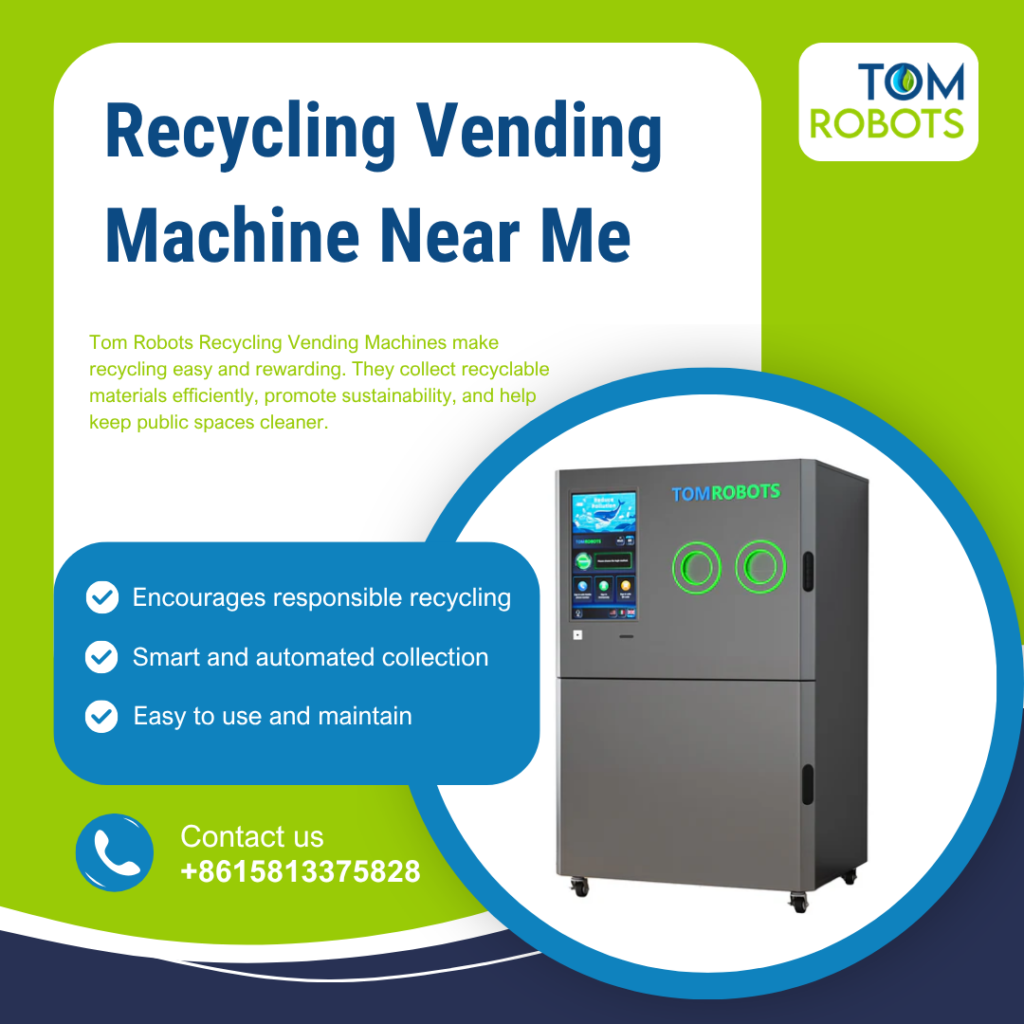

Waste management has a participation problem. Collection infrastructure exists in most cities, recycling bins sit on pavements and in lobbies, and public awareness campaigns have been running for decades — yet plastic bottle and aluminium can recovery rates remain well below what they could be. The gap between intent and action is where a Recycling Vending Machine fits in. Not as a novelty, but as a practical intervention that changes the economics of recycling at the point where it matters most: where the consumer is standing with an empty bottle in hand.
The concept behind reverse vending is straightforward. Instead of purchasing a product from a machine, the user returns a used container and receives something in return — a voucher, a deposit refund, loyalty points, or a charitable donation. The machine accepts the item, identifies it, compresses or stores it, and logs the transaction. What makes modern systems genuinely useful is the technology running underneath that simple exchange: AI-based visual recognition, barcode scanning, real-time fill-level monitoring, and cloud-connected data reporting that gives operators visibility into collection volumes without manual auditing.
Why Convenience Drives Recycling Rates
Studies on recycling behaviour consistently point to one variable above others: friction. When returning a container requires effort — finding a drop-off point, sorting materials correctly, travelling out of the way — participation drops. When a return point is close, clearly marked, and gives something back, participation rises. This is why deposit return schemes anchored by accessible reverse vending infrastructure produce dramatically higher collection rates than awareness campaigns alone.
The phrase Recycling Vending Machine Near Me has become a meaningful search term in markets where deposit return schemes are either established or being introduced. People want to return containers, but they want to do it where they already are — at the supermarket entrance, the transit hub, the university canteen. Siting machines where footfall already exists removes the primary barrier to participation. It turns recycling from a dedicated trip into a thirty-second detour.
What Happens Inside the Machine
The process looks simple from the outside, but the engineering behind accurate container acceptance is more involved than it appears. A container inserted into a reverse vending machine goes through several identification checks in rapid sequence. Shape recognition confirms it’s a bottle, or can rather than a foreign object. Barcode scanning checks the item against an accepted product database. Weight sensors add a further verification layer. All of this happens in under a second.
Rejected items — containers that don’t meet the machine’s acceptance criteria, or items that aren’t part of the deposit scheme — are returned to the user with an explanation. This prevents contamination of collected material, which matters because the value of recovered plastic and aluminium depends heavily on its purity. A Plastic Bottle Recycling Machine that accepts contaminated or non-eligible items creates downstream sorting problems that undermine the economics of the whole system.
After acceptance, containers are typically compacted to increase storage capacity before collection. Machines equipped with real-time fill monitoring alert operators when capacity is approaching, allowing collection to be scheduled efficiently rather than on a fixed calendar that sends trucks to half-full machines or allows machines to go offline because they’ve hit capacity.
The Role of Data in Smart Waste Systems
Where reverse vending integrates meaningfully into smart city infrastructure is through data. A network of connected machines generates continuous information about collection volumes by location, time of day, container type, and participation rates. This data has operational value — it tells collection teams where to focus, when to increase capacity, and which sites are underperforming. It also has policy value, giving municipal authorities evidence about how deposit return schemes are functioning and where adjustments are needed.
App integration extends this further. For registered users, the app does more than confirm a return was logged. It builds a running record — containers returned, rewards earned, drop-off points nearby. That visibility changes how people engage with recycling, because there’s something concrete coming back rather than a vague sense of having done the right thing. For companies, the value sits elsewhere. Sustainability teams need numbers that hold up to scrutiny, and a connected reverse vending network produces exactly that: location-stamped, time-stamped recovery data that goes into an environmental report without requiring anyone to estimate or approximate. The difference between a recycling program and a verifiable recycling program is that audit trail.
Applications Across Settings
The versatility of modern reverse vending machines makes them deployable across a wide range of environments. Large-format machines suit high-volume retail settings — supermarkets, shopping centres, transport hubs — where hundreds of returns per day are expected. Compact indoor units work in office buildings, schools, and food courts where space is limited but consistent footfall makes a machine economically viable. Outdoor models with weatherproof enclosures, can be installed in public parks, pedestrian zones and event venues.
For businesses operating under extended producer responsibility obligations, deploying on-site collection infrastructure is increasingly part of compliance rather than a voluntary initiative. A Recycling Vending Machine Near Me in the context of a retail chain means a machine at the entrance of every store in the network — a scalable commitment that contributes to national container recovery targets while giving customers a tangible reason to return.
Building the Infrastructure for Circular Materials
The broader ambition behind reverse vending is to make the materials in single-use containers recoverable at a rate that justifies investment in recycling infrastructure. Plastic recovered through deposit return schemes is typically cleaner, more consistent in grade, and more valuable than material collected through kerbside mixed recycling. Aluminium recovered this way commands full secondary market value.
Tom Robots designs Plastic Bottle Recycling Machine solutions with advanced sensor systems built for high-accuracy recognition and durable performance across demanding deployment environments. For municipalities, retailers, and businesses building out their recycling infrastructure, reverse vending is no longer an experimental add-on — it’s the mechanism that makes recovery rates achievable rather than aspirational.