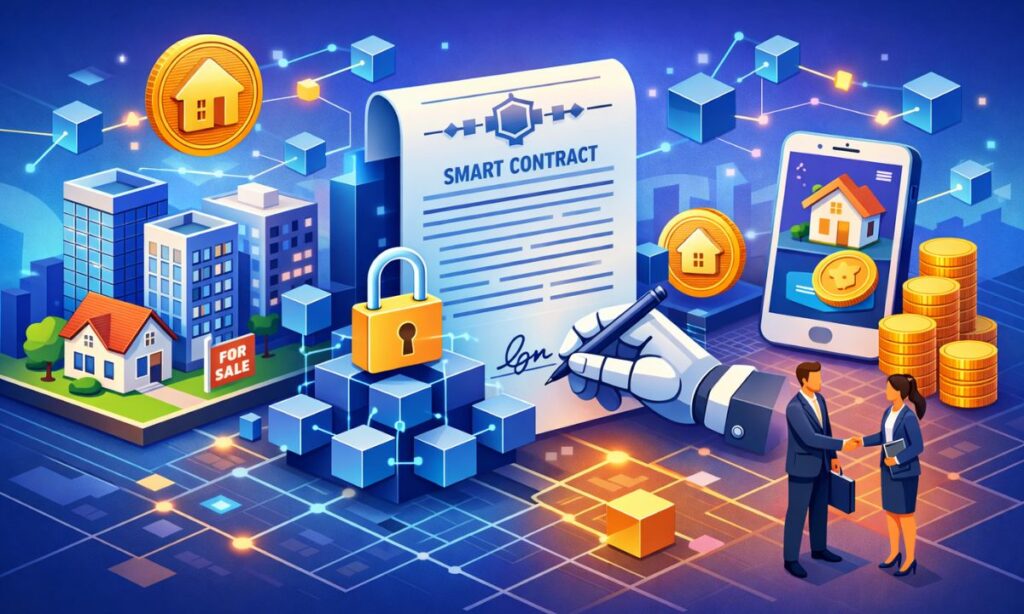

The global real estate market has always been known for its size, complexity, and slow-moving processes. Property transactions often involve multiple intermediaries, lengthy paperwork, and high entry barriers for investors. Over the past few years, however, a new model has started gaining attention. Real estate asset tokenization introduces a digital layer to property ownership, supported by blockchain systems and smart contracts. This approach is beginning to change how property is bought, sold, and managed.
At the center of this shift are smart contracts, which replace many traditional processes with automated logic. As more investors and institutions examine this model, an important question arises: are smart contracts permanently changing how property deals work? This blog examines the structure, benefits, risks, and future direction of this model in detail.
Understanding Real Estate Asset Tokenization
Real estate asset tokenization refers to the process of converting ownership rights in a property into digital tokens recorded on a blockchain. Each token represents a share of the property, allowing investors to hold fractional ownership instead of purchasing an entire asset.
This approach is not just about digitization. It changes how ownership is structured. Instead of relying on traditional legal documentation alone, ownership is reflected through blockchain records. These records are immutable and accessible to all participants in the network.
In a typical setup, a property is placed under a legal entity such as a Special Purpose Vehicle. Tokens are then issued representing shares in that entity. Investors can buy, sell, or transfer these tokens through a digital platform.
Real Estate Tokenization is gaining interest because it opens the market to a wider audience. Investors who were previously unable to enter the property market due to high capital requirements can now participate with smaller investments.
The Role of Smart Contracts in Property Transactions
Smart contracts are self-executing programs stored on a blockchain. They automatically carry out predefined actions when certain conditions are met. In real estate transactions, they replace many manual steps traditionally handled by lawyers, brokers, and financial institutions.
For example, when a buyer transfers funds for a tokenized property, a smart contract can automatically transfer ownership tokens to the buyer. There is no need for manual verification or third-party intervention once the rules are set.
This automation reduces delays and minimizes the risk of human error. It also removes the need for constant coordination between multiple parties.
In Real Estate Tokenization Platform Development, smart contracts are used for several purposes, including token issuance, dividend distribution, compliance checks, and ownership transfers. Each of these functions can be encoded into the contract logic.
How Traditional Property Deals Work
To understand the impact of smart contracts, it is important to compare them with traditional processes. A typical property deal involves multiple stages such as property listing, due diligence, negotiation, financing, and final registration.
Each stage requires coordination between various participants, including brokers, banks, legal advisors, and government authorities. Documentation is extensive, and verification processes can take weeks or even months.
There is also a lack of liquidity in traditional real estate. Once an investor purchases a property, selling it can be time-consuming. The market is not as flexible as stock markets or digital assets.
Real estate tokenization development introduces a different approach. Instead of relying on manual processes, many steps are handled digitally, with smart contracts acting as the execution layer.
Smart Contracts and Automation in Property Deals
Smart contracts bring automation into several aspects of real estate transactions. One of the most significant changes is in ownership transfer. In a tokenized environment, ownership changes are recorded instantly once the transaction conditions are satisfied.
Another area where smart contracts play a major role is income distribution. Rental income generated from a property can be automatically distributed to token holders based on their share. This eliminates the need for manual accounting and payment processing.
Compliance is another important aspect. Regulations often require identity verification and adherence to investment limits. Smart contracts can integrate compliance rules directly into the system, ensuring that only eligible participants can transact.
A Real Estate Tokenization Development company typically designs these smart contracts based on jurisdictional requirements and business models. The contracts must align with local laws while maintaining the efficiency of blockchain-based operations.
Benefits of Smart Contracts in Real Estate Tokenization
The introduction of smart contracts brings several benefits to property transactions. One of the most noticeable advantages is speed. Transactions that previously took weeks can now be completed in a much shorter time frame.
Another benefit is cost reduction. By reducing reliance on intermediaries, transaction costs can be lowered. This includes fees associated with brokers, legal advisors, and administrative processes.
Liquidity is also improved. Tokenized assets can be traded on digital platforms, allowing investors to buy and sell their holdings more easily. This is a significant shift from traditional real estate markets.
Accessibility is another important factor. Smaller investors can participate in property markets through fractional ownership. This expands the investor base and creates new opportunities for capital inflow.
Real Estate Tokenization Services often focus on delivering these benefits to clients by offering end-to-end solutions, including platform development, legal structuring, and token issuance.
Challenges and Limitations
Despite its potential, real estate asset tokenization faces several challenges. One of the primary concerns is regulatory uncertainty. Different countries have different rules regarding digital assets and property ownership. This creates complexity for cross-border investments.
Another challenge is technological adoption. Not all stakeholders are familiar with blockchain systems. Educating users and building trust in the technology takes time.
Security is also a concern. While blockchain systems are generally secure, vulnerabilities in smart contract code can lead to risks. Proper auditing and testing are necessary to prevent issues.
Liquidity, although improved, is still dependent on market adoption. Without sufficient participants, trading volumes may remain limited.
A Real Estate Tokenization company must address these challenges through careful planning, compliance measures, and robust technical infrastructure.
Legal and Regulatory Considerations
Legal frameworks play a crucial role in the adoption of tokenized real estate. Property ownership is governed by local laws, and any digital representation must align with these regulations.
In many jurisdictions, tokenized assets are classified as securities. This means that they must comply with securities laws, including investor protection measures and reporting requirements.
Smart contracts must also be legally enforceable. While they can automate transactions, they must be supported by traditional legal agreements to ensure validity in case of disputes.
Real Estate Tokenization Development Services often include legal consultation to ensure that projects comply with relevant laws. This includes structuring the token offering, drafting agreements, and integrating compliance mechanisms.
Use Cases Across the Real Estate Sector
Real estate asset tokenization is not limited to a single type of property. It can be applied across various segments, including residential, commercial, and industrial real estate.
In residential real estate, tokenization allows investors to purchase shares in rental properties. This creates opportunities for passive income through rent distribution.
Commercial real estate projects, such as office buildings and shopping centers, can also benefit from tokenization. Developers can raise funds by issuing tokens, reducing reliance on traditional financing methods.
Hospitality properties, including hotels and resorts, are another area where tokenization is being explored. Investors can participate in revenue-sharing models through token ownership.
Real Estate Tokenization Platform Development supports these use cases by providing the infrastructure needed to manage tokens, transactions, and investor interactions.
The Role of Technology Providers
Technology providers play a significant role in the adoption of tokenized real estate. They develop the platforms and tools required to support token issuance, trading, and management.
A Real Estate Tokenization Development company typically offers services such as blockchain integration, smart contract development, and platform customization. These providers work closely with property owners and investors to create functional systems.
In addition to technical development, these companies also provide ongoing support, including system maintenance, updates, and security monitoring.
Real Estate Tokenization Services often include user interface design, investor dashboards, and reporting tools, making it easier for participants to manage their investments.
Market Trends and Adoption
The adoption of real estate asset tokenization is gradually increasing. Institutional investors are beginning to show interest, recognizing the potential benefits of fractional ownership and improved liquidity.
Startups and established firms alike are entering the market, offering various solutions for tokenized property investments. Some platforms focus on specific regions, while others aim for global reach.
The integration of blockchain technology with traditional real estate systems is still in progress. However, the direction suggests continued growth as more participants become familiar with the model.
Real estate tokenization development is also being influenced by advancements in blockchain technology, including improvements in transaction speed and cost efficiency.
Are Smart Contracts Changing Property Deals Forever?
Smart contracts are introducing a new way of handling property transactions. By automating processes and reducing reliance on intermediaries, they offer a more efficient alternative to traditional methods.
However, it is important to recognize that this change is not absolute. Traditional systems will continue to exist alongside tokenized models, at least for the foreseeable future. The transition will depend on regulatory developments, technological adoption, and market demand.
In many cases, a hybrid approach is likely. Traditional legal frameworks will work in combination with blockchain systems, creating a balanced model that leverages the strengths of both.
Real estate asset tokenization is still in its early stages, but its impact is becoming more evident. Smart contracts are not just a technological feature; they represent a shift in how transactions are structured and executed.
Future Outlook
Looking ahead, the role of smart contracts in real estate is expected to grow. As regulatory clarity improves and technology becomes more accessible, adoption is likely to increase.
Interoperability between different platforms may also improve, allowing tokenized assets to be traded across multiple systems. This could further enhance liquidity and market participation.
Education and awareness will play a crucial role in this growth. Investors, developers, and regulators need to understand the benefits and limitations of the model.
Real Estate Tokenization Platform Development will continue to evolve, incorporating new features and addressing existing challenges. Companies that invest in robust systems and compliance measures are likely to gain an advantage.
Conclusion
Real estate asset tokenization presents a new perspective on property ownership and investment. By introducing digital tokens and smart contracts, it changes how transactions are conducted and recorded.
Smart contracts reduce manual intervention, improve efficiency, and create opportunities for broader participation. At the same time, challenges related to regulation, security, and adoption must be addressed.
The future of property deals is likely to involve a combination of traditional and digital methods. As the industry continues to develop, smart contracts will play an increasingly important role in shaping how real estate transactions take place.
For investors, developers, and businesses, understanding this model is becoming increasingly important. Real Estate Tokenization, supported by well-structured platforms and services, is gradually redefining the landscape of property investment.