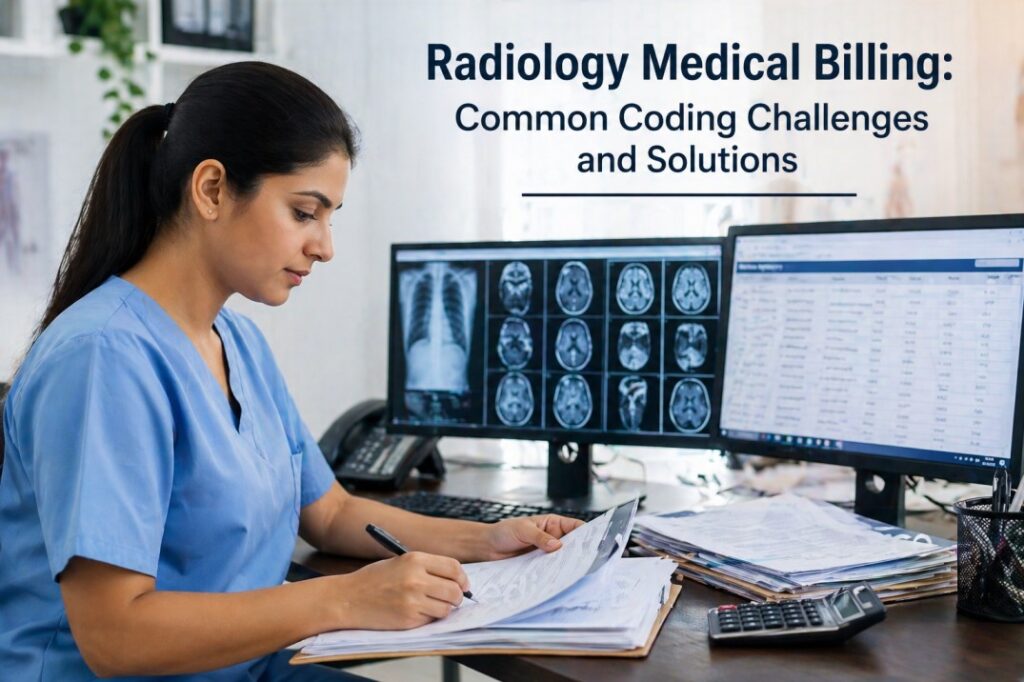

Radiology Medical Billing: Common Coding Challenges and Solutions
Radiology represents one of the most valuable fields in medicine, both for diagnosing and treating various diseases. This field exists due to the imaging techniques used for improving diagnostics, monitoring, and developing a treatment plan. Regardless of whether it is X-ray scanning or such advanced imaging procedures like computerized tomography (CT) and magnetic resonance imaging (MRI), radiological tests are conducted daily in hospitals and clinics.
While today the most advanced technology allows performing all tests efficiently, radiology billing is not much easier.
There is an appropriate code, documentation, filing claims according to certain requirements established by health insurance companies, and timeliness in performing all actions associated with radiology billing.
If something goes wrong with the code, it might cause denial of claim, delayed payment, and low reimbursement, among other issues.
Imaging studies comprise technical and professional elements; therefore, radiology billing requires greater attention compared to some other fields of medicine.
Understanding the difficulties in coding radiology billing services and resolving them properly is essential.
Below we discuss common coding challenges in radiology billing and solutions to such problems.
Why Coding Accuracy Matters in Radiology Billing
Coding is the foundation of every insurance claim. The codes selected for a radiology procedure tell the payer what service was performed, why it was medically necessary, and how much reimbursement should be issued.
Radiology coding usually includes:
- CPT codes for procedures
- ICD-10 codes for diagnoses
- HCPCS codes when applicable
- Modifiers for billing circumstances
If any part of the coding is incorrect, the payer may reject the claim or pay less than expected.
Accurate coding helps providers:
- Receive proper reimbursement
- Reduce claim denials
- Improve first-pass acceptance rates
- Stay compliant with regulations
- Maintain predictable cash flow
For these reasons, coding accuracy should always be a top priority.
Common Coding Challenges in Radiology Billing
Radiology claims often fail because of preventable coding issues. Below are the most common problems providers face.
1. Incorrect CPT Code Selection
Each imaging procedure has a specific CPT code. Selecting the wrong code can lead to denied or underpaid claims.
For example, coding the wrong type of MRI, CT scan, or ultrasound may create reimbursement problems because different procedures have different payment rates.
Solution
- Use updated coding manuals
- Verify procedure details before coding
- Review physician documentation carefully
- Provide regular coder training
Accurate CPT selection starts with understanding exactly what service was performed.
2. Diagnosis Code Mismatch
Diagnosis codes explain the medical reason for the imaging study. If the diagnosis does not support the procedure billed, the payer may deny the claim for lack of medical necessity.
For example, a high-level imaging study may require a diagnosis that clearly justifies advanced testing.
Solution
- Match diagnosis codes to physician documentation
- Confirm medical necessity requirements
- Avoid vague or unsupported diagnoses
- Review payer-specific coverage policies
Strong diagnosis coding improves approval rates.
3. Modifier Errors
Modifiers provide extra information about how a service was delivered. In radiology, modifiers are commonly used to separate technical and professional billing services or explain special circumstances.
Common examples include:
- Modifier 26 for professional component
- Modifier TC for technical component
- Other payer-required modifiers depending on the case
Using the wrong modifier or forgetting one entirely can delay payment.
Solution
- Create modifier reference guides
- Train coders on payer rules
- Audit claims regularly for modifier accuracy
- Use billing edits before submission
Correct modifier use is essential in radiology claims.
4. Duplicate Billing
Duplicate claims happen when the same procedure is billed more than once by mistake. This may occur because of manual entry errors or confusion during resubmission.
Duplicate claims can trigger denials and create compliance concerns.
Solution
- Use claim tracking tools
- Review claim history before resubmission
- Improve internal communication between staff
- Automate duplicate claim alerts
Prevention is easier than correcting duplicates later.
5. Missing Documentation
Even when codes are correct, claims may fail if documentation is incomplete. Payers often request evidence that the procedure was medically necessary and performed as billed.
Missing items may include:
- Physician orders
- Clinical symptoms
- Procedure notes
- Final interpretation reports
Solution
- Standardize documentation workflows
- Use checklists before claim submission
- Integrate clinical and billing systems
- Educate providers on documentation needs
Good documentation supports good coding.
6. Unbundling Errors
Some imaging services must be billed together under one code structure rather than separately. Billing components individually when they should be combined can cause denials or audit risk.
Solution
- Follow National Correct Coding Initiative edits
- Use updated payer billing rules
- Audit bundled procedure claims regularly
- Train coders on package billing rules
Understanding bundled services protects reimbursement and compliance.
7. Failure to Update Coding Changes
Healthcare coding rules change regularly. New CPT codes are introduced, descriptions are revised, and payer policies are updated.
Using outdated codes can lead to rejected claims.
Solution
- Review annual coding updates
- Subscribe to payer bulletins
- Hold ongoing training sessions
- Update billing software regularly
Continuous education keeps teams accurate.
8. Authorization and Coding Disconnect
Some procedures require prior authorization for a specific service. If the approved service does not match the billed code, the claim may be denied.
Solution
- Compare authorization details with final billed codes
- Confirm procedure changes before service delivery
- Improve scheduling and billing communication
- Document updated approvals when needed
Alignment between authorization and coding is critical.
How Coding Errors Affect Revenue
Coding mistakes do more than delay claims. They directly impact the financial health of a practice.
Common consequences include:
- Slower cash flow
- Higher denial rates
- Increased rework for staff
- Lost revenue from underpayments
- Greater audit exposure
- Lower patient satisfaction when balances are delayed
Reducing coding errors improves both operations and profitability.
Best Practices to Improve Coding Accuracy
Strong systems and habits help prevent recurring billing problems.
Perform Regular Internal Audits
Review a sample of claims monthly to identify coding trends, documentation gaps, and denial patterns.
Invest in Staff Training
Coders and billing staff should receive ongoing education on coding updates, modifiers, and payer requirements.
Standardize Workflows
Create clear procedures for registration, documentation review, coding, submission, and follow-up.
Use Technology Tools
Modern billing software can flag missing data, modifier issues, duplicate claims, and coding inconsistencies before submission.
Track Key Metrics
Monitor performance indicators such as:
- First-pass claim rate
- Denial percentage
- Days in accounts receivable
- Underpayment recovery rate
- Coding error frequency
Metrics help leaders measure progress.
Role of Specialized Billing Support
Many providers choose external experts to manage complex radiology claims. Experienced teams understand payer behavior, coding changes, and imaging-specific billing workflows.
They can assist with:
- Accurate coding
- Claim scrubbing
- Denial appeals
- Payment reconciliation
- Performance reporting
- Compliance monitoring
Specialized support often leads to faster collections and fewer errors.
Future Trends in Radiology Coding
The future of billing is becoming smarter and more automated.
Emerging trends include:
- AI-assisted coding suggestions
- Predictive denial prevention
- Real-time eligibility checks
- Automated documentation prompts
- Better analytics dashboards
These tools help teams work faster while improving accuracy.
Conclusion
Radiology billing is an area that needs accuracy, uniformity, and extensive knowledge of coding procedures. Inaccurate use of CPT codes, wrong diagnoses, faulty use of modifiers, inadequate documentation, and obsolete coding are some of the most common mistakes.
Fortunately, these issues have workable solutions. Proper training, efficient systems, constant auditing, and advanced software for billing will make it easier to maximize claim submission and payments.
In the medical field, learning to deal with coding difficulties is one of the best ways for imaging centers and healthcare facilities to develop their revenue cycle management processes.