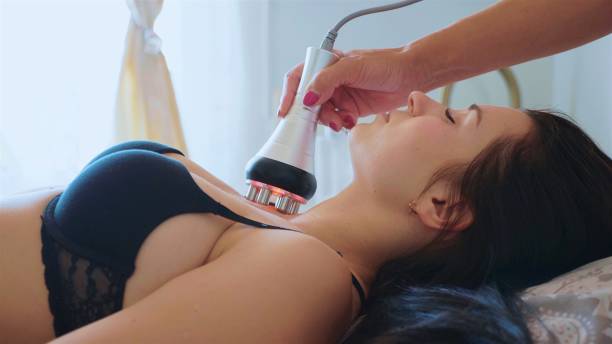

Most patients who research radiofrequency treatment in Dubai read the same surface-level explanation everywhere they look. Radiofrequency heats the skin. Collagen is stimulated. Skin tightens. The explanation is not wrong — it is just incomplete. It tells patients what happens without telling them how, why it matters for their specific skin concern, or what the experience actually involves from the moment they sit in the treatment chair.
This article goes deeper. The mechanism, the biology, the clinical variables, and the honest picture of what radiofrequency skin tightening delivers — and where it stops.
The Biology Behind Radiofrequency Skin Tightening
To understand why radiofrequency skin tightening in Dubai works, it helps to understand why skin loosens in the first place.
Skin firmness and structural integrity depend on two proteins produced by fibroblasts in the dermis — collagen and elastin. Collagen provides tensile strength, the resistance that keeps skin from stretching and sagging. Elastin provides recoil, the ability to return to its original position after movement. Together they form the structural scaffolding that keeps skin looking firm, smooth, and well-supported.
From the mid-twenties onward, fibroblast activity gradually declines. Collagen production slows. Existing collagen fibres begin cross-linking abnormally, losing their organised parallel structure and becoming less mechanically effective. Elastin degrades and is replaced more slowly. The result is skin that progressively loses its ability to resist gravity and maintain its original contours.
Ultraviolet radiation accelerates this process significantly — a factor of particular relevance in Dubai’s high UV environment, where photoageing compounds chronological ageing at a rate many patients do not fully account for.
Radiofrequency skin tightening intervenes directly in this biological sequence. By delivering controlled thermal energy to the dermis, it simultaneously addresses existing collagen and stimulates new production.
What Radiofrequency Energy Actually Does to Skin Tissue
How Does Radiofrequency Energy Interact With Skin at a Cellular Level?
Radiofrequency energy passes through the skin’s surface and heats water molecules in the dermis through electrical resistance. This resistive heating raises tissue temperature in a controlled and targeted way without damaging the epidermis. When dermal temperature reaches the therapeutic range — typically between 60 and 70 degrees Celsius — two simultaneous biological responses are triggered.
The first is immediate collagen contraction. At these temperatures, the triple-helix structure of existing collagen fibres partially denatures and contracts. This mechanical shortening of collagen fibres produces an immediate firming effect — visible within days of treatment as the skin appears more taut and structurally supported.
The second is the initiation of a controlled wound-healing response. The thermal injury signals the body to repair the treated tissue. Fibroblasts migrate to the heated zone and begin producing new collagen and elastin to replace what has been thermally modified. This biological rebuilding process takes months — which is why the most significant results from radiofrequency skin tightening in Dubai appear not immediately after treatment but progressively over three to six months.
Monopolar, Bipolar, and Multipolar: Why Device Type Changes Everything
Not all radiofrequency devices deliver energy in the same way. The configuration of the electrodes — how energy travels through tissue — determines how deeply it penetrates, which layers of skin are most affected, and how precisely the heating can be controlled.
What Is the Difference Between Monopolar and Bipolar Radiofrequency?
Monopolar radiofrequency uses a single active electrode on the handpiece, with a grounding pad placed elsewhere on the body. Energy travels through tissue from the handpiece to the pad, penetrating deeply — sometimes reaching the subcutaneous fat layer and superficial muscle fascia. This deep penetration makes monopolar radiofrequency particularly effective for significant skin laxity and for treating the SMAS layer — the same tissue addressed surgically in a facelift.
Bipolar radiofrequency uses two electrodes positioned close together on the handpiece. Energy travels between these two electrodes, limiting penetration depth to the tissue directly between them — typically the mid-to-upper dermis. This shallower penetration makes bipolar radiofrequency better suited for superficial skin quality improvements and for delicate areas such as around the eyes where deep energy delivery would be inappropriate.
Multipolar devices use three or more electrodes, creating multiple energy pathways simultaneously. This configuration allows broader tissue coverage per pass and more even heating distribution across the treatment zone, reducing the risk of hot spots that can occur with monopolar delivery.
Most advanced radiofrequency devices used in established Dubai clinics today combine multiple electrode configurations in a single platform, allowing the practitioner to switch between delivery modes based on the treatment area and depth of correction required. Understanding which configuration is being used — and why — is a question worth asking at consultation.
The Role of Temperature Control in Safe and Effective Treatment
Why Does Skin Temperature Monitoring Matter During Radiofrequency Treatment?
Therapeutic radiofrequency skin tightening in Dubai depends on reaching a specific tissue temperature range and maintaining it long enough to trigger the collagen response — without exceeding the threshold at which tissue damage occurs. This temperature window is narrow, and accurate real-time monitoring is what keeps the procedure both safe and effective.
Below the therapeutic range, the collagen response is insufficient. The treatment produces minimal biological effect regardless of how many passes are made. Above the therapeutic range, the risk of burns, blistering, and post-inflammatory changes increases significantly.
Advanced radiofrequency devices include real-time surface temperature sensors that feed information back to the practitioner continuously during treatment. When the skin surface approaches the upper limit of the safe range, energy delivery is modulated automatically or manually to maintain the correct temperature.
Patients notice this in practice as the practitioner varying the speed of handpiece movement — slowing over areas where the skin heats more quickly, accelerating over areas that require more energy delivery to reach therapeutic temperature. This dynamic adjustment is one of the clearest indicators of an experienced practitioner working correctly.
Radiofrequency Skin Tightening vs Other Non-Surgical Tightening Options
Radiofrequency is not the only energy-based skin tightening technology available in Dubai. Understanding how it compares to alternatives helps patients make an informed treatment decision.
HIFU — high-intensity focused ultrasound — delivers energy to the SMAS layer using focused ultrasound rather than radiofrequency waves. It targets a deeper anatomical level than most radiofrequency configurations and produces a more pronounced lifting effect in some patients. However, it involves a more intense procedural sensation and a more pronounced initial response period. Radiofrequency is generally better tolerated and more appropriate for patients with mild to moderate laxity who are not ready for the intensity of HIFU.
Laser skin tightening uses infrared or near-infrared light energy to heat dermal tissue. It can be combined with surface resurfacing, making it appropriate for patients who have both laxity and surface texture concerns simultaneously. However, certain laser wavelengths carry greater risk of post-inflammatory hyperpigmentation in darker skin tones — making radiofrequency a safer default choice for the range of skin types seen across Dubai.
Microneedling with radiofrequency — sometimes called RF microneedling — combines the collagen induction of microneedling with the dermal heating of radiofrequency by delivering energy directly into the dermis through fine insulated needles. This allows precise energy delivery at a controlled depth, producing significant collagen remodelling with less surface disruption than ablative approaches. It is particularly effective for patients with both skin laxity and surface concerns such as enlarged pores, fine lines, and acne scarring.
What Radiofrequency Skin Tightening Feels Like: A Sensory Account
What Does Radiofrequency Skin Tightening Feel Like During Treatment?
The experience begins with the application of a conductive gel — cool and slightly thick — across the treatment zone. The handpiece makes first contact and the warming begins almost immediately, building gradually as the first pass progresses. Over soft tissue areas such as the cheeks and mid-face, the heat is broad, diffuse, and easy to tolerate. Over bony areas — the jaw angle, the cheekbones, the brow ridge — it concentrates and intensifies briefly with each pass.
Most patients describe the sensation as a deep, penetrating warmth that feels productive rather than alarming. Occasionally, when energy settings are optimised for maximum therapeutic effect, the heat becomes briefly intense — a sharp warmth that fades within seconds as the handpiece moves on. Practitioners monitor patient response throughout and adjust settings immediately based on feedback.
By the end of the session, the skin feels warm, tight, and slightly sensitive — not in the way that an irritated or inflamed skin feels, but in the way that skin feels after a genuinely effective treatment. Most patients leave the clinic looking slightly flushed, which fades within two to four hours.
What Happens to Skin in the Weeks and Months After Treatment
The post-treatment timeline for radiofrequency skin tightening in Dubai follows a predictable biological sequence — and understanding it prevents the anxiety that comes from expecting immediate dramatic results.
In the first week, the immediate collagen contraction effect is most visible. Skin feels firmer and more taut. The surface appears slightly more refined. Patients often describe looking rested and well rather than obviously treated.
From weeks two to four, the active collagen synthesis phase begins. Fibroblasts are producing new collagen along the pathways of thermal injury. This process is invisible on the surface but measurable in the tissue. Patients at this stage sometimes notice their skin feeling different in texture — more consistent, more resilient — even before visible changes become apparent.
From months two to six, new collagen matures and organises into functional fibres. Skin firmness, contour definition, and surface quality improve progressively. The jawline sharpens. The neck tightens. The mid-face feels more supported. This is the phase in which most patients experience their most significant and satisfying improvement.
Beyond six months, results plateau and then gradually decline as the ageing process continues. Maintenance sessions at six to twelve month intervals sustain the collagen response and prevent significant regression.
How Practitioners Customise Radiofrequency Treatment for Each Patient
One of the most important and least discussed aspects of radiofrequency skin tightening in Dubai is how much the treatment should — and must — be individualised.
Energy settings, electrode configuration, handpiece speed, number of passes, and the sequence in which treatment zones are addressed all vary between patients. A 42-year-old with mild jawline softening and good skin quality requires a fundamentally different protocol than a 58-year-old with moderate neck laxity and sun-damaged skin.
Experienced practitioners make these adjustments continuously, guided by real-time temperature feedback, visual assessment of the skin’s response, and patient-reported sensation. They are not pressing a button and waiting for a timer. They are actively managing a biological process throughout the session.
Patients benefit from asking their practitioner at consultation which device will be used, at what configuration, and why that specific approach is appropriate for their skin concern. A practitioner who can answer these questions specifically and confidently is one who understands what they are doing and why.
Patient Perspectives: What Patients Noticed About the Process
“I expected it to feel like a procedure. It felt more like a very warm facial that occasionally got intense over my jawbone. The practitioner talked me through every part of it and adjusted the heat twice when I mentioned it was getting strong. I left looking slightly pink and feeling genuinely tighter — which I had not expected to feel on day one.” — Aisha, 49, Palm Jumeirah
“What I did not expect was how much the result built over time. The first session I thought I was wasting my money. By session three my skin looked different in a way I could not ignore. By month four I had stopped wearing foundation over my jaw and neck area because the definition had come back enough that I didn’t feel I needed to.” — *Reem, 52, Mirdif
Why Choose Tajmeels Clinic for Radiofrequency Skin Tightening in Dubai?
Tajmeels Clinic uses clinically validated radiofrequency devices operated by specialists with specific training in energy-based skin tightening across the full range of skin types seen in Dubai. Every patient receives an individual protocol assessment at consultation — device configuration, energy settings, treatment zone sequencing, and session number are all planned based on the patient’s specific anatomy, skin quality, and goals. Structured follow-up appointments at key intervals allow the treatment programme to be adjusted based on actual response rather than a fixed, one-size protocol.
FAQ: Radiofrequency Skin Tightening in Dubai
How is radiofrequency skin tightening different from a regular facial?
A regular facial addresses the skin surface through cleansing, exfoliation, and hydration. Radiofrequency skin tightening delivers energy to the deep dermis, triggering collagen contraction and new collagen synthesis at a structural level. The effects are biological and cumulative — not superficial and temporary. The two serve entirely different purposes and should not be compared as alternatives.
Can radiofrequency skin tightening replace a facelift?
For patients with mild to moderate skin laxity, radiofrequency skin tightening in Dubai can produce meaningful improvement that delays or reduces the perceived need for surgical intervention. It cannot replicate the structural correction, skin excision, or longevity of a surgical facelift for patients with significant laxity. The right answer depends entirely on the individual patient’s anatomy and the degree of correction required.
How many radiofrequency sessions will I need in Dubai?
Most patients benefit from three to six sessions spaced two to four weeks apart for an initial treatment course. Patients with mild laxity may see satisfying results from three sessions. Those with more pronounced concerns typically need a full course before peak results are assessed. Maintenance sessions every six to twelve months sustain the collagen response long term.
Is there any downtime after radiofrequency skin tightening?
Downtime is minimal. Most patients return to work and social activities the same day or the following morning. Flushing and mild warmth resolve within two to four hours. Mild swelling in sensitive areas such as around the eyes may persist for 24 to 48 hours. Vigorous exercise, direct sun exposure, saunas, and active skincare ingredients are avoided for 24 to 48 hours post-treatment.
At what age is radiofrequency skin tightening most effective?
Radiofrequency skin tightening produces the most significant results in patients between approximately 35 and 65 years of age who retain meaningful skin elasticity and some functional collagen density. Younger patients may benefit preventatively. Older patients with severe skin redundancy may find that radiofrequency produces insufficient correction and require surgical assessment. Candidacy is always assessed individually rather than by age alone.
Can radiofrequency skin tightening be done on the body as well as the face?
Yes. Radiofrequency treatment is applied to body areas including the abdomen, flanks, inner arms, inner thighs, and décolletage. Body treatment sessions typically require higher energy settings and longer session times than facial treatment. The same biological mechanism applies — collagen contraction and new collagen synthesis — but body skin tends to respond more slowly than facial skin and may require more sessions to achieve comparable results.