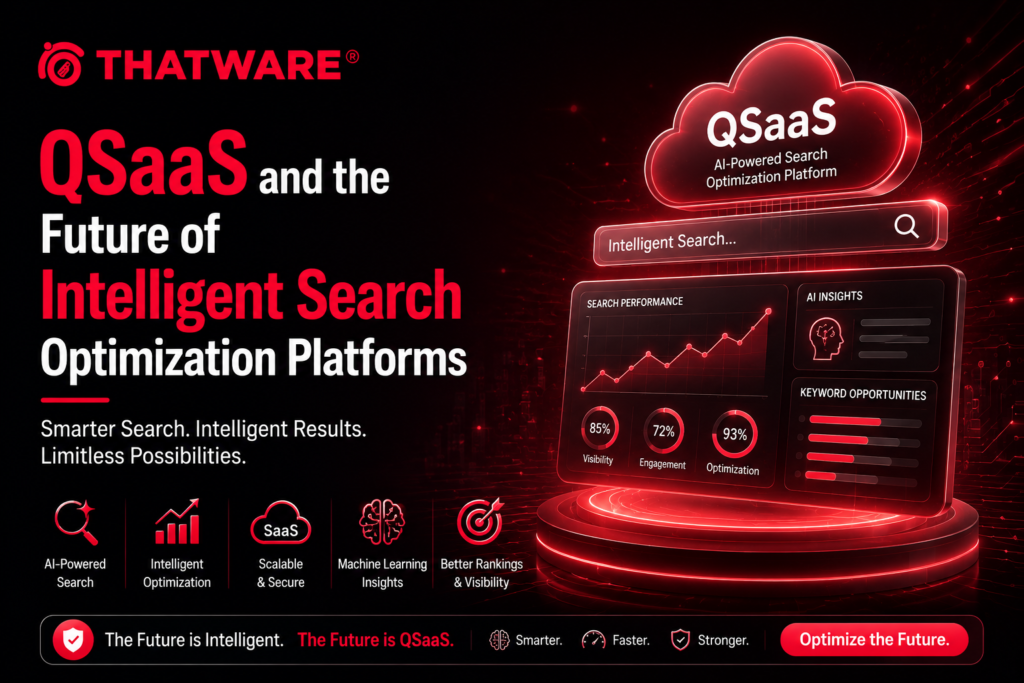

Search optimization has changed far beyond keyword tracking and backlink counting. Businesses today are operating in a search environment shaped by AI-generated results, semantic understanding, user intent mapping, and highly competitive content ecosystems. In that environment, relying only on conventional SEO software is starting to feel incomplete.
This is where QSaaS services are beginning to redefine how modern optimization works.
For years, marketers compared SEO tools based on surface-level functionality. Which platform has the biggest keyword database? Which one crawls faster? Which one reports more backlinks? These questions still matter, but they miss something bigger. The real difference lies in how a platform helps people think, prioritize, and make decisions.
Modern search visibility is no longer about isolated metrics. It is about understanding how signals interact with each other across an entire digital ecosystem.
Why Traditional SEO Workflows Are Becoming Limiting
Most standard SEO platforms are built around segmented analysis. One dashboard focuses on rankings. Another handles backlinks. A separate report highlights technical errors. Content gaps sit somewhere else entirely.
This structure forces SEO professionals to manually connect insights from different places. The process often depends more on human interpretation than on the platform itself.
That approach worked reasonably well when search algorithms were simpler. Today, search engines evaluate context, topical authority, intent alignment, behavioral signals, and semantic relationships simultaneously. Treating SEO metrics separately no longer reflects how search systems actually work.
An SEO issue is rarely isolated anymore.
A drop in rankings may not come from weak keywords alone. It may be connected to poor topical clustering, internal linking inefficiencies, thin informational pages weakening authority flow, or content mismatches across search intent stages.
The challenge is not collecting more data. The challenge is understanding relationships between signals fast enough to make accurate decisions.
The Shift Toward Relationship-Based Optimization
QSaaS platforms operate from a different philosophy altogether.
Instead of analyzing signals individually, they evaluate how those signals influence one another in real search environments. The goal is not only to diagnose problems but to predict outcomes and recommend strategic actions with greater precision.
That difference becomes obvious in practical scenarios.
A standard SEO platform may show that a website has declining rankings, several thin pages, and weak authority metrics on a few URLs. Useful information, yes. But the interpretation is still left to the analyst.
A QSaaS platform looks deeper into the interaction layer. It may identify that low-performing informational pages are disrupting topical authority distribution across a revenue-driving category page. It can then model how strengthening those supporting pages could improve commercial rankings within a specific competitive environment.
That is a very different level of insight.
Instead of static reporting, businesses begin working with predictive optimization logic.
This is one reason many organizations are now exploring an AI powered search optimization platform for modern websites as search competition becomes more intelligent and increasingly data-connected.
Why Intelligent Search Optimization Matters More Now
Search behavior itself has changed dramatically.
Users are no longer searching in rigid keyword patterns. Queries are becoming conversational, contextual, and intent-driven. AI-generated search experiences are also influencing how content is surfaced and prioritized.
Because of this, optimization strategies built only around rankings and backlinks often fail to capture the full picture.
Modern SEO success depends on understanding:
- Topical authority relationships
- Entity relevance
- Content ecosystem strength
- Search intent progression
- Internal authority flow
- Predictive ranking opportunities
- Semantic coverage gaps
QSaaS systems are designed to process these variables together rather than separately.
That capability becomes especially valuable for large websites operating in highly competitive markets.
Who Actually Benefits Most From QSaaS Platforms
Not every website needs advanced analytical infrastructure.
A small local business website with minimal competition may perform perfectly well using conventional SEO tools combined with strong execution and good content practices.
The situation changes when complexity increases.
Enterprise e-commerce brands, SaaS companies, media publishers, healthcare platforms, and competitive B2B businesses deal with massive content ecosystems. Thousands of pages interact with each other, influencing authority distribution and search visibility at scale.
In those environments, manual interpretation becomes a bottleneck.
Teams spend more time connecting insights than executing strategies.
This is where QSaaS seo services create practical value. They reduce analytical fragmentation and provide a more unified view of how search performance drivers interact across the entire website.
For organizations where ranking improvements directly impact substantial revenue, the cost of poor prioritization becomes far more expensive than investing in better analytical systems.
The Configuration Process Most Businesses Underestimate
One of the biggest misconceptions about advanced optimization platforms is that they work effectively straight out of the box.
They do not.
QSaaS implementation requires thoughtful configuration from the beginning. Competitive context, ranking goals, signal weighting, topical priorities, and business objectives all need to be properly aligned during onboarding.
This step is critical.
A poorly configured platform can generate misleading strategic recommendations, even if the underlying technology is powerful.
Many businesses make the mistake of rushing into reporting without investing enough time in setup. That usually leads to confusion, inconsistent outputs, and distrust in the platform itself.
The strongest results come from organizations willing to treat onboarding as part of the strategy rather than a technical formality.
When configured correctly, QSaaS platforms become far more than reporting systems. They evolve into strategic decision engines.
The Human Learning Curve Behind Smarter SEO Systems
Another overlooked factor is analyst adaptation.
SEO professionals who have spent years working with traditional dashboards often need time to develop confidence in relationship-based optimization models.
The outputs are different.
Instead of isolated metrics, analysts begin interpreting interconnected patterns, predictive recommendations, and weighted signal interactions.
The best transition approach is gradual integration.
Many experienced teams run QSaaS analysis alongside traditional SEO platforms during the early stages. This allows them to compare outputs, validate recommendations, and build intuition around how predictive models align with real search behavior.
Over time, the strategic advantages become easier to recognize.
Teams stop reacting to isolated problems and start optimizing entire search ecosystems more intelligently.
The Future of Search Optimization Is Context-Aware
Search engines are becoming more sophisticated every year. They increasingly reward contextual relevance, topical completeness, and intent satisfaction rather than simple metric manipulation.
Optimization platforms are evolving in response to that reality.
The future of SEO will likely belong to systems capable of understanding relationships instead of only collecting observations. Businesses that adapt early will have a significant advantage in identifying opportunities before competitors recognize them.
That does not mean traditional SEO tools are obsolete. They still provide valuable data and remain useful for many workflows.
But as search environments become more interconnected and AI-driven, businesses will need platforms capable of processing complexity at a much deeper level.
The real question is no longer which tool has the largest database.
The better question is which platform helps businesses make smarter strategic decisions in environments where visibility depends on understanding relationships, intent, and context simultaneously.
That is exactly why companies like ThatWare are exploring more intelligent frameworks for the future of search optimization.