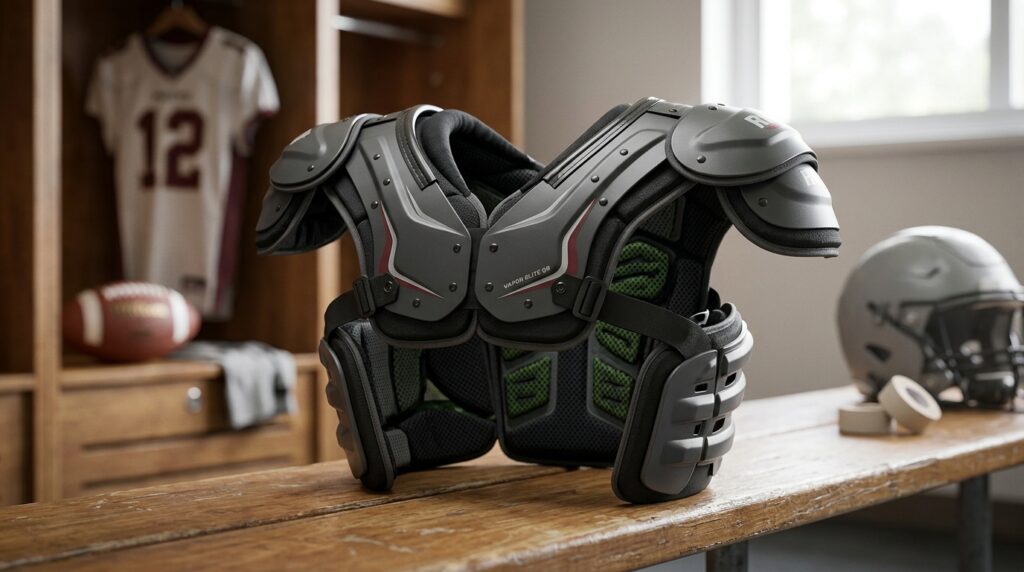

In the high-intensity world of 2026 youth sports, the conversation around athlete safety has shifted from simple impact protection to a holistic view of physical and thermal well-being. As global temperatures rise, youth leagues like Pop Warner and the University Interscholastic League (UIL) have implemented stricter regulations regarding heat illness prevention, including the mandatory monitoring of Wet Bulb Globe Temperature (WBGT) thresholds starting in August 2026. For parents and coaches, this means that selecting the right base layer is no longer just about style; it is a critical decision for thermal regulation.
High-quality youth padded compression shirts have emerged as the gold standard for balancing these safety needs. Unlike the heavy, heat-trapping cotton undershirts of the past, modern compression gear utilizes advanced synthetic fibers designed to facilitate the body’s natural cooling processes while shielding vulnerable areas like the ribs, spine, and shoulders. By managing moisture and reducing friction, these shirts allow young athletes to remain focused on the game rather than the discomfort of skin irritation or heat exhaustion.
The Science of Thermoregulation: Managing Heat Loads in Youth Sports
Thermoregulation is the body’s ability to maintain a stable internal temperature, a process that is significantly more challenging for children whose sweat glands are still developing. In 2026, many sports organizations have adopted specific “heat-standard” policies that dictate when pads must be removed and when practice must be moved indoors. A common misconception is that adding a layer like a compression shirt will make an athlete hotter. However, research into performance fabrics shows that high-quality synthetics actually assist in heat dissipation by spreading sweat across a larger surface area for faster evaporation.
When an athlete wears a compression shirt under their jersey and pads, the fabric acts as a mechanical pump for moisture. By keeping the material in constant contact with the skin, the shirt pulls sweat away before it can pool and create a “sauna effect” under heavy equipment. This is especially vital during the first five to ten days of the season, a period known as heat acclimatization, where the risk of exertional heat stroke (EHS) is at its peak.
| Feature | Breathable Compression (2026 Tech) | Traditional Cotton Undershirts |
| :— | :— | :— |
| Sweat Management | Rapid moisture-wicking; keeps skin dry | Absorbs moisture; becomes heavy and damp |
| Evaporation Speed | 30% faster than standard blends | Slow; traps heat against the skin |
| Airflow | High-ventilation mesh panels | Minimal; fibers swell when wet |
| Heat Retention | Regulates temperature via conductive fibers | Acts as an insulator, increasing core heat |
Frictionless Performance: How Compression Fabrics Prevent Chafing
Chafing is one of the most common yet avoidable distractions in youth contact sports. It occurs when moisture, salt from sweat, and constant movement combine to create friction against the skin. Traditional shirts often have protruding, bulky seams that act like sandpaper against the underarms and chest during repeated movements. To combat this, premium youth padded compression shirts utilize flatlock stitching—a manufacturing technique where fabric edges are fused flat rather than overlapped—to create a “second skin” feel.
The tight, supportive fit of compression gear is also essential for preventing turf burns and abrasions. By providing a slick, durable barrier between the skin and the rough interior of shoulder pads or the abrasive surface of artificial turf, these shirts eliminate the direct skin-on-equipment contact that leads to raw, painful sores. In 2026, the inclusion of sustainable materials like recycled nylon has even improved the softness of these fabrics, ensuring they remain gentle on sensitive skin even after multiple washes.
- Flatlock Seams: Eliminates the ridges that cause “seam burn” during high-motion activities.
- Four-Way Stretch: Ensures the fabric moves with the athlete’s gait rather than rubbing against it.
- Seamless Underarm Zones: Targeted areas of high-friction are designed without stitches to maximize comfort.
- Moisture Barriers: Prevents salt crystals from building up and irritating the skin’s surface.
Impact Protection without the Bulk: The Role of Advanced EVA Foam
The evolution of padding technology in 2026 has moved toward low-profile, high-density solutions that do not restrict a child’s range of motion. The TAG ALT II style of padding, for example, utilizes Ethylene-Vinyl Acetate (EVA) foam, which is revered for its superior shock-absorbing properties. Unlike some “intelligent” gels that can feel heavy or stiff, EVA foam remains lightweight and flexible, allowing young quarterbacks and skill-position players to move with total freedom while still receiving the rib and spine protection required for full-contact play.
Furthermore, the placement of this padding is ergonomically designed for the growing bodies of youth athletes. High-quality shirts integrate the pads directly into the moisture-wicking fabric, ensuring they stay in place regardless of the intensity of the hit. This prevents the “shifting pad” problem common with separate rib guards, which can often ride up and leave the lower torso exposed. By distributing the force of an impact across a wider area, the foam reduces the peak pressure on the bones, significantly lowering the risk of fractures and deep bruising.
- Ergonomic Placement: Padded zones target the sternum, anterior ribs, and posterior ribs.
- Closed-Cell Structure: EVA foam does not absorb sweat or water, keeping the shirt lightweight even in the rain.
- Shore Hardness Standards: Foam density is calibrated specifically for youth-level impact forces.
- Breathability Channels: Perforated foam designs allow air to reach the skin through the padding layers.
The Mental Edge: Building Confidence Through Integrated Safety Gear
The psychological aspect of youth sports is often as important as the physical. Research conducted in early 2026 indicates that over 80% of young athletes feel a greater sense of security when wearing high-quality protective gear. This “confidence of armor” allows players to focus on their technique—such as proper tackling form—rather than flinching in anticipation of contact. When a player feels secure, they are less likely to lead with their head or use unsafe body mechanics to avoid pain.
Integrated padded shirts provide this mental edge by offering consistent, predictable protection. Because the padding is built into the compression layer, there are fewer straps, buckles, or shifting parts for the athlete to worry about during a game. This reduction in “gear distraction” helps maintain the athlete’s focus on the field, which is a key factor in preventing injuries caused by poor situational awareness.
- Reduced Fear of Contact: Encourages aggressive, safe play during drills and games.
- Focus on Fundamentals: Fewer equipment adjustments mean more time spent on coaching and technique.
- Professional Appearance: Padded compression gear mimics the equipment used by collegiate and professional athletes, boosting self-esteem.
- Consistency: The “always-on” nature of integrated pads ensures no part of the torso is accidentally left unprotected.
Hygiene and Skin Health: Antibacterial Solutions in 2026 Tech
Synthetic fabrics, while excellent for wicking moisture, can sometimes disrupt the skin’s natural microbiome if not properly treated. In 2026, the best youth padded compression shirts are infused with silver-ion or Polygiene technology. These treatments work at the molecular level to inhibit the growth of odor-causing bacteria and fungi. This is particularly important for youth athletes who may wear their gear for several hours during tournaments or back-to-back practices.
By preventing bacterial buildup, these antimicrobial treatments also reduce the risk of skin infections like MRSA, which can thrive in the warm, damp environment of a locker room. Furthermore, high-quality shirts help maintain the skin’s acidic pH balance. Standard, untreated synthetics can sometimes cause a spike in skin pH, leading to irritation and “gear rash.” Choosing a shirt with built-in hygiene tech ensures that the athlete’s skin remains healthy throughout the season.
| Treatment Type | Primary Benefit | Durability |
| :— | :— | :— |
| Silver-Ion (Ionic+) | Broad antimicrobial action; prevents odors | Lasts for the life of the garment |
| Polygiene Coating | Anchors to fibers to halt bacteria at the source | High (tested for 100+ washes) |
| Moisture-Wicking | Prevents salt-induced skin irritation | Permanent (built into fiber structure) |
| UV Protection (UPF 50+) | Blocks 98% of harmful rays during outdoor play | High, but decreases when fabric is wet |
Maximizing Longevity: Maintenance for High-Performance Gear
To ensure that youth padded compression shirts maintain their elasticity and protective qualities, proper care is essential. The high-performance fibers used in 2026, such as NEOLAST or advanced spandex blends, are sensitive to high heat and harsh chemicals. Using fabric softeners, for instance, can “clog” the microscopic pores of the wicking fabric, rendering the shirt’s cooling properties useless over time.
Parents should always opt for a cold-water wash on a gentle cycle to preserve the integrity of the EVA foam and the compression tension. Additionally, air drying is the preferred method for these garments. The high heat of a tumble dryer can break down the elastic polymers, leading to a “loose” fit that no longer provides the necessary support or wicking contact. By following a disciplined care routine, a single high-quality shirt can last through multiple rigorous seasons.
- Cold Wash Only: Prevents the breakdown of technical fibers and elastic tension.
- No Fabric Softeners: Keeps the moisture-wicking channels open and effective.
- Inside-Out Laundering: Protects any logos, prints, and the outer surface of the padding.
- Air Dry: Maintains the shape and density of the integrated EVA foam inserts.