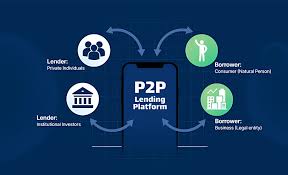

Peer-to-peer (P2P) lending has revolutionized how people borrow and invest money, offering a platform that directly connects borrowers with individual investors. Unlike traditional banking methods, this innovative financial service eliminates middlemen, reduces overhead costs, and provides both parties with better opportunities. This article delves deep into P2P lending, exploring its benefits, functionality, and its evolving role in the financial ecosystem. Along the way, we’ll also touch upon alternative borrowing options such as loan apps without PAN cards.
What is P2P Lending?
P2P lending, or peer-to-peer lending, is an online platform where individuals can lend or borrow money directly from others without involving a traditional financial institution. Borrowers get access to funds faster and often at lower interest rates, while investors (lenders) earn higher returns than typical savings or fixed deposits.
The platforms facilitating P2P lending serve as intermediaries, vetting borrowers, assigning risk ratings, and managing transactions. They create a secure space where borrowers and lenders can meet, negotiate terms, and finalize repayments.
How P2P Lending Works
The P2P lending process is straightforward and transparent. Here’s a step-by-step breakdown:
- Registration:
Both borrowers and lenders register on a P2P lending platform. Borrowers provide their personal details, loan requirements, and purpose, while investors set investment goals and risk appetite. - Verification:
Borrowers undergo a thorough verification process. The platform evaluates aspects like income, credit history, and repayment capability to determine eligibility. - Loan Listing:
Once the borrower is approved, the loan request is listed on the platform with details such as the required amount, interest rate, and repayment tenure. - Investor Selection:
Lenders review loan listings and select borrowers based on their preferences. A single loan can be funded by multiple investors, reducing risk exposure for each contributor. - Fund Disbursement:
When the loan is fully funded, the borrower receives the amount. The P2P platform typically charges fees for facilitating the process. - Repayments:
Borrowers repay the loan via equated monthly installments (EMIs), including principal and interest. The platform ensures that investors distribute repayments proportionally.
Why P2P Lending is a Smart Way to Borrow
For borrowers, P2P lending offers numerous advantages compared to traditional credit avenues.
1. Lower Interest Rates
One of the primary attractions of P2P lending is the lower interest rates compared to banks. Traditional financial institutions often charge high rates to cover administrative and operational costs. P2P platforms, being digital-first, minimize these costs and can pass the savings to borrowers.
2. Quick and Hassle-Free Process
Unlike applying for loans from banks, which often involve lengthy paperwork and approvals, P2P lending platforms offer a streamlined process. Many borrowers receive funding approvals within hours or days, making it a preferred option for urgent financial needs.
3. Flexibility in Loan Terms
P2P platforms typically allow borrowers to personalize their loan requirements. Borrowers can opt for short or long terms based on their ability to repay, as well as select competitive interest rates that work best for them.
4. Access to Funding Without a Credit History
For individuals struggling to secure loans from traditional banks due to poor or non-existent credit scores, P2P platforms provide a lifeline. Many platforms assess alternative indicators of creditworthiness, making loans accessible to more people.
Why P2P Lending is a Smart Way to Invest
Investors can benefit significantly from P2P lending.
1. Higher Returns
Compared to traditional investments like fixed deposits or savings accounts, P2P lending offers higher returns.
2. Portfolio Diversification
Investors can spread their investments across multiple borrowers to reduce overall risk.
3. Full Control Over Investments
Investors have the freedom to choose borrowers, interest rates, and repayment periods.
4. Passive Source of Income
Regular EMI payouts create a steady passive income stream.
Exploring Loan Apps Without PAN Card
While P2P lending is a booming sector, some borrowers look for faster alternatives like loan apps requiring minimal documentation.
Features of Loan Apps Without PAN Card:
- Minimal Documentation
- Instant Approvals
- Small Loan Amounts (₹5,000–₹50,000)
- Higher Interest Rates
These apps, including loan app without pan card, can be useful but should be used cautiously due to potential risks and high costs.
The Role of Technology in Driving P2P Lending
Technology powers P2P lending through:
- Creditworthiness Analysis
- Smart Contracts
- Blockchain Technology
These innovations ensure better security, transparency, and efficiency.
The Risks of P2P Lending
- Default Risk
- Regulatory Risks
- Liquidity Concerns
Proper research and diversification can help mitigate these risks.
How to Get Started with P2P Lending
- Research and choose a platform
- Sign up and complete verification
- Set your goals
- Finalize terms carefully
Conclusion
P2P lending has emerged as a modern financial solution for both borrowers and investors. It offers flexibility, faster access to funds, and better returns compared to traditional systems. Alternatives like loan apps without PAN cards further expand access to credit.
However, responsible usage is essential. Borrow wisely, invest smartly, and always evaluate risks before making financial decisions.