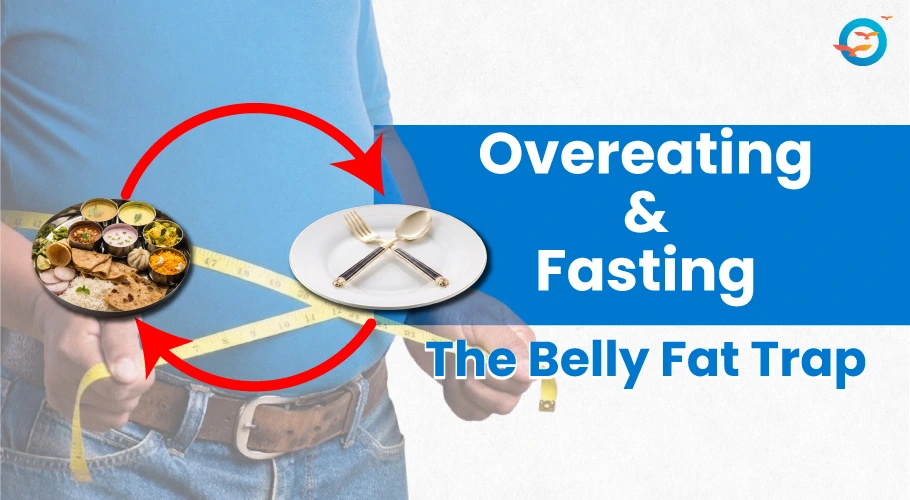

Overeating and Fasting: Why This Cycle Often Leads to Belly Fat
Many people try to balance unhealthy eating by skipping meals the next day. After overeating at a party, weekend outing, or late-night craving session, fasting may seem like the quickest way to “undo the damage.” This habit has become even more common with the growing popularity of intermittent fasting for weight loss.
At first glance, the idea sounds reasonable. Eat more one day, eat less the next. But the body does not work like a simple calculator.
In reality, the repeated cycle of overeating and fasting can negatively affect metabolism, increase belly fat, and slowly reduce muscle mass over time. The issue is not fasting itself or enjoying food occasionally. The real problem begins when overeating and fasting become extreme reactions to each other.
What Happens Inside the Body When You Overeat?
When you eat more food than the body needs, especially meals high in sugar, refined carbohydrates, or processed snacks, insulin levels rise quickly.
Insulin helps move excess glucose into storage. If the body does not immediately use that energy, it stores the extra calories as fat. A large portion of this fat often collects around the abdominal area.
This is one reason belly fat gradually increases even when people believe they are “balancing things out” with fasting later.
For example, eating large amounts of pizza, desserts, sugary drinks, or fried snacks over the weekend may create a calorie surplus that the body stores efficiently.
Occasional indulgence is normal. However, when overeating becomes frequent, it starts affecting metabolism and appetite regulation.
Why Fasting Does Not Automatically Reverse Overeating
One of the biggest misconceptions about fasting is the belief that it can completely cancel out overeating.
Many people skip meals after a binge or follow long fasting periods hoping to quickly burn stored fat. Unfortunately, the body responds differently.
When fasting follows overeating regularly, the body may shift into a protective mode. Instead of simply burning fat, it starts conserving energy because it senses inconsistency in food intake.
This pattern can make the body more efficient at storing fat rather than losing it.
The combination of intermittent fasting and binge eating often creates instability in hunger hormones and eating behavior. People may feel extremely hungry after fasting, which increases the chances of overeating again.
As a result, the cycle repeats itself.
The Hidden Problem: Muscle Loss and Fat Gain
One of the lesser-known effects of the overeating and fasting cycle is the impact on body composition.
During overeating:
- Excess calories are stored as fat
During prolonged fasting without proper exercise:
- The body may break down muscle tissue for energy
This creates an unhealthy situation where fat increases while muscle decreases.
Muscle plays a major role in maintaining metabolism. The more muscle the body has, the more calories it naturally burns throughout the day.
When muscle mass decreases, metabolism slows down. Over time, this can make belly fat more noticeable even if body weight stays similar.
This is why some people feel weaker, softer, or more tired despite trying different fasting methods.
Why Belly Fat Becomes More Common With Age
As people grow older, metabolism naturally slows down. The body becomes less efficient at processing excess calories, especially when physical activity is low.
At the same time, factors such as:
- Stress
- Poor sleep
- Irregular meal timings
- Emotional eating
- Lack of exercise
can make overeating more frequent.
Stress eating is a good example. After a long workday, many people turn to comfort foods for temporary relief. This often leads to overeating without real hunger.
When these habits continue for years, abdominal fat accumulation becomes more common.
The Missing Piece: Exercise Changes Everything
Food alone does not determine how the body uses energy. Physical activity sends important signals that help the body decide whether to build muscle or store fat.
Without exercise, excess calories are more likely to remain stored as body fat.
Strength Training Helps Preserve Muscle
Resistance exercises like bodyweight workouts, weight training, or resistance bands help maintain muscle mass during fat loss.
This supports metabolism and improves long-term weight management.
Cardio Improves Energy Use
Walking, cycling, swimming, or jogging helps the body utilize stored energy more effectively.
Even a brisk 30-minute walk after meals can support digestion and calorie usage.
Yoga and Stretching Reduce Stress
Stress plays a major role in overeating for many individuals. Yoga, stretching, and breathing exercises may help improve emotional balance and reduce stress-related cravings.
Consistency matters more than intensity. Even moderate exercise a few times a week can create meaningful improvements over time.
How to Break the Overeating and Fasting Cycle
Breaking this pattern does not require extreme dieting. Instead, the goal is to create stability.
1. Stop Using Fasting as Punishment
Skipping meals after overeating often increases hunger later. Instead of punishment, focus on returning to normal eating patterns.
2. Eat Balanced Meals Regularly
Balanced meals with protein, fiber, and healthy fats help control cravings and improve fullness.
3. Avoid Extreme Restrictions
Very restrictive diets can trigger binge eating later. Flexible and sustainable habits usually work better long term.
4. Stay Physically Active
Regular movement supports metabolism and helps preserve muscle mass.
5. Focus on Long-Term Habits
Real progress comes from consistency, not quick fixes.
What to Do After Overeating
Everyone overeats occasionally. The important thing is how you respond afterward.
Helpful steps include:
- Drinking enough water
- Going for a light walk
- Returning to balanced meals
- Avoiding guilt or panic
- Getting enough sleep
One heavy meal does not cause long-term weight gain. Problems usually develop when unhealthy patterns become repetitive.
Conclusion
The cycle of overeating and fasting may seem like a shortcut to weight control, but it often creates the opposite effect. Instead of improving metabolism, it can increase belly fat, reduce muscle mass, and make healthy eating harder to maintain.
Rather than relying on extremes, focus on structure and balance. Consistent meals, regular movement, proper hydration, and realistic habits support better long-term results than constant restriction.
Health improves when the body feels supported, not punished.
Read more here:
Overeating and Fasting: The Belly Fat Trap