
Anyone who has spent a summer in South Louisiana knows that the climate here is a force of nature. The unique combination of intense heat, dense humidity, and sudden tropical downpours defines life across Acadiana. While this rich environment makes for beautiful landscapes, it also creates an absolute nightmare for stored belongings.
When residents across Lafayette and surrounding communities clear out their spare bedrooms, downsize their homes, or organize corporate inventory, they often look for the nearest open space to stack their boxes. However, treating storage as a simple matter of square footage can ruin precious items. Wood warps, electronics short-circuit, mildew ruins fabrics, and sensitive paperwork deteriorates in just a matter of weeks when exposed to ambient conditions.
Protecting your investments requires understanding the science of local climate risks and choosing defensive storage strategies. This comprehensive guide outlines the atmospheric threats unique to South Louisiana and details how to safeguard your personal and commercial assets.
The Hidden Science of Humidity: How South Louisiana Weather Destroys Your Property
The Gulf Coast climate features exceptionally high relative humidity, which rarely drops below seventy percent during peak summer months. When warm, moisture-laden air is trapped within an unventilated or non-insulated environment, it triggers several destructive physical and biological processes.
Mildew and Mold Proliferation
Microscopic mold spores exist naturally in the air, but they require moisture, warmth, and an organic food source to thrive. When relative humidity levels exceed sixty percent, these spores settle on porous materials like clothing, upholstered furniture, cardboard boxes, and canvas artwork. Within twenty-four to forty-eight hours, an active infestation can permanently stain fabrics, rot fibers, and leave a persistent musty odor.
Thermal Expansion and Contraction
Extreme temperature swings cause materials to expand and contract. In South Louisiana, metal roofs on standard outbuildings can heat the interior air to well over one hundred degrees Fahrenheit during July and August. At night, as temperatures dip, the rapid cooling creates condensation on interior surfaces. This cycle fractures structural joins in wooden furniture, cracks musical instruments, and causes delicate veneers to peel away from their bases.
Oxidation and Chemical Degradation
High moisture levels act as an environmental catalyst for chemical degradation. Ferrous metals oxidize quickly when exposed to humid air, forming rust that ruins tools, appliances, and mechanical components. Concurrently, synthetic materials like vinyl records, photographic paper, and old film strips undergo accelerated chemical breakdown, causing layers to stick together or dissolve entirely.
High-Risk Belongings: What Can and Cannot Survive Standard Storage
Many everyday items simply cannot tolerate the natural climate fluctuations of the region. Knowing which categories require specialized protection helps prevent devastating losses.
Solid Wood and Antique Furniture
Hardwoods like oak, walnut, and cherry are highly hygroscopic, meaning they naturally absorb and release moisture from the surrounding air. When a wooden table or dresser is subjected to the intense humidity of a non-insulated space, the wood fibers swell unevenly. This leads to warped tabletops, stuck drawers, cracked panels, and weakened wood glue at structural joints. Antiques are particularly vulnerable, as older organic glues and finishes degrade rapidly in hot environments.
+-----------------------------------------------------------------------+
|                       Material Vulnerability Matrix                   |
+-----------------------------------------------------------------------+
|  Material Class   |  Primary Threat         |  Max Safe Environment   |
+-------------------+-------------------------+-------------------------+
|  Solid Wood       |  Warping, Joint Failure |  Below 60% Humidity     |
|  Electronics      |  Corrosion, Condensation|  Below 80°F             |
|  Paper & Media    |  Foxing, Mold, Acid     |  Stable Cool Temp       |
|  Fabrics/Leather  |  Mildew, Dry Rot        |  Dehumidified Air       |
+-----------------------------------------------------------------------+
Advanced Electronics and Media Storage
Whether it is home audio equipment, vintage gaming consoles, desktop computers, or commercial servers, circuit boards are highly sensitive to moisture. Humid air deposits a microscopic film of water across internal copper contacts, inducing corrosion and short circuits when power is applied. Magnetic media, such as VHS tapes, cassette tapes, and optical discs (CDs and DVDs), suffer from “delamination”—a process where the data-carrying layers separate from their plastic substrates due to extreme ambient heat.
Paper Records, Photographs, and Fine Art
Important documents like tax returns, corporate ledgers, marriage certificates, and family photographs face dual threats from acid accumulation and mold. Standard paper contains trace acids that turn pages yellow and brittle when exposed to high heat. Humidity also triggers “foxing,” a term describing the unsightly reddish-brown spots caused by fungal growth on paper fibers. Oil and acrylic paintings on canvas can stretch, sag, or peel as the underlying support expands and contracts with atmospheric changes.
Defensive Packing: Proactive Steps for Maximum Asset Protection
Choosing an optimized storage environment is only half the battle; how you prepare and package your items determines their long-term survival. Implementing museum-grade packing techniques establishes a crucial baseline barrier against dust, pests, and ambient moisture.
Strategic Cleaning and Drying
Never place an item into storage if it contains trace moisture or organic residue.
-
Fabrics: Launder all clothing, linens, and curtains using a deep-cleaning detergent, and ensure they are thoroughly dried. Avoid fabric softeners, which can deposit fats that attract insects.
-
Appliances: Defrost refrigerators and freezers at least forty-eight hours prior to packing. Wipe the interior chambers down with a dilute vinegar solution to kill lingering bacteria, and leave the doors slightly ajar during transport.
-
Furniture: Vacuum upholstered items completely to remove skin cells and dust mites. Clean wooden surfaces with a high-quality oil soap, and apply a thin layer of paste wax to seal the grain against airborne moisture.
Advanced Containment Solutions
Ditch traditional cardboard boxes for long-term storage of sensitive items. Cardboard is highly porous, absorbing moisture from the surrounding air and sagging under weight, which invites insect nesting.
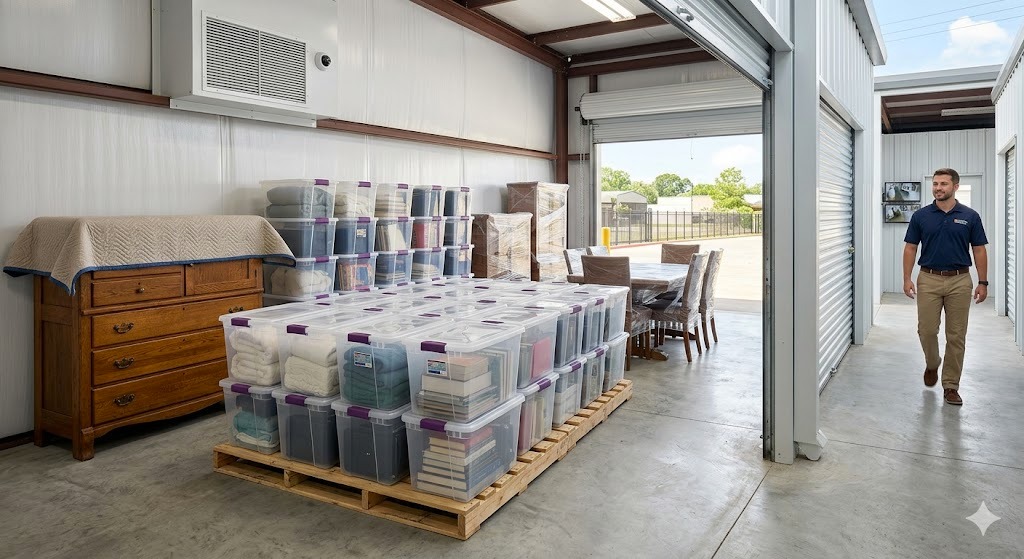
Instead, opt for heavy-duty, clear plastic storage bins featuring gasket-sealed lids. These containers keep humidity out and allow you to audit contents visually without opening the seal. For added protection, drop a few high-capacity silica gel packets into each bin to capture any moisture trapped inside during the packing process.
                    +-----------------------------+
                    |  Ideal Gasketed Plastic Bin |
                    +-----------------------------+
                    | [Silica Gel]   [Silica Gel] |
                    |                             |
                    |    Clean, Dry Valuables     |
                    |    Protected From Moisture  |
                    +-----------------------------+
Wrapping for Air Circulation
Avoid wrapping wooden furniture or leather goods in tight plastic stretch wrap. Plastic traps existing moisture against the surface, accelerating mold growth in warm weather. Wrap furniture in breathable cotton moving blankets or clean canvas drop cloths instead. This safeguards against scratches and dust while allowing natural air exchange.
Smart Spatial Layout: Maximizing Safety and Utility Within Your Space
How you arrange your belongings inside a storage footprint affects both structural safety and access convenience. Poor planning leads to collapsed stacks and damaged items.
The Foundation Layer
Always assume that concrete floors can transmit ground moisture via capillary action, even in well-insulated facilities. Never place furniture, mattresses, or boxes directly onto a raw concrete floor. Lay down a protective base layer of clean wood pallets or interlocking plastic floor tiles. This creates a vital air gap beneath your belongings, keeping them safe from condensation or accidental spills.
Stack Architecture and Weight Distribution
When building your storage stacks, structural integrity prevents crushing hazards:
-
Heaviest Bins First: Place your largest, heaviest plastic totes at the very bottom of the stack to establish a solid foundation.
-
Like with Like: Stack containers of identical sizes together to distribute the vertical load evenly across the corners of the bins rather than the center of the lids.
-
Leave an Air Perimeter: Do not press your furniture or boxes flush against the walls of the unit. Maintain a two-to-three-inch gap around the entire perimeter to facilitate consistent air currents.
-
The Center Aisle: Leave a clear walkway down the middle of the space so you can access items in the back without climbing over fragile stacks.
Navigating Acadiana: Selecting Strategic Access Across the Region
Logistics should guide your facility choice. Driving long distances through heavy traffic along Ambassador Caffery Parkway or Johnston Street wastes time and increases the risk of item damage during transport. Mapping your storage needs to regional transit corridors simplifies the process.
If you are a business owner or resident balancing life across the Hub City and its surrounding communities, consider how secondary locations impact your travel patterns:
-
The Southern Core: Those commuting from the fast-growing residential hubs of Broussard, LA and Youngsville, LA should prioritize facilities located along the southern loops of Highway 90 or the Ambassador Caffery extension for quick weekend drop-offs.
-
The Western Corridor: If you live in Scott, LA or Duson, LA, look for options with direct access to Interstate 10 or Highway 90 West to avoid bottleneck traffic in the city center.
-
The Northern Tier: For households in Carencro, LA, finding a location along the Evangeline Thruway corridor ensures smooth transits.
-
The Rural South: Residents in Milton, LA or Maurice, LA benefit from choosing facilities accessible via Highway 167 or Johnston Street, providing a straight path into a centralized, high-security location.
Evaluating these geographic touchpoints alongside your daily routine makes managing inventory or seasonal gear convenient and stress-free.
Commercial Storage Strategy: Protecting Local Business Assets
Self-storage is not just for residential transitions; it serves as a critical asset for businesses throughout Acadiana. Contractors, retailers, medical offices, and professional services use off-site units to manage physical overhead.
Document Archiving and Compliance
Law firms, accounting practices, and medical clinics face strict regulatory mandates regarding record retention. Storing physical files in a damp warehouse can lead to illegible documents, violating compliance standards. Utilizing a managed storage environment keeps files crisp, dry, and organized for audits.
Inventory and E-Commerce Fulfillment
For local online sellers and brick-and-mortar retailers, inventory represents working capital. High heat can melt adhesives, discolor apparel, crack plastics, and ruin cosmetics or specialty goods. Storing surplus stock in a clean, stable facility preserves product quality and packaging, ensuring your items remain ready for immediate shipping or retail display.
Contractor Tool and Equipment Management
Electricians, plumbers, and HVAC technicians frequently use storage spaces to secure high-value tools and installation materials. Protecting these assets from rust and humidity-induced electrical failures keeps your gear field-ready, preventing costly project delays.
Elevating Peace of Mind: Security, Convenience, and Local Reliability
When choosing where to store your belongings, evaluate the physical security infrastructure of the facility. A premium, modern environment provides comprehensive protection against both weather and unauthorized access.
Comprehensive Digital Surveillance
Look for facilities that implement layered electronic security measures. This includes gated perimeter fencing with individual electronic access codes, well-lit driveways that eliminate dark blind spots, and round-the-clock digital video recording. These systems create a complete digital audit trail, ensuring your items remain safe and secure.
Seamless Digital Management
Modern life moves fast, and your storage provider should match your pace. Leading local facilities feature robust online platforms that allow you to browse available unit sizes, complete rental agreements, execute secure payments, and receive your gate access codes from any smartphone or tablet.
This modern touch eliminates the need to wait in an office, enabling contact-free, same-day move-ins on your schedule. Utilizing a fully digitized platform gives you complete control over your space around the clock.
Finding the Perfect Fit: Assessing Your Storage Requirements
To ensure a smooth transition, select a facility that combines climate engineering, robust security, and neighborhood convenience. For residents seeking a trusted local option that balances these factors, checking the Save It Self Storage provides an excellent baseline for clean, accessible units engineered to withstand the Gulf Coast environment.
Choosing Your Environment
For standard items like lawnmowers, plastic patio furniture, or outdoor tools, a conventional drive-up unit offers unmatched utility. However, for sensitive items, utilizing premium Climate Controlled Storage Services is an absolute necessity to prevent mold and heat damage.
Investing in a facility that manages ambient temperature and actively mitigates humidity safeguards your valuable investments, keeping your items in the exact same condition as the day you packed them.
Frequently Asked Questions (FAQs)
What is the ideal temperature and humidity range for protecting sensitive household goods?
To stop mold growth and material warping, try to keep indoor storage temperatures under eighty degrees Fahrenheit and relative humidity levels below sixty percent. This stable window stops moisture from condensing on your belongings, keeping delicate organic fibers and electronic parts safe from degradation.
Can I use plastic moving blankets instead of canvas drop cloths to wrap my wooden furniture?
No, avoid wrapping solid wood or leather furniture in thick plastic sheeting. Plastic traps existing moisture against the surface. When temperatures rise, this creates a miniature greenhouse effect that accelerates mold growth and wood rot. Always use breathable fabric options like moving blankets, old cotton sheets, or canvas drop cloths.
How do I figure out what size storage unit I need for a three-bedroom house?
A three-bedroom home typically requires a 10×15 foot or a 10×20 foot storage unit, depending on how densely packed your furniture is. A 10×20 unit is roughly the size of a standard one-car garage and can hold large appliances, bedroom sets, couches, and dozens of packed moving boxes comfortably.
Are month-to-month leases better than long-term storage contracts?
Month-to-month leasing provides maximum flexibility, allowing you to pay only for the exact window of time you need without being locked into a rigid six-or-twelve-month agreement. This is perfect for home renovations, seasonal business inventory, or transitional moving windows.
What should I do immediately if I discover mold on my stored clothes or fabrics?
Move the affected items out of the storage space immediately to stop spores from spreading to nearby boxes. Launder the fabrics in the hottest water safe for the material using a heavy-duty detergent, or take them to a professional dry cleaner. Wipe down the exterior of any nearby storage boxes with a disinfectant solution before resealing them.
Conclusion: Securing Your Assets For The Long Haul
Preserving your personal memories and commercial assets across South Louisiana requires a proactive approach. The regional climate is unrelenting, but proper packaging, intelligent unit layout, and a clear understanding of material vulnerabilities can keep your items safe from environmental damage.
Whether you are decluttering a home, storing business documents, or staging inventory for an expanding enterprise, your choice of storage provider matters. By prioritizing facilities that offer advanced climate mitigation, secure perimeters, and digital convenience across Acadiana, you protect your hard-earned investments for years to come.