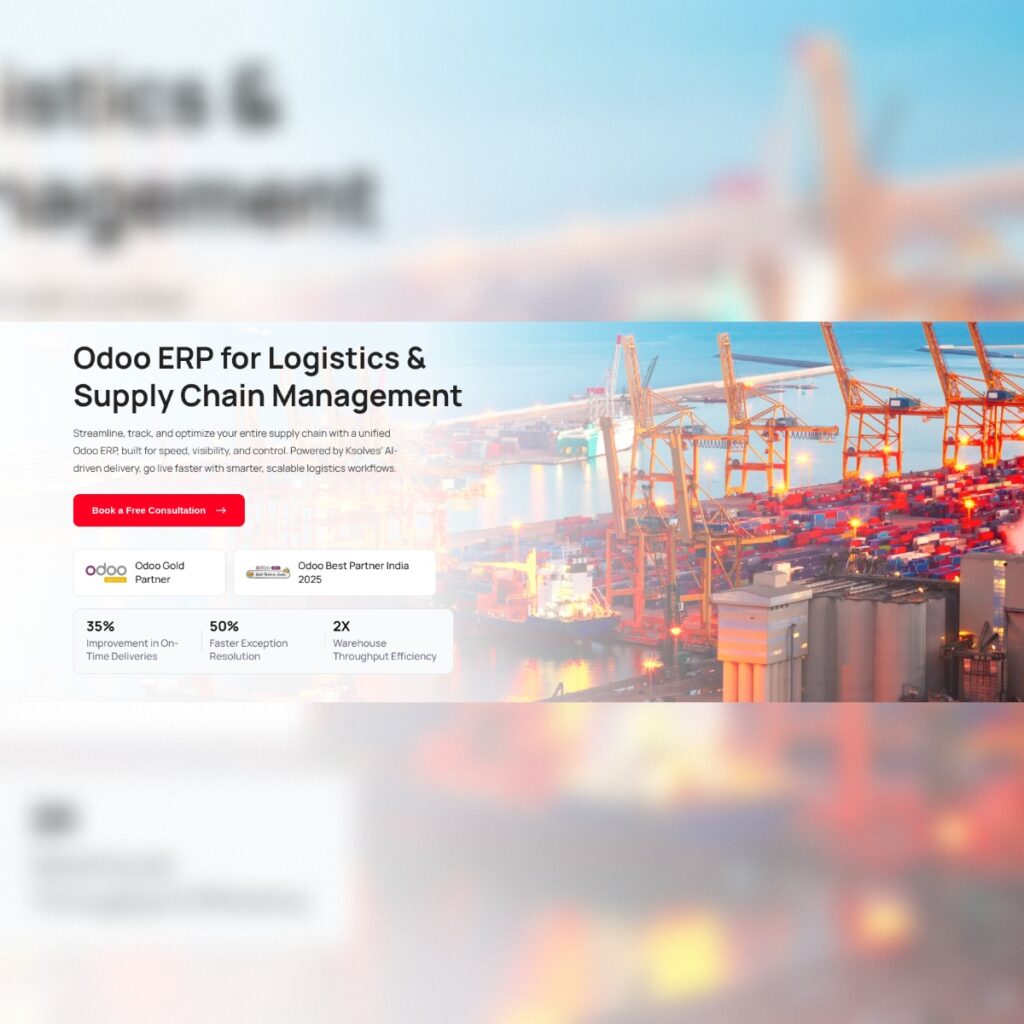

In today’s fast-moving global economy, third-party logistics (3PL) providers, freight forwarders, fleet operators, and distribution enterprises face mounting operational complexities. Coordinating multi-warehouse inventory movements, tracking cross-border freight dispatches, calculating landed costs, and managing vehicle maintenance requires seamless operational precision. However, many logistics companies continue to rely on a patchwork of disconnected Warehouse Management Systems (WMS), legacy Transportation Management Systems (TMS), and manual spreadsheets.
When warehouse stock levels, vehicle dispatches, customs documentation, and financial billing exist in digital silos, logistics operators suffer from delayed shipments, unrecorded carrier expenses, lost inventory, and declining client satisfaction. To eliminate these operational bottlenecks, forward-thinking logistics leaders are adopting unified enterprise software platforms. Deploying a specialized odoo erp for logistics and supply chain solution consolidates multi-location warehousing, fleet dispatching, carrier integrations, and financial ledgers into a single real-time platform.
Operational Hurdles Facing Modern Logistics & Supply Chain Networks
Managing complex supply chain networks involves balancing freight schedules, driver availability, warehouse space utilization, and fluctuating fuel prices under tight Service Level Agreements (SLAs). Without a centralized enterprise resource planning framework, logistics managers encounter critical friction points:
-
Warehouse Blind Spots & Stock Discrepancies: Lacking real-time visibility into bin locations, serial/lot batch tracking, and cross-docking workflows causes order picking delays and inventory write-offs.
-
Unoptimized Fleet Routing & Fuel Overhead: Assigning delivery vehicles without automated route planning or GPS tracking increases transit times, fuel consumption, and vehicle wear-and-tear.
-
Complex Landed Cost & Freight Billing Errors: Failing to accurately calculate insurance fees, customs duties, handling charges, and carrier tariffs leads to unexpected margin erosion and client billing disputes.
-
Disjointed Carrier & Subcontractor Tracking: Managing third-party freight carriers and local courier partners through separate communication channels delays shipment status updates for end clients.
Implementing a custom-configured odoo logistics and supply chain erp software platform overcomes these operational hurdles by automating end-to-end supply chain logistics.
Core Pillars of an Integrated Odoo Logistics & Supply Chain Solution
A tailored Odoo ecosystem connects warehouse teams, dispatchers, fleet drivers, and finance leaders into a streamlined digital pipeline:
1. Advanced Warehouse Management (WMS) & Double-Entry Inventory
Utilize double-entry inventory tracking to control multi-warehouse stock movements, cross-docking, wave picking, and putaway rules. Barcode scanning capabilities ensure precise serial, batch, and lot tracking from receiving docks to final dispatch.
2. Fleet Management & Route Optimization
Track internal transport fleets, commercial trucks, and delivery vans in real time. Log fuel consumption, assign licensed drivers, schedule routine preventive servicing, and integrate GPS tracking to minimize transit times and operating expenses.
3. Automated Landed Cost Calculation & Freight Invoicing
Automatically allocate freight expenses, customs duties, port charges, and handling fees across individual product lines. The system automatically computes exact landed costs to protect gross profit margins before posting entries to general ledgers.
4. Carrier & 3PL Subcontractor Integration
Connect seamlessly with major global shipping carriers (FedEx, UPS, DHL, local freight networks) to fetch real-time shipping rates, generate shipping labels, and provide clients with automated shipment tracking numbers via self-service portals.
5. Demand Forecasting & Automated Reordering Rules
Utilize Master Production Schedules (MPS) and automated reordering rules to maintain optimal stock levels across distribution centers. The system automatically triggers purchase orders based on lead times and forecasted customer demand.
6. Multi-Currency Accounting & Financial Consolidation
Consolidate financial ledgers across international shipping hubs, multi-country warehouses, and freight subsidiaries. Generate real-time profit-and-loss statements, manage foreign exchange rates, and simplify multi-entity audit compliance.
Driving Supply Chain Resilience and Client Satisfaction
Beyond daily transport operations, adopting specialized odoo logistics and supply chain erp management software empowers executive leadership to make data-driven strategic decisions. Real-time dashboards provide instant visibility into carrier performance metrics, warehouse space utilization, cost-per-kilometer, and order fulfillment times.
This end-to-end operational transparency allows supply chain enterprises to eliminate bottlenecks, reduce transit delays, fulfill SLAs consistently, and scale commercial distribution networks with confidence.
Scale Your Logistics Operations with Ksolves
Transforming a supply chain or 3PL enterprise requires a technical partner capable of mapping complex warehouse, fleet, and freight workflows into clean digital automation. As an award-winning, certified Odoo Gold Partner, Ksolves provides complete end-to-end guidance—from initial process mapping and custom WMS/TMS module engineering to secure legacy data migration and continuous technical support.
Ready to optimize warehouse fulfillment, streamline fleet routing, and gain full supply chain visibility? Explore our specialized Odoo ERP for Logistics and Supply Chain solutions to schedule a customized enterprise demonstration today.