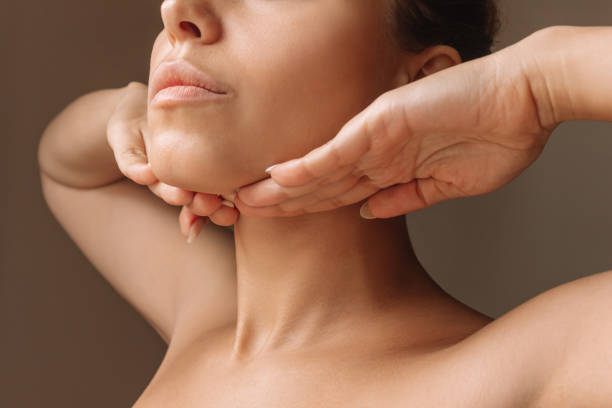

While threads and fillers address the skin and volume, a truly comprehensive Non-Surgical Facelift in Dubai often looks deeper—to the very same foundation that surgeons target during a traditional facelift. This foundation is known as the SMAS (Superficial Muscular Aponeurotic System). Through the use of High-Intensity Focused Ultrasound (HIFU), we can now tighten this deep structural layer without a single incision. At Tajmeels Clinic, we find that HIFU is the “biological engine” of a non-surgical lift. By delivering focused thermal energy to precise depths, it triggers a massive wound-healing response that results in long-term skin tightening and fat remodeling. We observe that when used as a standalone treatment or as a “primer” for injectables, HIFU provides a grounded, high-authority solution for those seeking structural firmness with zero downtime.
How HIFU Targets the SMAS Layer
The SMAS is the layer of tissue that sits between the skin and the muscle. We find that in a surgical facelift, this is the layer that is physically cut and tightened.
We observe that HIFU mimics this effect through thermal energy:
-
Deep Coagulation: We find that HIFU reaches depths of up to 4.5mm. At this depth, it creates “thermal coagulation points” that cause the SMAS layer to contract immediately.
-
Vertical Tightening: We observe that because the energy is delivered in vertical “lines,” it creates a lifting effect that pulls the jawline and brow upward.
-
Precision Targeting: We find that modern HIFU devices allow us to treat different depths (1.5mm, 3.0mm, and 4.5mm) in a single session, addressing everything from surface wrinkles to deep sagging.
Based on post-procedure follow-ups, HIFU is the only non-invasive technology capable of reaching the surgical SMAS layer. We find that “structural ultrasound” is the gold standard for non-invasive tightening.
The Synergy: HIFU + Injectables
For many seeking a Non-Surgical Facelift in Dubai, we find that combining HIFU with threads or fillers creates a “multi-dimensional” rejuvenation.
Can I get HIFU and fillers at the same time?
We find that timing is essential. We observe that it is often best to perform HIFU first to “tighten the canvas” before adding fillers or threads. If a patient already has fillers, we find it best to wait 4 to 6 weeks before performing HIFU in that same area to avoid “melting” the product with the ultrasound heat. Based on post-procedure follow-ups, this staged approach ensures that both the structural tightening and the volumetric filling are optimized. We find that “sequential rejuvenation” yields the most durable results.
Who Is the Best Candidate for HIFU?
While HIFU is a powerful tool, we find that it works best for a specific type of aging profile.
We observe that the ideal HIFU candidate includes:
-
Early Laxity: We find that patients in their 30s and 40s who are just beginning to notice a “softening” jawline see the most dramatic prevention.
-
The “No-Needle” Preference: We observe that for those who want a facelift but are not yet ready for threads or needles, HIFU is the perfect entry point.
-
Maintenance Seekers: We find that patients who have previously had surgery or a thread lift use annual HIFU to “lock in” their results.
Based on post-procedure follow-ups, if skin laxity is very severe, we find that HIFU works best as a “preparatory” treatment before threads. We find that “realistic candidacy” is the key to patient satisfaction.
The Results Timeline: A Slow-Release Lift
One of the unique aspects of a HIFU-based Non-Surgical Facelift in Dubai is that the results improve with time.
We find that the transformation follows a biological schedule:
-
Immediate (The Flash Lift): We find that about 20% of the result is visible immediately due to the heat-induced contraction of collagen fibers.
-
2 to 3 Months (The Growth Phase): We observe that the body is working overtime to produce new, organized collagen.
-
6 Months (The Peak): Based on post-procedure follow-ups, this is when the full lifting and tightening effect is realized.
We find that results typically last between 12 and 18 months, making it a very low-maintenance option. We find that “gradual improvement” is preferred by those who want their rejuvenation to look entirely natural.
Why Choose Tajmeels Clinic
At Tajmeels Clinic, we provide a professional and empathetic environment where we utilize medical-grade, high-authority HIFU technology. We provide high-authority care by ensuring our practitioners are extensively trained in “mapping” the facial nerves to ensure every ultrasound pulse is delivered safely and effectively. Our team understands that every face has different “density zones,” and we customize the energy levels to ensure your comfort while maximizing the lifting result. We provide a grounded, supportive experience, helping you decide if HIFU is the right standalone choice or if it should be part of a broader Non-Surgical Facelift in Dubai plan. By choosing Tajmeels Clinic, you are opting for a practice that prioritizes “high-tech precision and structural integrity.”
Social Proof
“I wanted a lift but I’m terrified of needles. The team at Tajmeels recommended HIFU, and I’m so glad they did. I could feel the tightness immediately, and three months later, my jawline looks so much sharper. It was exactly the ‘no-needle’ solution I was looking for.” — Fatima
“I use HIFU as my annual maintenance to keep my skin tight. It’s a bit of a strange ‘tingling’ sensation during the treatment, but there’s zero downtime. I went right back to my office afterward and nobody could tell I’d had anything done.” — Rashid
FAQs
Is HIFU painful?
We find that sensations vary. We observe that most patients describe it as a series of “tiny hot prickles” or a “deep ache” along the jawline. Based on post-procedure follow-ups, the discomfort is very temporary and stops the moment the device is moved. We find that “energy adjustment” allows us to keep the treatment comfortable for everyone.
How many sessions of HIFU are needed?
We find that most patients achieve excellent results with just one session. We observe, however, that for those with more significant sagging, a second session after 6 months can provide an even deeper lift. Based on post-procedure follow-ups, an annual “top-up” is the best way to maintain the firming effect. We find that “individualized dosing” is more effective than a one-size-fits-all approach.
Will HIFU melt my facial fat?
We find that when used at specific depths, HIFU can be used to reduce unwanted fat (like in a double chin). We observe, however, that when our goal is a “lift,” we use different transducers that focus the energy on the SMAS and skin layers, preserving your youthful cheek fat. Based on post-procedure follow-ups, “depth precision” is how we protect your facial volume. We find that “anatomical accuracy” is vital.
Is there any downtime with HIFU?
No, we find that there is absolutely no downtime. We observe that your skin might look slightly flushed for an hour or two, and some patients feel a minor “tenderness” when touching their face for a few days, but there are no marks or bruises. Based on post-procedure follow-ups, you can resume all normal activities, including exercise, immediately. We find that “zero-impact healing” is a major draw.
Can I do HIFU if I have dental implants?
Yes, we find that it is safe, though you may feel a slightly stronger “tingling” sensation near the implants or metal fillings. We observe that placing a piece of medical gauze between your teeth and your cheek can easily dampen this sensation. Based on post-procedure follow-ups, dental work is not a barrier to a successful lift. We find that “patient comfort tricks” make a big difference.
How is HIFU different from Thermage?
We find that while both use heat to tighten skin, they use different energy sources. We observe that Thermage uses Radiofrequency (which heats from the top down), while HIFU uses Ultrasound (which focuses deep and works from the bottom up). Based on post-procedure follow-ups, we find that HIFU is often superior for “lifting” the jawline, while RF is excellent for “smoothing” surface texture. We find that “energy selection” should be based on your primary concern.