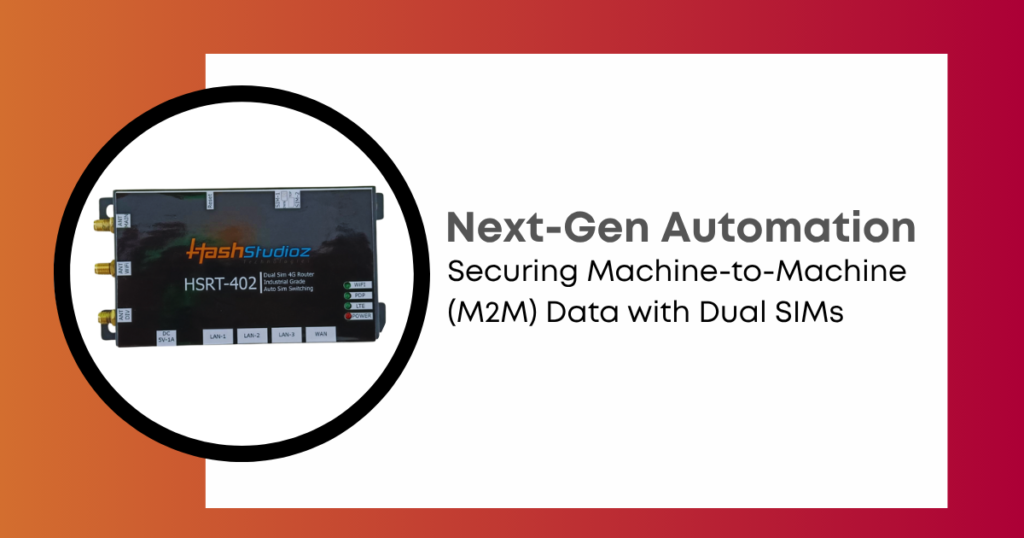

Industrial automation depends on continuous, autonomous communication. Machine-to-machine (M2M) systems transfer critical performance telemetry, control commands, and operational parameters without human intervention. This connected ecosystem faces serious security and uptime challenges. Malicious actors target industrial networks, while physical environmental factors threaten cellular link stability. Protecting this critical data requires robust hardware solutions. A Dual SIM Industrial Router offers the necessary architecture to defend data pathways and maintain continuous connections.
The scale of the M2M ecosystem makes security an urgent priority. By the start of 2026, the number of active cellular M2M connections globally reached approximately 5.4 billion. This massive network volume creates an attractive target for cybercriminals. Industry metrics show that industrial cyberattacks rose by 28% over the past year alone. Data breaches and network downtime cost industrial operations an average of $22,000 per minute. These statistics highlight the need for specialized data protection. Simple consumer-grade hardware cannot secure these expansive attack surfaces. Dedicated industrial routing hardware provides the only reliable defense.
Understanding the M2M Security Landscape
M2M communication operates across diverse environments like automated factories, offshore oil rigs, and municipal smart grids. In these settings, an Industrial Router serves as the central gatekeeper. The device aggregates data from local sensors and sends it to remote cloud servers via cellular networks. Data packets traveling across public or private cellular infrastructure face multiple vulnerabilities.
Interceptors can launch Man-in-the-Middle attacks to capture transmitted sensor data. Attackers can also use Denial of Service tactics to flood network cells, blocking vital industrial control signals. Physical hazards present another risk, as signal jamming can block localized radio frequencies. Finally, standard network downtime from carrier outages can completely halt production lines.
Industrial systems handle hazardous processes where data loss can cause physical accidents. If a valve sensor cannot transmit pressure data, a pipeline might fail. If an automated crane loses its control signal, it creates an immediate safety hazard. Legacy security methods relied on physical isolation, but modern cloud integration makes that approach impossible. Edge routing hardware must now provide strong security directly at the point of data origin.
The Role of Dual SIM Architecture
A standard cellular router uses one SIM card linked to a single Mobile Network Operator. If that specific operator experiences a core network failure or a cyberattack, the router loses connectivity. A Dual SIM Industrial Router solves this issue by using two distinct SIM slots. These slots hold cards from different telecom providers. The device operates on an automated standby or active switching architectural framework.
The internal operating system of the router continuously monitors network health metrics. The system evaluates Link Quality Parameters like Reference Signal Received Power and Reference Signal Received Quality. It also tracks the Received Signal Strength Indicator and ping latency.
If an attacker targets the primary network or if a technical failure occurs, the router triggers an automated failover. The system switches data routing to the secondary SIM card within milliseconds. This rapid process preserves the integrity of live data streams without interrupting industrial processes.
Using two different network operators reduces systemic risk. The primary and secondary networks rarely use identical routing pathways or the same cloud core infrastructure. A cyberattack targeting the authentication servers of Carrier A will not affect Carrier B. The router exploits this independence to maintain an open, secure channel for M2M communication. This redundancy forms the foundation of modern network resilience.
Data Encryption Protocols in M2M Routers
1. Securing Data Confidentiality During Transmission
Encryption ensures that sensitive industrial data remains protected while traveling across cellular networks. Even if attackers intercept transmitted information, they cannot interpret or use the encrypted data without authorized cryptographic keys.
2. Virtual Private Network Implementation
Industrial routers establish secure VPN tunnels that create protected communication channels over public cellular infrastructure. These encrypted pathways safeguard data from interception, tampering, and unauthorized access during transmission processes.
3. Use of IPSec and OpenVPN Protocols
IPSec secures network-layer communications by encrypting IP packets, while OpenVPN provides flexible transport-layer protection. Together, these protocols deliver strong authentication, confidentiality, and secure connectivity across industrial communication networks.
4. Advanced AES-256 Encryption Standards
Modern industrial routers utilize AES-256 encryption, which offers extremely strong protection against brute-force attacks. This encryption standard ensures intercepted information remains unreadable and inaccessible to unauthorized individuals or systems.
5. End-to-End Security and Regulatory Compliance
Encryption protects data throughout its entire journey, including within telecom infrastructure. This end-to-end security approach helps organizations maintain privacy, prevent insider threats, and comply with industry cybersecurity regulations and standards.
Technical Features of Industrial Hardware
1. Operation in Extreme Environmental Conditions
Industrial routers are designed to function reliably in temperatures ranging from -40°C to 85°C. This capability allows deployment in deserts, remote outdoor installations, factories, and other challenging environmental conditions.
2. Rugged Enclosures for Physical Protection
Durable IP-rated aluminum enclosures protect internal components from dust, water, moisture, and industrial debris. These protective designs ensure long-term reliability and reduce the likelihood of hardware-related communication failures.
3. Electrical Protection Through Galvanic Isolation
Galvanic isolation safeguards sensitive router electronics from voltage spikes and electrical surges generated by industrial equipment. This protection improves system reliability and prevents costly damage to communication infrastructure.
4. Embedded SIM Technology for Stability
Many industrial routers use embedded MFF2 SIM chips directly mounted on circuit boards. This design eliminates mechanical wear, prevents loose connections, and ensures stable performance under constant vibration and movement.
5. Automated Recovery with Watchdog Timers
Hardware watchdog timers continuously monitor system health and software performance. If the router becomes unresponsive due to faults or cyberattacks, the timer automatically initiates a reboot, restoring normal operation quickly.
Real-World Examples of Next-Gen Automation
1. Remote Energy Infrastructure
Electrical substations and oil wellheads operate far from metropolitan centers. These facilities rely entirely on wireless infrastructure to transmit telemetry data to centralized control rooms. A single network outage can stop safety alerts, creating massive operational risks.
A real-world example involves offshore wind farms located in the North Sea. These installations experience severe weather and unpredictable cellular coverage. By deploying an Industrial Router with dual SIM capabilities on each turbine, operators ensure constant connectivity.
If a storm degrades the signal of the primary maritime cellular provider, the router switches to a secondary terrestrial network. This allows continuous monitoring of turbine blade rotation, vibration levels, and electrical output, preventing catastrophic mechanical failures.
2. Autonomous Manufacturing Plant Floors
Smart factories use Automated Guided Vehicles and robotic assembly cells that require continuous data feeds. In these environments, automated machinery relies on uninterrupted signals to prevent production stops.
Consider a modern automotive assembly plant. Automated guided vehicles transport heavy chassis components across the factory floor. These vehicles depend on real-time commands from a central scheduling system to avoid collisions.
An Industrial Router managing this factory automation handles dense data traffic. If local radio interference blocks the primary network frequency slot, the dual SIM framework switches to a backup channel on a different frequency band. This quick transition keeps the vehicles moving, avoiding expensive assembly line stops that can cost thousands of dollars per minute.
3. Municipal Smart Grid Management
Water treatment facilities and electrical distribution grids utilize distributed sensors to balance supply and demand. These systems are highly vulnerable to localized infrastructure damage or targeted cyberattacks.
A practical deployment can be seen in municipal water management systems across major European cities. Water pressure sensors installed in underground vaults monitor for pipe bursts. These sensors connect to the central utility office via dual SIM routers.
If a cyberattack takes down the primary regional telecom network, the routers switch to a backup national infrastructure provider. The utility company continues to receive flow data, allowing them to isolate leaks instantly and preserve clean water supplies for the population.
Implementation Best Practices
Implementing secure M2M hardware requires strategic planning, strong authentication, network isolation, continuous monitoring, and centralized management to ensure reliable, scalable, and protected industrial communications.
1. Use Private APNs for Secure Connectivity
Organizations should avoid public APNs because they expose devices to internet-based threats and malware scans. Private APNs create isolated cellular environments, keeping industrial M2M traffic separated from public internet networks.
2. Adopt a Zero Trust Security Model
Security teams should never trust devices solely based on location or network presence. Every endpoint, user, and application must be continuously authenticated and authorized before accessing industrial resources.
3. Implement Certificate-Based Authentication
VPN connections should use digital certificates instead of passwords for authentication. Certificates provide stronger identity verification, reduce credential-related risks, and enhance overall security for industrial communication channels.
4. Enforce Least Privilege and Continuous Monitoring
Access permissions should be restricted to only necessary resources, ports, and services. Regular monitoring of logs helps identify suspicious activities, abnormal data transfers, and unexpected network failover events.
5. Centralize Device and Security Management
Cloud-based management platforms enable administrators to deploy firmware updates, renew security certificates, monitor SIM usage, and enforce consistent security policies across large-scale industrial router deployments.
Conclusion
As industrial automation scales, network resilience has become a core operational requirement. Relying on a single network connection leaves industrial sites vulnerable to unplanned downtime, physical environment changes, and targeted cyber threats. The massive growth of M2M connections requires a shift toward hardware-based redundancy and edge security models.
Integrating a Dual SIM Industrial Router creates a secure, reliable communication framework for modern M2M infrastructure. The combination of automated failover, heavy-duty hardware design, and edge data encryption protects industrial data against hardware failures and network attacks. This redundant architecture ensures that automated systems remain connected, secure, and fully operational across all industrial sectors, safeguarding the infrastructure that drives the global economy.