

In any electrical distribution system serving industrial loads, two categories of protective device form an essential part of the protection hierarchy. The motor protection circuit breaker provides precise, motor-tailored overcurrent protection at the point where each motor connects to the distribution system. The VCB breaker, or Vacuum Circuit Breaker, provides switching and fault protection at the medium voltage level where power enters the facility from the utility network. Both devices are indispensable for building distribution systems that are safe, reliable, and fit for the demands of industrial operation. This article explores both technologies in detail, covering their operating principles, applications, and selection criteria for electrical engineers and facility managers working with motor-heavy industrial installations.
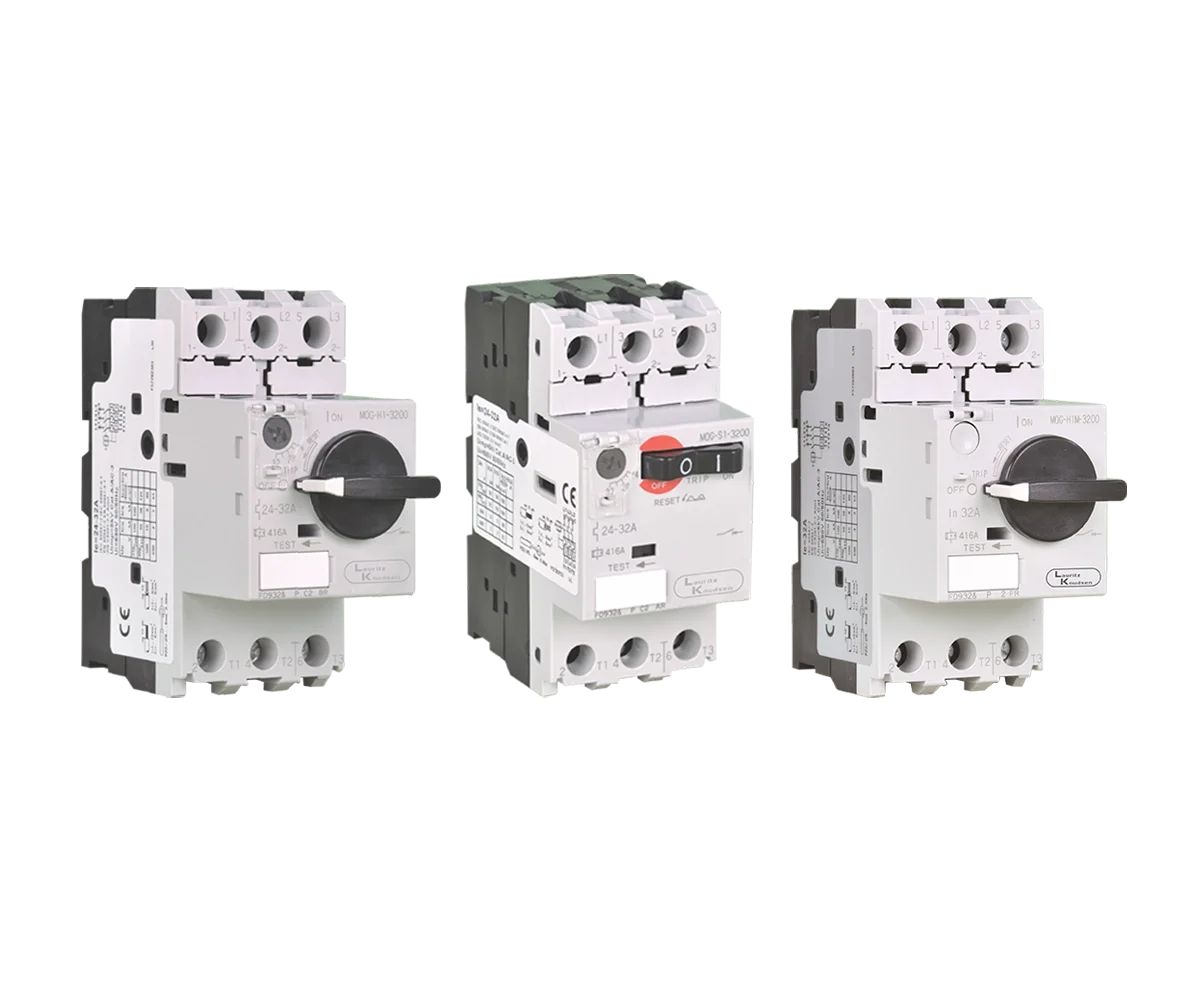
Understanding the Motor Protection Circuit Breaker
A motor protection circuit breaker is a specialized switching and protection device designed specifically for the protection of electric motors. Unlike a standard circuit breaker, the motor protection circuit breaker is engineered to accommodate the high inrush current that occurs during motor starting, which can be six to ten times the motor’s full load current, while still providing sensitive protection against sustained overload conditions that would overheat the motor windings.
This balance is achieved through a carefully designed trip characteristic that allows the high starting current to flow for the duration of the starting period, then trips if the current remains elevated after the motor should have reached normal running speed. The magnetic element of the motor protection circuit breaker provides instantaneous protection against short circuit currents at all times, regardless of the starting state. This combination of motor-tolerant starting current handling and precise overload protection makes the motor protection circuit breaker the standard choice for individual motor branch circuit protection in motor control centers and industrial control panels. Lauritz Knudsen Electrical & Automation offers motor protection devices within its Motor Management and Control product category, providing protection solutions for three-phase low voltage motors across a wide range of ratings.
Key Protection Functions
The motor protection circuit breaker incorporates an adjustable current setting range that allows a single product to protect motors of different ratings within its coverage range. This adjustability is essential for panel builders who want to simplify their product range without sacrificing the accuracy of protection for each individual motor. Phase loss sensitivity is built into the motor protection circuit breaker design, providing protection against the single phasing condition that can destroy a three-phase motor in minutes if not detected. A built-in test function allows the protection to be verified without connecting a test current source, simplifying commissioning and maintenance procedures.
Understanding the VCB Breaker
The VCB breaker, or Vacuum Circuit Breaker, is the dominant switching and protection technology in medium voltage switchgear for voltage levels between 3.3kV and 36kV. The VCB breaker uses a vacuum interrupter as its arc extinguishing medium. When the contacts of the VCB breaker separate under fault conditions, the electrical arc formed between them is extinguished almost instantaneously because the vacuum environment contains no ionizable gas to sustain the arc beyond the first natural current zero of the AC waveform.
This extremely fast and clean arc interruption gives the VCB breaker several important advantages over the older technologies it has replaced. The absence of oil eliminates fire risk and environmental contamination hazard. The sealed vacuum interrupter requires no periodic replacement of insulating medium and is essentially maintenance-free over its rated number of switching operations. The compact size of the VCB breaker vacuum interrupter allows MV switchgear panels to be made significantly smaller than equivalent oil or SF6 insulated equipment, reducing substation footprint and civil costs. Lauritz Knudsen Electrical & Automation offers Medium Voltage products including VCB breaker technology as part of its comprehensive electrical portfolio.
Applications of the VCB Breaker
The VCB breaker is used across a wide range of medium voltage applications. In utility distribution networks, the VCB breaker is the primary switching device in ring main units and primary substations. In industrial installations, the VCB breaker serves in unit substation incomer panels, medium voltage motor feeder panels for large pump and compressor drives, transformer primary switching panels, and bus coupler positions in double busbar MV switchgear. In renewable energy installations, the VCB breaker protects the MV collection circuits of solar farms and wind parks, and provides the main interface between the facility and the utility grid at the point of connection substation.
How Motor Protection Circuit Breaker and VCB Breaker Form a Coordinated Protection System
The motor protection circuit breaker and the VCB breaker operate at different voltage levels but must be coordinated to ensure that a fault on a motor feeder circuit is cleared by the motor protection circuit breaker without causing the VCB breaker to also trip and disconnect the entire medium voltage supply to the facility. This coordination is achieved through careful selection of the trip settings and the trip time characteristics of both devices, ensuring that the downstream motor protection circuit breaker always clears motor faults before the upstream VCB breaker reaches its tripping threshold.
Achieving this coordination requires knowledge of the fault current levels at both the MV and LV levels, the time-current characteristics of the VCB breaker protection relay, and the trip characteristics of the motor protection circuit breaker. Engineers should verify protection coordination during the design stage using time-current curve analysis, and the coordination should be documented in the project’s protection coordination study. Products like the eMPR series Electronic Motor Protection Relay from Lauritz Knudsen Electrical & Automation include the earth fault protection coordination capability specifically needed to ensure proper discrimination with upstream breakers including the VCB breaker.
Selection Criteria for Both Devices
Selecting a motor protection circuit breaker requires knowledge of the motor’s rated current, the starting method and starting time, the motor’s thermal class, and the required degree of protection. The motor protection circuit breaker current setting range must cover the motor’s rated current, and the trip class must match the starting time requirements of the specific motor and load combination. For the VCB breaker, key selection parameters include the rated voltage, rated current, rated breaking capacity, rated operating sequence, and the communication and protection relay requirements of the installation. Both devices must also be rated for the environmental conditions of their installation location, including ambient temperature, altitude, humidity, and contamination levels.

Conclusion
The motor protection circuit breaker and the VCB breaker are essential and complementary technologies for industrial electrical systems. The motor protection circuit breaker provides motor-specific, precision protection at the low voltage motor branch circuit level. The VCB breaker provides reliable, maintenance-friendly switching and fault protection at the medium voltage distribution level. Together, as part of a properly coordinated protection system, they ensure that faults are cleared selectively and quickly at every level of the distribution hierarchy, maintaining safety and minimizing the impact of faults on facility operations. Lauritz Knudsen Electrical & Automation, with its Motor Management products and Medium Voltage switchgear portfolio, provides both technologies backed by 70 years of electrical engineering expertise in India.