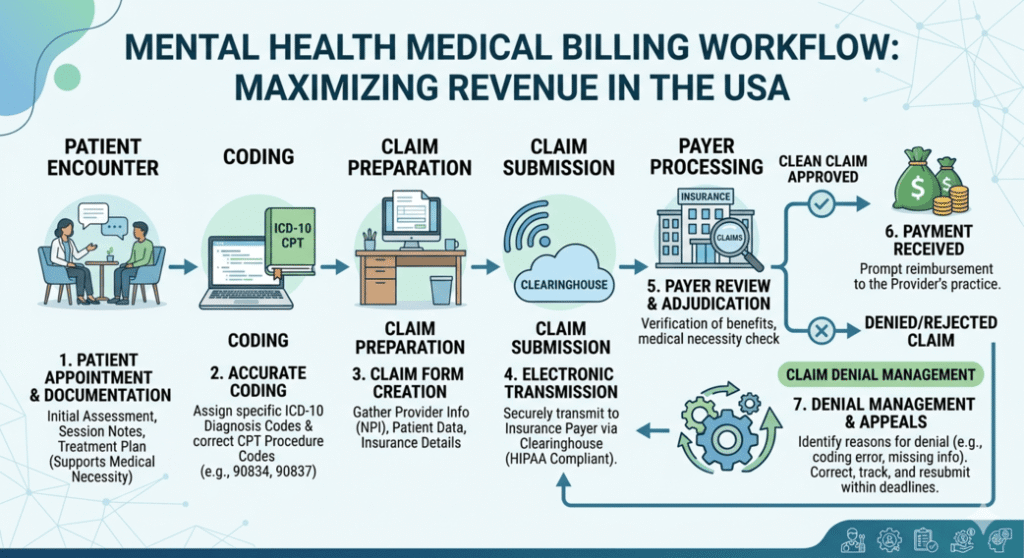

Mental health practices across the United States are growing rapidly, but along with that growth comes a complex challenge—accurate and efficient mental health medical billing. From insurance regulations to coding updates and payer-specific rules, managing billing for mental health services requires both precision and expertise.
Whether you are an independent therapist, a psychiatric clinic, or a multi-specialty practice, understanding how billing works can directly impact your revenue, compliance, and patient satisfaction.
Introduction
Mental health billing is not just about submitting claims—it involves a structured process that ensures providers are reimbursed correctly while staying compliant with regulations. Here’s what makes it unique:
- Complex coding requirements for therapy, psychiatry, and counseling
- Frequent policy changes, especially with Medicare and private insurers
- Documentation requirements tied closely to medical necessity
- High claim denial rates without proper billing workflows
Because of these factors, many providers rely on billing companies for mental health to streamline operations and reduce administrative burdens.
What is Mental Health Medical Billing?
Mental health medical billing refers to the process of submitting and following up on claims for services provided by mental health professionals. This includes therapy sessions, psychiatric evaluations, medication management, and more.
Unlike general medical billing, mental health billing focuses heavily on time-based codes, session types, and accurate documentation. Billing for mental health providers requires a strong understanding of CPT codes, ICD-10 diagnoses, and payer-specific guidelines.
A professional mental health billing services company ensures that claims are submitted correctly, reducing denials and improving reimbursement timelines.
Why Mental Health Billing is More Complex Than General Billing
There are several reasons why billing for mental health services is more intricate:
1. Time-Based Coding
Many services depend on session duration, making accuracy critical.
2. Authorization Requirements
Pre-authorizations are often needed for ongoing therapy sessions.
3. Frequent Claim Denials
Incorrect coding or missing documentation can lead to rejections.
4. Privacy Regulations
Mental health records are highly sensitive and require strict compliance.
Because of these complexities, many providers prefer outsourcing mental health billing and coding to experienced professionals.
Key Components of Mental Health Billing
To understand the full scope of mental health billing, here are the core components involved:
Patient Eligibility Verification
Ensures insurance coverage is active before services are provided.
Accurate Coding
Coding and billing for mental health services must align with clinical documentation.
Claim Submission
Timely and error-free submission improves approval rates.
Payment Posting
Tracks payments from insurers and patients.
Denial Management
Identifies and resolves rejected claims quickly.
A reliable mental health billing company handles all these steps efficiently.
Common Challenges in Mental Health Billing
Even experienced practices face obstacles such as:
- High denial rates due to incorrect coding
- Delayed reimbursements from insurance companies
- Frequent changes in billing guidelines
- Administrative overload on in-house staff
This is why many clinics turn to mental health billing specialist companies for support.
Benefits of Outsourcing Mental Health Billing
Outsourcing has become a strategic choice for many practices. Here’s why:
Improved Revenue Cycle
Outsourced billing for mental health ensures faster claim processing and reduced denials.
Cost Efficiency
Hiring and training in-house staff can be expensive. A cheap outsource mental health billing company can reduce overhead costs.
Compliance Assurance
Experts stay updated with regulations, including billing Medicare for mental health services.
Focus on Patient Care
Providers can spend more time treating patients instead of handling administrative tasks.
Choosing the best outsource mental health billing and coding services can significantly improve operational efficiency.
How to Choose the Best Mental Health Billing Company
Selecting the right partner is critical. Here’s what to look for:
Experience in Mental Health Billing
Ensure they specialize in behavioral and mental health billing services.
Transparent Pricing
Avoid hidden costs and unclear fee structures.
Technology and Reporting
Real-time reporting helps track financial performance.
Credentialing Support
Mental health billing and credentialing services ensure providers are enrolled with payers correctly.
Client Support
Responsive support is essential for smooth operations.
Working with a top mental health billing company ensures long-term success.
Importance of Credentialing in Mental Health Billing
Credentialing is a foundational step in billing. Without proper enrollment, claims cannot be processed.
Mental health billing and credentialing services help providers:
- Get enrolled with insurance companies
- Maintain compliance with payer requirements
- Avoid claim rejections due to credentialing issues
This step is especially important for new practices entering the healthcare system.
Role of Technology in Mental Health Billing Solutions
Modern mental health billing solutions rely heavily on technology to improve accuracy and efficiency.
Automation Tools
Reduce manual errors and speed up claim submissions.
EHR Integration
Ensures seamless documentation and billing alignment.
Analytics and Reporting
Provides insights into revenue trends and performance.
Technology-driven mental health billing services improve both financial outcomes and operational workflows.
Medicare and Mental Health Billing
Billing Medicare for mental health services requires strict adherence to guidelines.
Key considerations include:
- Proper documentation of medical necessity
- Use of correct CPT and ICD-10 codes
- Compliance with session limits and reimbursement policies
Errors in Medicare billing can lead to audits or penalties, making expertise essential.
Mental Health Billing for Different Providers
Different professionals have unique billing needs:
Therapists
Billing for mental health therapists often involves psychotherapy codes.
Psychiatrists
Focus on medication management and evaluation codes.
Clinics
Billing services for mental health clinics require handling multiple providers and services.
Each category benefits from specialized billing services for mental health.
In-House vs Outsourced Billing
Here’s a quick comparison:
In-House Billing
- More control
- Higher operational costs
- Requires continuous training
Outsourcing Mental Health Billing
- Lower costs
- Access to experts
- Faster claim processing
Most practices today prefer outsourcing mental health billing for scalability and efficiency.
How Mental Health Billing Impacts Revenue
Efficient billing directly affects a practice’s financial health.
A professional mental health billing services company can:
- Reduce claim denials
- Improve reimbursement rates
- Shorten payment cycles
- Increase overall revenue
This makes medical billing for mental health a critical business function.
Why Choose Professional Billing Services
Partnering with a reliable mental health billing company offers long-term benefits:
- Expertise in coding and compliance
- Reduced administrative workload
- Improved cash flow
- Better patient satisfaction
Many providers rely on the best mental health billing company to ensure consistent performance and growth.
Conclusion
Mental health medical billing is a complex but essential aspect of running a successful practice in the United States. From accurate coding to compliance and reimbursement, every step plays a vital role in financial stability.
As the demand for mental health services continues to grow, providers must adopt efficient billing strategies to stay competitive. Partnering with experienced mental health billing specialist companies can simplify operations and improve outcomes.
For practices looking to scale efficiently, integrating services such as medical billing services, medical coding services, medical billing and coding services, revenue cycle management services, and credentialing services can create a strong foundation for long-term success. Companies like 247 Medical Billing Services provide comprehensive support tailored to the unique needs of mental health providers.
FAQs
What is mental health medical billing?
Mental health medical billing is the process of submitting and managing claims for services provided by mental health professionals, ensuring accurate reimbursement from insurance providers.
Why is mental health billing complicated?
It involves time-based coding, strict documentation requirements, and frequent policy updates, making it more complex than general billing.
Should I outsource mental health billing?
Yes, outsourcing mental health billing can reduce costs, improve accuracy, and allow providers to focus on patient care.
What services are included in mental health billing?
Services include eligibility verification, coding, claim submission, payment posting, and denial management.
How do I choose the right billing company?
Look for experience, transparency, technology support, and expertise in behavioral and mental health billing services.
What is the role of credentialing in billing?
Credentialing ensures providers are enrolled with insurance companies, allowing claims to be processed without delays.
Can billing errors affect revenue?
Yes, errors can lead to claim denials and delayed payments, impacting overall revenue.
Is Medicare billing different for mental health services?
Yes, it requires strict compliance with documentation and coding guidelines to avoid penalties.