
In the high-stakes theater of modern commerce, the methodology you deploy to capture market share determines your brand’s long-term survival. Navigating the choice between inbound vs. outbound marketing is no longer a simple budgetary decision; it is a fundamental alignment of your resources with the contemporary buyer’s psychological journey. While one approach utilizes the traditional strength of proactive, direct engagement, the other harnesses the sustainable power of organic discovery and educational value. This analysis explores the core mechanics of both systems, helping you determine which strategy will effectively scale your revenue in an increasingly sophisticated digital economy.
The Directional Dynamics of Modern Growth
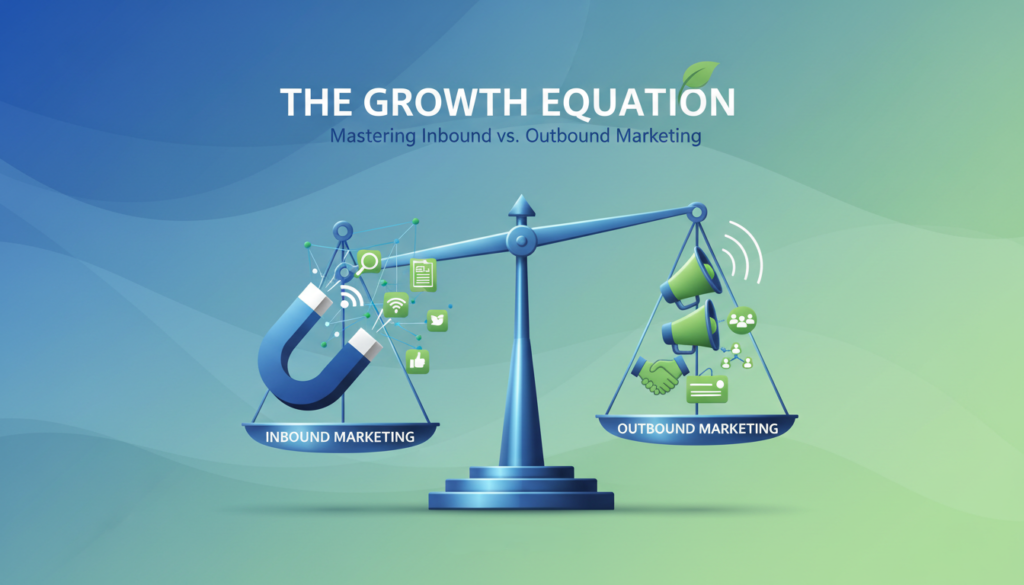
The primary distinction between these two heavyweight strategies lies in the direction of the initial engagement. Outbound marketing functions as a “push” mechanism, where the brand initiates the conversation by projecting a message toward a broad audience. Inbound marketing, conversely, acts as a “pull” mechanism, focusing on building a high-value digital ecosystem that naturally draws prospects in when they begin their search for specific answers.
According to insights shared by Inbound Marketo, the effectiveness of “push” marketing has faced significant headwinds due to the rise of consumer autonomy. With the ubiquity of ad-blocking technology and the ability to skip traditional commercials, the “interruption” model often meets friction. In contrast, the “pull” of a well-researched whitepaper or a targeted search result meets the prospect at the peak of their interest, leading to a much more efficient conversion path.
The Inbound Blueprint: Investing in Long-Term Digital Equity
Inbound marketing is a foundational investment in your company’s intellectual property and digital presence. Rather than renting attention through recurring ad spend, you are constructing a permanent asset that generates interest around the clock.
-
Authority-Driven Lead Generation: By publishing expert-level articles and technical case studies, you establish your brand as a primary source of industry truth.
-
Search Intent Mastery: Advanced SEO ensures that your solution appears at the exact moment a potential client identifies a problem they need to solve.
-
Relationship Nurturing: Instead of a high-pressure pitch, inbound uses social proof and educational workflows to build a relationship based on helpfulness.
The core benefit of this model is its compounding nature. While the initial creation of high-quality assets requires a significant investment of time and expertise, those resources continue to attract high-intent leads long after publication, significantly lowering your long-term cost-per-acquisition.
The Outbound Advantage: Speed, Precision, and Control
While the digital landscape has shifted toward organic discovery, outbound marketing remains an essential tool for organizations that require immediate results or are targeting a hyper-specific niche. If inbound is a lighthouse, outbound is a laser—capable of cutting through the noise to reach a specific decision-maker at a specific moment.
Modern Proactive Outreach
Today’s outbound is a far cry from the generic “spray and pray” tactics of the past. It now involves sophisticated Account-Based Marketing (ABM), highly personalized professional outreach on platforms like LinkedIn, and programmatic advertising that targets specific job titles within your “dream” accounts.
When to Lead with Outbound
Outbound is often the superior choice for companies launching a disruptive new product where search volume does not yet exist. It allows you to define the category and force-feed your value proposition to the right people, providing a level of control over the timing and volume of your lead flow that inbound simply cannot match in the short term.
Comparing Financial Realities: Inbound vs. Outbound Marketing
The choice between inbound vs. outbound marketing often comes down to how you prefer to allocate your capital. Outbound is a “linear” spend—you pay for a certain number of impressions or clicks, and you receive a proportional number of leads. The moment the budget is paused, the lead generation ceases.
Inbound is a “nonlinear” spend. It requires a significant upfront lift in content production and technical optimization, often without immediate results. However, as noted by Inbound Marketo, once the engine starts turning, the cost-per-lead often drops dramatically because you are no longer paying for every individual “eyeball.” The most successful growth models use outbound to provide the initial spark of revenue while building the inbound engine for permanent sustainability.
Conclusion: Crafting a Balanced Growth Ecosystem
The most resilient brands in 2026 do not view this as a binary choice. They understand that a hybrid approach—using outbound precision to amplify their best inbound assets—creates the most robust sales funnel. By balancing the “push” of direct outreach with the “pull” of expert authority, you create a marketing strategy that is both fast enough for today’s goals and strong enough for tomorrow’s expansion.
Read the Full Article
Mastering the balance between proactive outreach and organic attraction is the secret to a high-performing marketing department. This summary provides the strategic pillars of the debate, but the source contains the granular metrics, ROI benchmarks, and implementation checklists you need to choose the right path for your brand. Visit the source to explore the complete guide to the modern marketing mix.
👉 Read the full article here: https://inboundmarketo.com/inbound-outbound-marketing/
#InboundMarketing #OutboundStrategy #MarketingROI #inboundmarketo